Release Day: Off Book

After months and months of edits (and at least three different title changes) the long awaited day is finally here. Off Book is now for sale!

http://video214.com/play/CtCLT0LUqJgCrns4qy7uKg/s/dark

About Off Book:

Twenty-year-old Eloise has learned all she can from the School, where characters live until joining their novels. No one knows genre and plot structure better than her, but despite her knowledge, she’s yet to be assigned to her own story. All her friends are off starting their lives with their authors—and if Eloise doesn’t get assigned soon, she’ll fade away, forgotten by all.

When she is suddenly offered a job at the Recording Office, she takes the chance to write her own future. Suddenly living among the post-storied, Eloise meets Barnaby Fitzwilliam, a former romance novel hero who hasn’t lost any of his in-story charm. But just as their relationship begins to get serious, everything Eloise has been taught gets turned upside down when she’s sucked into a novel she was never meant to be part of.

Now, caught where the only rules are made by the authors and truly anything is possible, Eloise must find her way back home—or else her life might end before she ever gets the chance to live it.

Set in a world dictated by Authors, OFF BOOK explores the story beneath the stories we all know and love, taking readers and characters alike on an adventure just waiting to be written.

Get your copy today!

off-book-V2

Do the Twist

A great twist can make a story (think, would The Sixth Sense have been nearly as popular without people loving its?) but a poorly done twist can just as easily sink one (think every other M. Night Shyamalan movie that has been panned in the years since Sixth Sense).

The general advice I have when it comes to twists is only use them when it flows naturally in your story rather than being a planned gimmick. If you are trying to force your story to conform to a plan just for a twist, don’t do it. Ninety-nine percent of the time the damage you’ll do to your story will not be redeemed no matter how mind blowing the final twist is. Some gimmicks work, but more often than not a well-written story will beat out a mediocre but unique gimmick.

If you are planning part of your plot around a twist, however, some more specific things to keep in mind:

1. Make sure the story supports it. This is one of the major stumbling blocks that get many “twist-based” stories stuck. When the author starts becoming hyperfocused on their great twist, it often opens up the story to other plot holes. Sure, you can hand wave a lot of things in fiction if necessary, but when you start having readers question the very premise of your story (why would the aliens even want a planet that’s mostly water if they’re allergic to it?) you’re going to have a problem. If there’s no reason for the story to progress in the first place once you learn there was someone controlling it the entire time or it turns out a character is a turncoat, the twist isn’t going to protect you from criticism from readers left scratching their heads. Likewise, if your twist relies on other characters keeping information from one another, make sure they have a reason for keeping that information to themselves outside of “because the author said to” otherwise the rest of the plot can stop making sense.

2. Don’t make you characters seem like idiots. There is an ongoing joke that characters in Superman comics aren’t able to see that Superman and Clark Kent are the same person past a pair of glasses. At this point, it has simply become an accepted part of the storytelling along with the fact that no one ever really stays dead in comics. Unfortunately for those writing outside of the DC or Marvel universes, that level of suspension of disbelief doesn’t carry over to most other forms of prose. Where the people of Gotham may still not get that Bruce Wayne is Batman even though Batman for some reason disappeared at the same time as Bruce Wayne and he always seems suspiciously “away” when Batman’s out and about, readers are going to start getting a little annoyed when your character hasn’t put something together that it seems any reasonable person would have. You definitely want to have some sort of foreshadowing when it comes to a twist, but don’t offer enough so the reader has figured out the twist so far ahead of the character that the character seems dim for having missed the myriad of clues.

3. Foreshadow properly. As stated above, you don’t want twists to entirely come out of nowhere. If there has been absolutely no sign of anything nefarious happening, a twist that turns everything on its head can be just as annoying as a twist that was signposted way too early. Readers don’t tend to like being blindsided. Make sure there are some clues that foreshadow the ending. Just make sure they’re subtle enough so it make sense that your character has missed them without needing to throw in some sort of explanation about why they were uncharacteristically nearsighted when it came to an obvious twist. If some of your readers figure the twist out, that’s fine. You don’t need to try to trick every single reader. Readers like feeling smart, especially when it comes to figuring out where something is going before it’s revealed. You just have to make it difficult enough to figure out that 1) your character wouldn’t figure it out and 2) your reader doesn’t feel bored by the time they reach the twist because they figured it out ten pages in. So how do you foreshadow properly? It varies from story to story, of course, but some general tips to tread that line between blindsiding and boring:

  • Place “big” clues early on. The earlier on you are in the story, and the less your reader yet knows about the characters/plot, the simpler it will be to slip something in the reader will likely forget about until it becomes important later. If your reader mentions he has a sister working at [company] before [company] ever becomes important, it is more likely for the reader to take the fact and move on than if they just learned last chapter that [company] is doing something strange. If the sister is brought up following some suspicion being thrown on the company she works for, the reader is more likely to assume the sister is playing a larger role than we yet know about.
  • Spread foreshadowing out. Similar to utilizing dropping clues long before the reader has a reason to pay attention to them, it’s smart to not pile too many clues right on top of each other. If your readers just learned one piece to the puzzle, give it a little time before you give them another. This is especially true if the pieces don’t necessarily seem to connect. The farther apart you keep them, the less likely readers are to make the jump that X and Y must be related (or else why would they both be right here?)
  • Keep your characters from trying to purposefully mislead the reader (repeatedly). While it’s perfectly fine to have your character make an assumption that turns out to be wrong, don’t try to “trick” the reader by bringing up the wrong assumption repeatedly or you can quickly find yourself in a “The lady doth protest too much, methinks” situation. The more you bring up how obviously this means that, the more time the reader has to focus on that plot point and realize there must be more than meets the eye.
  • Determine how common your “twist” is. A twist doesn’t always need to be unique. There is a saying that there are no new plots, and in a way that is true. You can write something that is a fresh idea, but that doesn’t mean that there aren’t any tropes in it. And the more well known a trope is (especially in your genre) the more likely it will be that readers will be able to figure out the “twist.” For example, if it turns out that the “big bad” is a relative of your protagonist, that twist is well enough known that you likely will be able to get away with just a few clues before people start catching on (because they’ve likely seen Star Wars and a number of other stories with that same twist). There is nothing wrong with using the trope all the same, just keep in mind what readers might be expecting when choosing how much to foreshadowing. Also keep in mind, if you intend to subvert a trope, you can also use these assumptions to your advantage. By letting the reader believe you’re following a common trope, it’s possible to sneak in other clues to what the real twist is while readers are distracted by what they believe will be the twist.
  • Look for “throw away” lines. Especially if your twist is on the more common side, less is often more when it comes to foreshadowing. Readers are trained to expect that everything they read is important–after all, to keep up pacing, authors don’t tend to write in scenes that don’t matter to the plot. Because of that, if you put something in past the early “the reader doesn’t know what to look for” stage of a story that has a lot of attention drawn to it, the reader is likely to assume it is very important for some reason and take note. Look for ways to work in clues that are buried under other more obviously important information or in phrases that are nearly clichés. For example if someone says “what planet are you from?” when the twist is the character is an alien, the reader is likely to pass by the familiar saying less critically than something that sticks out as purposefully planted there (added bonus, the saying is also so easy to breeze over if you aren’t already thinking “aliens” that readers who have figured the twist out already will feel smart having caught it).

As with everything else, what exactly works for your story will be different from project to project. What is too much foreshadowing in one novel will be too little in another. When in doubt, look for beta readers who will be able to tell you if they figured your twist out too early or felt too blindsided at the end to have it be enjoyable. And then just keep on working at it.

What Should We Call Me?

After many months and more rounds of edits than probably healthy, cover reveal day is finally here for my forthcoming fantasy novel Off Book. A rather meta-humor story (where the characters in it are well aware that they’re characters in a book) I think the title suits it.

off-book-V2

Of course… that wasn’t always the title. Just like the several edits the overall story went through between initial writing and now, the book’s title has gone through no less than four iterations (after being discussed in multiple marketing meeting). And so it seemed to be the perfect day to discuss just what makes a good title.

1. Don’t feel like you need a title right away.

Some authors come up with their titles before ever putting pen to paper, some are still looking for a good one as they get a query ready to send. Personally, I find coming up with titles feels more difficult than actually writing a full novel half the time and so I often have “working titles” while writing a book that will likely change three or four times before I’ve reached “the end” There is absolutely no problem with not having a title while you’re working on a book. Just make sure that you can always find your file if you work on a computer by having a “working title” that is distinct enough (for example, title it after your main character rather than just “Story” or “Untitled”)

2. Look for strong themes

Either while planning (if you like to title before writing a book), writing (if you like to title while in process), or editing (if you like to title after) keep an eye out for strong themes you could build a title around. Is your character dealing with a certain emotion? Look for words that embody that. Does your character have a distinct name? Try to figure out if there is a way use that (one of the early titles of Off Book was Ashes to Ashes because of the character’s last name, for example, though more on that later). Once you have some focus, it will become easier to narrow down title options.

3. Consider if this is part of a series.

If you are writing a series, take into consideration if there are any title patterns you will want to use. Many series try to use similar sounds for their books. For example George R. R. Martin’s A Song of Ice and Fire Series (A Game of Thrones, A Clash of Kings, A Storm of Swords…), Traci Borum’s Chilton Crosse Series (Painting the Moon, Finding the Rainbow…), or even my own Broken Line Series (The Copper Witch, The Porcelain Child, The Paper Masque) Each book has a unique title, but follows the same pattern (A ____ of ____. ___ing the ____. The ____ ____) If you are coming up with the title for a later book of a series, try to find a way to tie it to the previous books. If you are titling the first book of a series, try to come up with something that will allow for similar follow-up titles.

4. Do some market research.

This is where things can get a little bit trickier, for while titles can be just as creative as the books inside the cover, titles are largely about marketing. You want to find something that catches the reader’s eye, fits the feel/genre of the book, and (where many people get tripped up) doesn’t get lost in search results. It is not possible to copyright a title so just because someone has used a certain title before doesn’t mean you can’t. Just because you can, however, doesn’t mean you should. While one of my working titles was Ashes to Ashes, going with that would have likely been a bit of a marketing nightmare. Enough books (and TV shows) have used that title that it was likely my book would get lost far down the search results. Another possibility (Between the Lines) while considered ended up bringing up a number of Romance novels when researched. You don’t necessarily need to go for entirely unique, but you don’t likely want to end up with your book being the 5000th of the same name or immediately assumed to be a different genre than it is because you pick a name associated with a number of [other genre] books. A quick search at the Amazon Kindle Store or otherwise online will help you get an idea if you are on the right track with what you’ve come up with so far.

5. Let your publisher help you.

If you are self publishing, it is up to you to come up with something you can market well, but if you are working with a traditional publisher, listen to their marketing team. You can fight for a title you’ve come up with if you want, but publishers generally have a good reason for asking for title changes (most often having to do with how they intend to market your book) so being willing to work with them will help you down the road. Always consider a title a “working title” until your book hits the shelf.

Off Book: Coming soon from REUTS Publications. Read more about it here, request to be part of the blog tour here, or find it on Goodreads

Twenty-year-old Eloise has learned all she can from the School, where characters live until joining their novels. No one knows genre and plot structure better than her, but despite her knowledge, she’s yet to be assigned to her own story. All her friends are off starting their lives with their authors—and if Eloise doesn’t get assigned soon, she’ll fade away, forgotten by all.

When she is suddenly offered a job at the Recording Office, she takes the chance to write her own future. Suddenly living among the post-storied, Eloise meets Barnaby Fitzwilliam, a former romance novel hero who hasn’t lost any of his in-story charm. But just as their relationship begins to get serious, everything Eloise has been taught gets turned upside down when she’s sucked into a novel she was never meant to be part of.

Now, caught where the only rules are made by the authors and truly anything is possible, Eloise must find her way back home—or else her life might end before she ever gets the chance to live it.

Set in a world dictated by Authors, OFF BOOK explores the story beneath the stories we all know and love, taking readers and characters alike on an adventure just waiting to be written.

off-book-V2

Tense Slips

When it comes to narration, there are several choices to make based on what tone you’d like for your book. The one people tend to most talk about is if the narrator speaks in first or third person, but with present tense becoming more popular, Narrative Tense is becoming a hot topic.

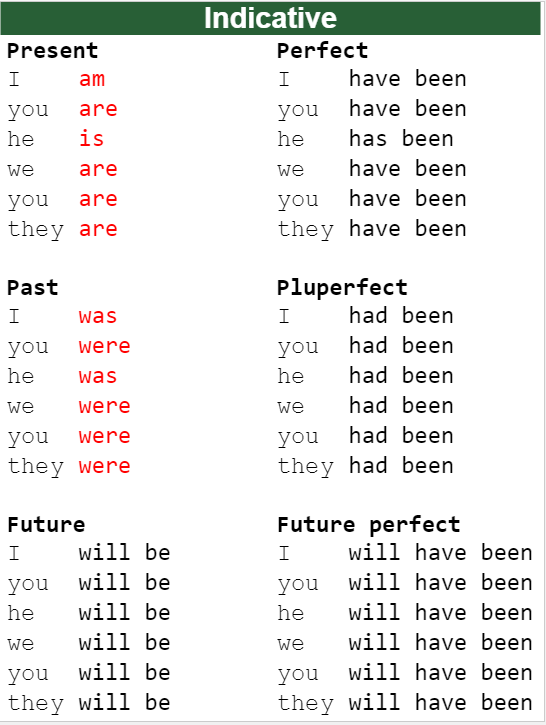
(source: verbix.com)

(source: verbix.com)

For the most part, past tense has been the standard in story telling (“She walked down the street and looked around). With the popularity of present tense novels like The Hunger Games, however, the present tense is becoming more common (if not yet the standard). There are plenty of pros and cons to writing in either (some people find present tense more engaging, others find it distracting…) but the main writing rule when it comes to narrative voice is to be consistent.

One more than one occasion, I have been asked what to do in past tense narratives for facts that are still true after the telling of the story. For example:

My sister was named Sally.

Unless Sally is now dead, she is very possibly still named Sally. Wouldn’t you then want to say, “My sister is named Sally”?

Not unless you have a present tense framing device.

For, you see, the fact that you are using past tense in a story doesn’t mean that everything written is only true in the past. It is simply the narrative tense you are using to tell your story. As a coworker of mine once described it, “If I were describing my trip ten years ago to Germany, I might say, ‘It was beautiful. There were all these tiny streets and medieval buildings.’ It’s likely it’s still beautiful with tiny streets and medieval buildings. I just happen to be describing what it was like in the moment I was there. That is my narrative tense.”

For example Hirschhorn, Germany (Source: journey-to-germany.com)

For example, Hirschhorn, Germany (Source: journey-to-germany.com)

Similarly, unless you have a present tense narrator who is covering things in the past as a clear framing device (“I didn’t know it at the time, but…”) it is important to stay in a consistent narrative voice, even if that means you’re saying “John was a tall man” when John might still be a tall man after the story.

Similarly with present tense, everything in the story should be in present tense, unless you are actually describing something happening in the past (these would be sections that would be in past perfect in a past tense novel). For example:

In present tense:

I walk down the street, looking at the spot Jack and I went on our first date.

“I walk” is in present tense, meaning everything happening in-story should be in present tense  (e.g. you shouldn’t have something like “I walk into the building and looked around” but “I walk into the building and look around”) but as the narrator and Jack’s first date happened in the past, that verb is properly in past tense.

In past tense:

I walked down the street, looking and the spot Jack and I had gone on our first date.

Here, the narrative is already in past tense (“I walked”) meaning everything happening in-story is related in past tense. To show something happening before the story, you then switch to past perfect (“had gone”).

Once you have decided the narrative voice of your story, you should stay consistent in either using present for in-story and past for the past, or past for in-story (including things that remain true after the story) and past perfect for the past. Slipping between tenses once one has been established can at best be jarring, and worst look like sloppy writing.

Language Barriers

Today’s post, Language Barriers, is being hosted by Kate Warren from katewarren.com:

Authors are pretty lucky when it comes to choosing what language they can write their story in. Just like suspension of disbelief will let readers believe there are really ghosts in a book, it will let readers believe that someone living in Ancient Rome or on a distant planet speaks fluent English—or at least the book is a “translation” of whatever language they would be speaking. The problem, therefore, becomes what to do when a character is bilingual. Many times that raises issues of both needing to show a switch between languages while not confusing readers who very likely don’t speak both languages. After all, you can’t exactly run subtitles under the dialogue like you would in a movie.

In both of my most recent Broken Line books (novella, The Copper Rebellion, and Book 3, The Paper Masque) I came up against just this problem. While Books 1 and 2 take place in their version of England, The Copper Rebellion finds protagonist, Adela, abroad in a version of France and the protagonist of The Paper Masque, Elsie, finds herself dealing with a number of Irish Gaelic speakers throughout her story. While some readers might speak either of those languages, requiring all readers be trilingual to finish the series seemed like a tall order.

So what to do then, when your characters speak more than one language? There are a few different methods, all of which depend on your Point of View (POV) character.

POV Character is Bilingual


If your POV Character in a scene understands whatever the language being spoken is, the easiest method is to use tags like “in French” at the end of dialogue to show that the characters are now speaking another language. For example, in The Copper Rebellion we find:

“Bonjour, madame…” The tallest stopped in front of her, Adela’s mind taking a moment to click over into [French]. “…how may we help you?”

Adela gave a pretty smile, silently thanking her grandmother’s insistence on learning the language. “Good day. I am Adela Wembley, and I have come to call on his majesty, King Charles, if he is in?

The reader has been filled in that they are now speaking in another language, and dialogue can continue on in English.

Note: To add credence to the switch, you can use a few words here and there of the language you’re switching from. Just try to make sure that they are either words that the reader would likely know (such as Bonjour) or words that are not important to the meaning of the sentence (so that the reader hasn’t missed anything if they don’t understand that word).

You will likely notice that I have used italics throughout the sample above after the language switch. If your character will be staying in one language more often than not, italics are not necessary (you can simply add “in French”/“in German”/etc. Italics, however, can be handy if you’re going to be switching in and out of a language quickly. For example:

There is a messenger here for you, madame,” the servant continued.

Adela recovered enough to smile. “Mr. Fletcher. What a surprise.”

Antony seemed to take everything in, bowed as his gaze began to linger too long. “Your majesty.”

Louis turned to her. “A friend of yours?

“Monsieur le duc, this is Antony Fletcher. He was a painter at my late husband’s court.” She looked back at Antony, flipped to [English]. “Mr. Fletcher, Louis Delone, Duke of Parnulle and brother to the king.”

Since Adela is speaking to Antony and Louis in two separate languages, it became simplest to establish that italics=French, no italics=English and remove “in English” and “in French” from appearing over and over again. You can determine if italics are necessary for clarity’s sake in your own writing.

POV Character is not Bilingual

If your POV character does not speak the second language being used in a scene, things get a little trickier. You see, since the character doesn’t know what is being said, there is no way for them to relate what is being said.

The easiest way to get around this problem is to have another character translate. For example:

Stringing a rope along the ceiling, Úna continued to speak to Laurence as she worked.

“She’s dividing up the room,” Laurence translated. “She says we aren’t married so we can’t sleep in the same room together.”

By having a character who speaks the second language translate, you can get a summary of what is being said across without the POV character needing to understand it word for word.

If the POV character doesn’t have someone to translate for them, try to stick to things the reader doesn’t need to understand, put in enough so that the reader can follow along, or have the POV character make guesses as to the content. For example:

Colm continued to rant in [Gaelic], switching as he turned to Gordon, “Though, like you really understand what we’re even saying,eachtrannach.”

Díul mó bhad,” Gordon returned, Elsie entirely willing to believe it was an insult just by the tone.

If someone speaks Irish Gaelic, they won’t need to be told that what Gordon says is an insult, but the rest of the audience has been told enough to pass over the phrase with the knowledge that Gordon says something insulting.

POV Character is Learning

For the most part, I don’t suggest taking the “subtitle” route, where you give lines in whatever foreign language a character is speaking and then add the translation verbatim after it. This is primarily because it can become clunky/disrupt the flow of the scene. Readers who don’t know the original language will have to skip over to find the translation meaning more “clutter” in the scene which often leads to slower pacing. It can be effective, however, if used for small stretches. I primarily use this strategy when it comes to a character learning the other language. For example:

Mon père est un soldat, comme mes frères,” Antony pieced the sentence together, doing his best to explain his family—the martial proclivity he hadn’t seemed to inherit with the rest of his brothers.

Vous ne voulez pas être un soldat?” Henriette asked quickly.

You did not want to be a soldier? Antony pieced the words together with just a little delay, answered, “Non. Not at all.”

“You really are not bad.” Henriette switched back to [English].

The extra wordiness in these instances can work well since it forces in the lull it takes the character to think of what the other characters are saying. The POV character is likely a step behind and so the “clunky” feel to the wording will suit for pacing.

All in all, when in doubt, understandability should be the goal when it comes to using two languages in your writing. You don’t want your readers to miss an important plot point just because they don’t speak as many languages as your character—or worse, to get so frustrated, they put your book down. Err on the side of caution and, when in doubt, call in a beta reader or two and see if it makes sense to readers who don’t speak a second language.
Guest Post – Laura E. Koons: Strengthening Your Dialogue

Last week, I posted a blog about identifying your strengths and weaknesses as an author as a step to becoming a better writer. Since most authors tend to either start out having problems either with narrative or dialogue, I asked Laura E. Koons, author of He Said, She Said: Writing Effective Dialogue, to share a few of her tips on becoming a better dialogue writer. If you’re currently working on moving from being narrative-strong to more well rounded, here are Laura’s suggestions:

——————————————————————-

Dialogue, like any aspect of writing, can be strengthened and improved with practice. While it may seem like some writers were gifted with “an ear for dialogue” and can effortlessly put the right words into their characters’ mouths, the art of producing good dialogue can be studied, and practice and attention can help any writer appear to have the gift of that “good ear.”

Perhaps the most useful general guiding principle to keep in mind when trying to strengthen your dialogue is the concept of fiction as a balance between the realistic and the artful. Realistic dialogue mimics the way people really talk. But while it is often a writer’s goal to make her dialogue sound “real,” dialogue which mimics precisely the way most people talk may come across as boring, clunky, or repetitious. Real people often do not speak elegantly; listen to any conversation and you are likely to hear a lot of oral crutches (um, ah, er, and so on), repeated words, pauses, and sentences that don’t come out quite right. While there may occasionally be times when a scene requires that kind of realism, most of the time you will want to make your characters speak more proficiently or more efficiently than real people usually do. This is where the balance between the realistic and the artful comes in. Use your artistic license to “clean up” dialogue of the oral crutches, repetitions, and the like that pepper most real conversations in order to present dialogue that reads like the best version of the way people really talk.

In order to strike this balance between realism and the artful in your dialogue, consider the following tips.

In order to keep your dialogue realistic:

  • DO use contractions as real people of similar backgrounds to your characters might. Dialogue without contractions will sound stilted.
  • DO use widely understood (or easily deciphered) slang and/or regionalisms appropriate to your characters. This will help them sound like real people from real places.
  • DO keep the scene going during dialogue exchanges. People don’t usually drop everything and stand still to talk to one another. They keep making dinner, or fidget, or try to fix the dishwasher to avoid the conversation, or carry on working on their report. At the very least, they gesture or make facial expressions. Having your characters do something while they have a conversation will make the conversation itself seem more realistic.
  • DO NOT overuse direct address. Most people don’t refer to one another very often by name in conversation, so having your characters do so may sound inauthentic and will become tedious.

And in order to keep your dialogue artful:

  • DO avoid distracting dialogue tags. Consider using “asked” and “said” as your default dialogue tags, as these will fade into the background and allow readers to concentrate on the dialogue itself. Reserve other tags (such as lied, interrupted, shouted, whispered) for those times when it is necessary to tell the reader how the dialogue was said.
  • DO vary character gestures and use unique rather than generic gestures whenever possible during dialogue exchanges. Real people likely do a lot of generic things like smiling, frowning, nodding, and shrugging in the course of their conversations, but in a dialogue exchange on the page, these generic gestures can become tedious and—worse—make your characters seem boring or cookie-cutter. Keep generic gestures to a minimum (they are certainly necessary sometimes) and give your characters gestures, habits, and tics that are unique to them that they can engage in during dialogue exchanges.
  • DO NOT overemphasize characters’ dialects through phonetic spellings and dropped letters. If a character’s dialect is important, suggest it through the use of slang, regionalisms, and occasional nonstandard grammar rather than trying to reproduce its exact sound through nonstandard or phonetic spellings. The resultant “apostrophe jungle” on the page can be very distracting to readers.
  • DO NOT overuse clichés in dialogue. Real people use clichés frequently, but clichés are phrases that have become commonplace and as such are usually uninteresting. Err on the side of having your characters speak with original language to keep your dialogue interesting and fresh.
  • DO summarize commonplace exchanges in dialogue. Commonplace exchanges such as the pleasantries exchanged at the beginning of a phone call (“Hello?” “Hi, Jim.” “Oh, hi, Sam.”) do not need to appear in full in dialogue if nothing but that commonplace exchange occurs. This kind of over-representation of characters’ exact words can be dull. Summarize instead: Jim answered the phone. It was Sam.
  • DO NOT overuse oral crutches in dialogue. Use oral crutches only when absolutely necessary to show that a character is at a loss for words or is otherwise stumbling over his speech. Real people use oral crutches to let their brains catch-up with their mouths—generally the reader doesn’t need to see that process for fictional characters.

In order to fine tune your ear for realistic dialogue, listen carefully to conversations going on around you. Make note of interesting turns of phrase, regionalisms, and the cadences of real speech. You might even record (with permission) some real conversations so you can study at your leisure the way real people’s speech sounds.

To ensure that your dialogue comes off as artful as well, make it a habit to read your dialogue out loud to yourself. Note any places where you trip over the words, where you hear repetitions, or where the exchange becomes dull. Ask yourself what you might remove or change (even if you think doing so will tip your dialogue away from strict realism) to make it read more smoothly.

Following these tips should help you develop your own “ear for dialogue.”

Happy writing!

——————————————————

Find more dialogue writing tips and full exercises in Laura’s book, He Said, She Said: Writing Effective Dialogue, available exclusively on Amazon.

cover

Dialogue-Strong vs. Narrative-Strong

As far as art forms go, creative writing is a bit of an interesting one. Just like painting or sculpting it can take a while to become skilled at it, but not everyone seems to expect that. I can’t say I have looked into any psychological studies about it, but what I am always reminded of is one school trip I made to a arts/theater festival in high school. While at dinner that night, I was complaining to a friend that I didn’t seem to be as good at acting as some of the other classmates we had come with, and at 15, I had determined that obviously I wasn’t “naturally” as talented as they were. A teacher nearby asked how long I had been practicing–not just my scene, but acting in general stating, “You wouldn’t expect to pick up a brush for the first time and be a brilliant painter, would you? Why would you expect to be a brilliant actor?”

It didn’t fully make sense to me at the time (what was acting, really? Standing in front of people and talking! I talked in front of people all the time!) but it always stuck with me. And it’s true. Art forms, even ones that seem easy in their simplest form (talking to people, writing words down) still require a certain skill set to progress from novice to professional.

As I hinted to above, writing is very similar. With most people learning to write in some way or another by first grade, putting words on paper isn’t difficult. We are taught how to form letters, go through spelling tests, and are forced to write hundreds of school papers by the time we graduate high school or college. Therefore, many people think of writing creatively as just another part of that progression. They could write good papers in high school so this is just doing that but while also telling an awesome story. At its heart, the skills that seem necessary to write a novel don’t seem very hard at all.

Of course, if writing (or writing well) were as simple as that, I wouldn’t have this blog. There really wouldn’t be much to discuss. You’d think of a story idea, write it down in your native language, and move on with your life. After over a decade of writing, and editing, and learning it as a craft, however, I’ve realized it isn’t quite that simple. Different people have different levels of natural talent when it comes to any art form. There might be someone who has never held a pen before who can draw or write at professional levels straight off the bat. There are Mozarts of every generation. If that doesn’t happen to be you, however, that doesn’t mean that you will never write or draw (or act) at the same level as them. It just means that you need to practice. Because for all the ways you could learn to go from being an okay writer to a great writer, the best is to read and write as much as possible.

The other part to going from okay to great is to figure out what your strengths and weaknesses are as a writer.

If you don’t happen to be a literary Mozart who comes to the table with all your writing skills sharply developed (I know I wasn’t) I find that writers tend to start out as either dialogue-strong or narrative-strong. It’s generally pretty simple to pick this out looking over your writing based on what you end up writing the most of in your first novel, but as a general outline:

Dialogue-Strong Authors tend to:

  • Prefer “discussion” scenes to “movement/action” scenes
  • Have long stretches of conversation, often either without tags or with very short tags (he said, he nodded, he asked, etc.)
  • Introduce characters with very little or no description but have well-developed “voices”
  • “get into a flow” when writing dialogue/not have to think too much as to how characters would naturally respond to each other

Narrative-Strong Authors tend to:

  • Prefer “movement/action” scenes to “discussion” scenes
  • May have long stretches of description without any dialogue or summaries of dialogue rather than actual discussion.
  • Provide great descriptions of characters but not feel comfortable with unique “voices”
  • “get into a flow” when writing narrative/develop brilliant action, but struggle to make conversations sound “natural”

These lists aren’t exact or all inclusive, of course, but they at least give a quick snapshot if you aren’t sure what your strength might be. If you still aren’t sure, look over whatever you’re writing and see if you are defaulting to one or the other.

I, personally, have always been a dialogue-strong writer. My struggle, therefore, has been figuring out how to insert narrative in a way that doesn’t feel clunky in the middle of dialogue. I know several authors who started out narrative-strong and have had to figure out how to make their dialogue sound natural. It doesn’t matter which your strength is, part of going from “okay” to “great” is learning how to do your weakness just as well as your strength. And that means practicing even if those parts seem awful and strained compared to what you’re naturally good at. Furthermore, when reading, pay careful attention to dialogue/narrative that you find well written and critically try to determine what about it works and what doesn’t. By identifying your weaknesses, you can become better as a writer overall, rather than just making what you’re already good at better.

Taking “I” Out of It

Happy Day 6 of NaNoWriMo. Hopefully it is going well for everyone participating–and even if it’s not, the month is still young.

An interesting fact, I have to say, that I have found as an editor is that many new writers gravitate to first person. Whether if it’s because it feels more natural to tell a story as “I” or just a quirk that makes it more popular, I’m not sure. Before I go on, I want to say there is obviously nothing wrong (or inherently inferior) with using first person for narration. First, Third, and even Second person all have their place depending on what kind of story someone’s telling. It’s all about what works for the book.

The problem many newer writers writing in first person have, however, is that pesky pronoun, “I” cropping up over and over again. As the narrator is “I” in first person novels, there is obviously no way to fully remove the word from your writing (nor should you try to). What you can do, however, is find some ways to cut down on the repetitive: “I [verb]. I [verb]. I [verb]” sentences, which make  “I” feel a little too front and center.

1) Remove filtering. I previously discussed “filtering” in regard to self-censoring. This is the other kind. Rather than trying not to filter the actual content, this is trying not to filter content through the narrator. If you are seeing a lot of “I saw X”/”I watched X”/”I heard X” you are likely filtering. To get rid of the repetitive “I [verb]” simply remove the narrator from sentences where they aren’t needed. That is:

I saw the car turn down the street.

becomes

The car turned down the street. 

As everything in a first person narration is being related by one person, the reader can assume everything happening is being seen by “I” It is perfectly fine to remove the “I” from these sentences to cut down on repetitiveness.

2) Change up sentence structure. Since not every sentence will allow for “I” to be removed (e.g. “I walked around the table”) try to change up sentence structure if you feel like you’re falling into a string of “I [verb]”s. For example, rather than writing something like:

I opened the door. I looked down the hall. I didn’t see anyone…

consider something like:

Opening the door, I looked down the hall. No one was in sight…

By joining the first two sentences, and starting with a verb, you don’t fall into that repetitive structure. You also lose one of the “I”s being used. By switching the last sentence to remove the narrator from the action, the third is gone, leaving the remaining “I” feeling much less noticeable.

As with anything in writing, don’t take these tips to an extreme. If you have a section that works very well with “I [verb]. I [verb]. I [verb]” you don’t necessarily need to change it. If things start feeling repetitive, however, or “I” begins to feel overused, see if you can use these two tips to make things a little less awkward.

———————————————————————————————–

News Alert: Broken Line novella, The Copper Rebellion, is now available to buy for only $0.99 or receive it for FREE with newsletter sign up. Find out more here!

The Copper Rebellion

Where to Start

Happy Halloween, or as it’s known around my house, Happy “Oh god, it’s the day before NaNoWriMo…” Day

For those who don’t know (and possibly have never visited this blog before) NaNoWriMo stands for “National Novel Writing Month” and is a time when writers of all levels come together to try to write 50,000 words in the month of November.

It can be a contested (sometimes loathed) event amongst those in the publishing world (mostly having to do with authors submitting unedited, literally “written in a month” books to agents or publishers December 1st) but for those who use it as motivation, it is a great program. After all, even if you only end up writing 1,000 words over the entire month, it’s 1,000 words you didn’t have in October. NaNoWriMo serves to be the kick in the pants some of us need to put our butts in a chair and start writing.

And, as long as you edit, it’s entirely possible to end up with good stories.

TBC         

All of the above, and my newest fantasy novel contracted with Red Adept Publishing, were partially (or entirely) written during NaNoWriMo.

Of course, with kickoff just around the corner, I have seen many authors asking how or where they’re supposed to start their novels. And it’s understandable. It tends to be much easier to write when you’re already in the flow of things rather than when you’re staring at a blank page.

Short answer: Start writing with whatever scene comes to you. Yes, openings are very important when it comes to publishing (if you don’t catch an agent/publisher/reader within the first 1000 words or so, your odds of them contracting you drastically drops) but as long as you do go back and edit (several times) before sending a manuscript off, it doesn’t matter. Many people end up cutting their first scene or two once they’ve written the full book because they realize they came in too early. Others end up adding a few scenes because they came in too late. It is actually often times easier to see where you need to start after you’ve ended. As long as you start getting words down on the page, it doesn’t matter what your opening sentence, paragraph, or even scene is.

Long answer: For those who want a little more advice when it comes to picking an opening scene, look to your plot structure. While you will tend to have some exposition at the beginning of novels, you generally want to start as close to the inciting incident as possible. You picked the story you are writing for a reason–hopefully because you find it interesting. Don’t waste time with scenes that aren’t involved in the story you want to tell. So, if your story follows a cop chasing a serial killer, it is perfectly fine to start with your characters finding the first body rather than with your cop waking up and going to work one day. Or even your cop going through the police academy, meeting his/her partner, being promoted to detective, and whatever else happened before your story actually starts. As an author, you will always know more about your character’s background than your reader will likely need to know. If it helps you in your rough draft to info dump some of that backstory right at the beginning of your novel, feel free to. You will just generally find the story flows better once you get rid of that come editing time.

But, hey, that’s what editing is for. Don’t stress it.

Rejectomancy or: Why did they really say ‘no’?

Rejection is part of an author’s life. Sure, every once in a while there are those lucky people out there who get a “yes, we want more” with the first query they send an agent or publisher, but most of us who go the traditional publishing route are at least marginally well acquainted with the standard “thanks but no thanks” form letter.

Having worked in acquisitions before, however, I sometimes get asked what certain letters “mean”. Do they suggest that there’s a problem with the story? Or just that the agent loves it and just doesn’t have the time to take it on?

For the vast majority of rejection letters, the answer is that they can mean either, neither, or both.

Every once in a while, you might get lucky and get a personalized rejection that is along the lines of “we really liked this, but we don’t think we can take it right now because X, Y, and Z.” But 99 percent of the time, if you’re hearing “no” you’re likely going to get a form letter.

Sometimes form letters will let you know that they are form letters (generally as an apology, for example: “I apologize for the form letter, but the volume of query letters I receive makes it impossible to send personal responses to every writer.” [yes, that’s from one of my own rejection letters]) but many will simply follow the same basic formula:

1) Thank you for writing/contacting me/letting me read your submission.

2) Unfortunately I don’t feel it is quite right for me right now/I don’t think it’s the right fit.

3) Best of luck on your future endeavors.

4) Signature

Believe me, having been dealing with submissions on both sides for over five years, I am well acquainted with seeing that letter time and time again. It is the standard “thanks but no thanks” set up in the publishing world.

Still, the vagueness of those letters sometimes gets to people, and they start trying to practice what I have heard termed “rejectomancy“–the practice of trying to discern just what led to that thanks but no thanks letter. Does “right fit” mean that it’s not a genre they really like? Is “not quite right” mean that it’s a little off, or is it a nice way of saying my manuscript is awful?

Honestly, there is no way to tell. A form letter could mean just about anything, and so rejectomancy most of the time just serves to drive authors crazy.

“But really,” some people still ask. “What could it mean?”

Well:

1. The agent/publisher likes your manuscript, but they don’t think it fits well with their current list. While both agents and publishers will generally provide what genres/kinds of books they tend to represent/publish (and you should always read those lists before hitting send) the fact that they have “fantasy” listed doesn’t mean that your sword and sorcery book will fit in well with the urban fantasy books they are currently trying to sell. They honestly don’t believe it’s a good fit for them, and so they pass.

2. Your query isn’t engaging. You’ll come up against this more with agents than publishers who accept unagented submissions, but sometimes you will be asked to only send a query letter with nothing else. The agent/publisher will then decided, based on that one page, if the premise is something they might be interested in. If you don’t catch them with your query, off goes the form letter. If you’re worried it might be your query that’s getting you ‘no’s, try to find someone to critique it for you (ideally someone with experiencing in publishing). If you can’t find someone/don’t want to pay for a professional critique, consider posting in somewhere like the NaNoWriMo query critique forum.

3. They don’t believe there’s currently a market for your story. People sometimes wonder how books that seem typo-ridden and, well, poorly written end up getting published when their book, which is at least better than that, hasn’t found an agent/publisher. The biggest reason tends to be that publishers often work on trends. Marketing higher-ups try to predict what might sell next year (it can take up to a year or more for books to go from accepted to print), and they start snapping up things that fit that market. A few years ago it was vampires. More recent trends have been time travel and dystopias. Trends rise and fall with no real consistency, but if you’re shopping a vampire book and the thing publishers seem to be buying now are ghost stories, you’ll end up with more “thanks but no thanks” letters than if you’re on trend. After all, publishers are trying to make money, not just publish good books.

4. Your writing is really bad. Yes, we have to face it, sometimes it isn’t the market or the agent/publisher’s taste. It’s that your masterpiece just isn’t that good. Perhaps you didn’t edit it as well as you should have and there are three typos a page. Perhaps you’re just not quite up to professional level and don’t realize it (I tried querying my first novel at sixteen, I fully understand now why I didn’t have any bidding wars over it…) Working in acquisitions you see a manuscripts that range from “not quite ready” to “I can’t read this from all the typos” Both will get the standard “thanks but no thanks” along with everyone else the majority of the time.

5. The agent/publisher’s list is currently full. Sometimes agents and publishers will close submissions when they don’t have any more time/space for more books. Sometimes they’ll keep them open just on the off chance that they see a query they can’t bear to pass up. If you happen to query during one of these times, your story might be good, great even, but it just isn’t the exact one in a million manuscript they’d be willing to take on while they’re already stretched thin. Normally they might take it, but with their current work load, say hello to the “thanks but no thanks” letter.

6. The agent/publisher/slush pile reading intern is having a really bad day. Acquisitions works slightly differently from company to company. Some places the agents read each query themselves. Sometimes they have an assistant. The current publisher I work with has two acquisitions editors read each submission and give their suggestions before making a decision. When I worked in acquisitions at a separate publishing house the interns gave suggestions one way or the other, but any of the editors working there had full leeway to say “yes” or “no” for any reason. Those reasons could include any of the above, or just they have an aversion to seeing “said X” rather than “X said”, and after finding it in the past three really bad submissions they aren’t willing to give your good submission a chance. Is that good business practice, perhaps not, but when you’re getting hundreds of submissions daily, you can afford to be nit-picky like that.

And so, as you can see, that “thanks but no thanks” letter can mean just about anything. Don’t drive yourself crazy trying to figure out just what each word of those three sentences mean or you’ll never make it through the submissions process.