Guest Post: Tracy Lawson

Today’s post comes to us from the lovely Tracy Lawson, author of CounterAct, out August 6, 2014. Find out more about Tracy below, at her website, on Facebook, or Twitter

—————————————————————————-

Last month, when my publisher told me the manuscript for Counteract was headed for the printer, my first instinct was to ask for it back. What if I needed to make some changes? How could I be sure it was ready?

I imagine plenty of first-time authors contend with either impatience or perfectionism at some point in the writing / publishing process. Some rush to submit a manuscript that’s not been developed to its full potential, or that hasn’t been properly edited. Others hang back, fearing rejection, caught in the backspin of obsessive editing and tweaking.

I fell victim to both as I went through the process with Counteract. Jessica Dall, my lovely host, is the author of Write. Edit. Publish, a great step-by-step primer on how to navigate the publishing process. I wish I could say I followed all her advice and avoided the common pitfalls, but alas, that was not the case. I wish I’d read her book before I began!

Here’s some of the stuff I learned the hard way:

1. Go through several drafts and revisions to assure the story is developed, polished, and ready.

I was so pumped when I finished the first draft, and couldn’t wait to find a publisher. I rationalized that I didn’t really need to go through several revisions, because that would take forever! Off it went, but the industry professionals to which I submitted the manuscript knew it wasn’t ready yet. In fact, it probably took longer to find a publisher because I’d wasted so much time sending it out prematurely.

2. Seek input only from impartial, professional third parties.

I’d been shot down a few times, and I needed some reassurance, so I asked friends and family what they thought of the story. Trouble was, I didn’t want to take their advice. One friend suggested that what Counteract was lacking was a character based on her!

3. Hire an editor.

Most editors will do a free sample edit. I took advantage of several before I found the editor that was right for me. I trust her implicitly, and working with her has made me a better writer, hands down. Susan did a super job of cleaning the manuscript, but I sensed the first chapter still wasn’t drawing readers in like it should. So I went one step further and sought the advice of a writer acquaintance. Her critique of the first chapter was insightful and spot on. In the final round of submissions, I had six different publishers interested in the manuscript.

4. Get out of your rut.

It’s easy to see why some writers prefer to obsessively edit rather than submit their manuscripts and risk rejection. It’s safer to keep editing, rather than risk having a substandard product go out into the world. But obsessive editing is procrastination, especially when you edit a half-finished draft. But I couldn’t help it. Sometimes I needed to stay in a certain section of the manuscript and reboot my courage before I reached out into the next scene.

Once I’d signed the contract with Buddhapuss Ink, LLC, my project went into the queue, and it was several months before the publisher would be working on it in earnest. When she told me I should look it over, tweak it, and get it exactly the way I wanted, I was so relieved! I took advantage of that time, and I probably could’ve tweaked it a little more, but then I would’ve delayed realizing a lifelong goal—to see my first novel in print.

———————————————————————–

author picTracy Lawson knew she wanted to be a writer from the time she could read. While working toward her Bachelor’s degree in Communication at Ohio University, she studied creative writing with Daniel Keyes, author of Flowers for Algernon. After short stints as a media buyer and an investigative analyst, she settled into a 20-year career in the performing arts, teaching tap in Columbus, Ohio, and choreographing musicals. Though her creative energies were focused on dance, she never lost her desire to write, and has two non-fiction books to her credit: Fips, Bots, Doggeries, and More, winner of the 2012 Ohio Professional Writers Association’s Best Non-fiction History Award (McDonald & Woodward), and  Given Moments (Fathers Press).

Tracy’s love for writing new adult fiction is sparked by all wonderful teens in her life, including her daughter Keri, a college freshman. Counteract is Tracy’s first novel.

CounterAct

cover

Coming 8.6.14

Two strangers—their destinies entwined—must work together to thwart a terrorist the
country never suspected. The Office of Civilian Safety and Defense has
guarded the public against the rampant threat of terrorism for the last fifteen years with the
full backing of the US government. Their carefully crafted list of Civilian Restrictions means no concerts or sporting events, no travel, no social media, no cash transactions, and no driver’s licenses for eighteen-year-olds Tommy and Careen. The OCSD has even outlawed grocery stores, all in the name of safety.

Now, there’s a new threat-airborne chemical weapons that could be activated at any time. But the OCSD has an antidote: Just three drops a day is all it takes to stay safe. It’s a small price to pay for safety. Or is it…

Beat Changes

Those who knew me back in high school or college know that, while I did do creative writing groups back then, I was really more of a drama kid. Fall semester always meant the school play, and Spring the musical. While acting and writing are certainly different art forms, I do thank that experience for helping with one very important part of creative writing: Dialogue. You might be speaking someone else’s words when reciting a script, but you certainly develop an ear for how conversations flow.

The other very important lesson I picked up was beat changes.

You see, unlike a novel or short story, plays tend to give very little direction. You might see something like:

John: (sarcastic) No. Really?

Which would tell the actor how the line is meant to be read, but, for the most part, the script allows the actors to make roles their own without any sort of narration that says how each line is meant to be delivered.

Because of this lack of direction, it also is up to the actor to figure out where there are natural pauses, emotional changes, or just separate thoughts all crammed into one line. These breaks are–as my college drama professor was always prone to yelling at us–beat changes. And they are very important to acting. By picking out where there are natural shifts, it is possible to add complexity to a scene rather than just speaking the words.

In writing fiction, there is something similar. While our characters might not be picking out all of the emotional shifts in a scene, breaking up the beat changes for the reader will make for more powerful scenes.

So, how do you do that? The easiest way is to give the readers a natural pause. This gives the same effect as an actor physically giving the audience a beat change. Pauses can be done a number of ways, but the simplest to use dialogue tags/narration properly.

For example, say your character has a beat change between two sentences in dialogue. Just the line might be something like:

“I just don’t know what to do anymore. Are you listening to me?”

There is naturally a beat change between those two sentences. Without any sort of break between the sentences, however, they end up mushing into each other. There is no “beat” for the reader to switch tones in their head. The emotion you have for “I just don’t know what to do anymore” carries straight over to “Are you listening to me?” By instead writing:

“I just don’t know what to do anymore,” she said. “Are you listening to me?”

You have a natural break between the lines. It can be stretched out a little longer using “She paused” depending on what suits your scene.

These beat changes can become even more powerful by using the tag to “show” the emotions/stretch out the beat (rather than just using the word “paused”). For example:

“I just don’t know what to do anymore.” She sighed, looked up again. “Are you listening to me?”

Now there’s action “on stage” that is showing the switch in thoughts, along with a sizable break between the two sentences that gives the illusion of the character pausing–all using body language, like an actor would.

To really stretch out a beat change, you can even separate the dialogue all together. For example:

“I just don’t know what to do anymore.” She sighed.

John stared at his hands.

Jane frowned. “Are you listening to me?”

Even though John doesn’t say anything in the scene, throwing him in there with his own action stretches the silence in the reader’s head, leaving no mistake that these are two separate thoughts.

While what is said is always important to a story, it is also sometimes important to remember the silences for a more natural feel–and emotional effect–to scenes. You want your characters to “act” in your readers’ heads. Not just give them the lines and leave them to figure out the emotion.

There are no actual actors to bring stories to life in prose like you have in plays.

 ——————————————————————————–

 Live in the DC area and want to see some great emerging playwrights? The DC Fringe Festival runs through July 27th with wonderful plays (like TAME by Jonelle Walker). Check it out.

And… Scene.

Today’s question: “For awhile now I’ve had so much problems in ending scenes. I’m stuck on one particular scene in one chapter for a week before I move on to another scene and the same thing happens over and over again. What I like to ask is how do you know when to end the scene? How do your own scenes work out?”

Working as both a creative writing teacher and an editor, I have seen my share of first novels. Having seen so many, I can safely say first novels run the gauntlet from awe-inspiring to a little cringe-worthy (like my first novel was…), but no matter the inherent skill level, scenes often cause authors problems. How to start one, how to end one, it can be a bit of a headache.

Because starting and ending suddenly can feel unnatural, many beginning writers start scenes with a character waking up and end with them falling asleep. Besides being an easy way for critics to point out “new” writers (or at least ones that haven’t mastered that aspect of writing yet), the problem with this method is that you either end up with a lot of “filler” (things that happen that aren’t important) or something like this:

“I never want to speak to you again!” John yelled slamming the door in Sam’s face.

Really upset, John stormed upstairs, sitting on his bed as he tried to forget everything that had happened. When that didn’t work, he finally took a shower. Coming out ten minutes later, he was finally calm enough to sleep. He crawled into bed and turned off the light, closing his eyes.

While not bad for something like NaNoWriMo where you’re trying to up your word count, paragraphs like that are not especially engaging to read, meaning it can slow the pacing of the story at best, and lose you readers/get you slammed in reviews at worse.

So, if starting and stopping at the natural points of waking up and falling asleep are out, how exactly do you structure a scene?

Remember one cardinal rule: Start when the action starts. End when the action ends.

As far as prose goes, novels are the longest common form. Where short stories tend to clock in under 10,000 words, novels are often ten times that (if not even longer, like some epics). That does not, however, mean that there should be filler. Every scene in a novel should serve a purpose, be it introducing an important concept, serving as character building, or advancing the plot. If there is any scene (or any part of a scene) that doesn’t serve a purpose, it’s something that should likely be cut on the editing floor.

This includes summaries of unimportant things that happen between the actual action of a scene and some arbitrary cut off (the character going to sleep, class ending, etc.) There is absolutely no reason in the above example that you can’t end with John slamming the door. If something important happens afterward, you certainly don’t have to, but in the above example, all John does is sit, shower, and then go to bed. Not exciting to read, not character building, and certainly not advancing the plot, there is no reason to have it there.

But what if there’s a large chunk of time that’s going to pass between action? How will the reader know that things aren’t happening right in a row if you don’t explain time is passing?

Simple, you throw in a single line that time has passed at the beginning of the next scene.

For example, in my new novella, The Copper Rebelliontwo days pass between the end of chapter six and the start of chapter seven. Chapter Six ends as soon as the action is done (in this case, the character figuring something out with the ending line, “And that wasn’t good”). Chapter Seven starts:

“Adela took a deep breath, steeling her resolve. She’d let it sit two more days. And that was two days too long” 

That’s it. No summary of what had happened the past two days. No filler. With the second and third sentence, the reader knows that it has been two days since the last scene and can assume that nothing important happened those days (at least not to the story). Especially in a novella there’s no reason to waste space with “She sat around one day. Went out riding. Had dinner, etc. etc.” either as filler scenes or as a paragraph telling the reader these things have happened before the start of the important information, but even in a novel, the same holds true.

Similarly, if your characters are driving somewhere because they start in A and the story is actually in B–and nothing interesting happens on the way/nothing that is important to the plot–it is perfectly okay to have something like:

“Let’s go!” Jane threw the car in gear, pulling out of the driveway.

***

The New York Skyline came into view, Jane nearly ready to cry with joy. A week in the car with John and Miranda would be enough to make the Dali Lama snap.

Again, a week has passed. The characters have made it from their house to New York. The reader can assume they haven’t missed anything important by not seeing miles of road tick by or having a summary about how nothing, in fact, has happened.

As with everything else in writing, figuring out the perfect place to start and end scenes is something that becomes simpler with practice. But by approaching each scene looking for what’s important–figuring out where the action is–it becomes much simpler.

The Porcelain Child: Sneak Peek

With Book Two of the Broken Line series, The Porcelain Child, out one week from today, today’s post is an exclusive sneak peek:


Chapter One

The porcelain a little chipped, Mary still recognized the woman in the miniature. There were enough pictures of her around, after all. Mary supposed she shouldn’t be surprised to find it amongst the small box they had sent her of Richard Seymour’s affects—even as the parliamentarian he was. Queen Adela wasn’t a symbol of monarchy, after all. Even after everything, she was still the romantic heroine.

And Mary supposed it likewise wasn’t surprising the surviving Seymours had sent it to her. Mary hadn’t received much from Richard Seymour’s estate—she hadn’t expected to—but it seemed to be the logical conclusion for someone going through Richard’s things to send a picture of Adela Tilden to her daughter. Mary couldn’t imagine the remaining Seymours would have much love for Queen Adela themselves.

It was likely they would send it to Aberfirth or use it for target practice.

Touching the gold filigree around the little portrait, Mary finally set it down. Of all the portraits Mary had seen, this one didn’t look the least familiar. Adela couldn’t have been much more than fifteen in it. A rare portrait from before her short reign as queen, when she had been a baron’s daughter living so far north she was barely on the map. Still, looking down and off to the side, as if the viewer were below her interest, the picture still seemed bizarrely fitting—as though she already considered herself the viewer’s better, far before she had the right to.

The door opened, then slammed shut. William rested back against it, breathing heavily.

Mary frowned, attempting to recover from her thoughts. “What…?”

Motioning for her silence, William winced as someone knocked. He looked at her, mouthed, Help me.

Giving him a suspicious look, Mary moved forward all the same, letting him hide behind the dark wood as she pulled the door open.

Mr. Johnson, red-faced and soaking wet, looked up at her, puffing. “Where is he?”

Mary blinked, could feel William tense through the door. “Who?”

“Him,” the tutor seethed. “Lord Kedington. I heard him come this way.”

“He must have gone further down the hall, then.” Mary glanced out the door as though looking where William might have gone. “I haven’t seen him.”

Mr. Johnson didn’t move, hands clenched. A head shorter than her and red as a beet, he still somehow remained intimidating. Even while dripping on the hardwood.

Mary looked at him, unmoving, daring him to call her a liar.

Mr. Johnson didn’t answer.

“If you’re wanting to catch him, sir, you should likely keep looking,” Mary finished.

Another tense breath, and Mr. Johnson bowed shallowly at the waist, stalking off as his wet shoes squeaked after him.

Waiting a moment, Mary finally shut the door, looking at the smiling man still pressed against the wall. She crossed her arms. “Aren’t you getting a little old for these pranks, Will?”

“It wasn’t meant to be a prank.” The smile grew. “Just a happy coincidence.”

Mary sat at her desk, shaking her head. “I doubt Mr. Johnson will believe you.”

William shrugged, seeming less than bothered as he moved to the box on the bed. “This the Seymour stuff they sent you?”

Mary looked at it silently, allowing William to change the topic.

Peering over the side, William pursed his lips slightly. “Not much, is it?”

“More than I was expecting, honestly,” Mary answered. “You know what the rest of the Seymours think of me.”
William just nodded, poking through the few things left in the box. “Should I assume you aren’t planning on going to the funeral?”

Mary frowned, watching him closely at the change of tone. He hadn’t asked what he’d meant. She shook her head. “If my mother can’t be bothered to come back from abroad at all in light of recent events, I see no reason why I should make the effort go to Carby.”

“He’s your father.”

Mary snorted.

“And who knows,” William continued over her justified skepticism. “It might be exciting. Getting out of Aberfirth for a bit? Seeing Carby?”

“I really can’t think of a place I’d rather not see, Will,” Mary droned, picking up the miniature before he could argue. She tossed it to him. “He had that apparently.”

William caught it easily, eyebrows rising as he looked at it. “Very nice.”

Mary frowned deeply. “Could you please refrain from salivating over my mother while I’m still in the room?”

“I wasn’t salivating.” He smiled, tossing it back to her before he sat. “It’s just a nice picture. One of her queen portraits?”

“Not one I recognize at least.” Mary set it down without looking. “Do you find it strange that he had it?”

“Well.” William took a moment, shrugged. “Your mother is a beautiful woman.”

Mary made a face, standing to pick up the box.

William caught her wrist. “Don’t give me that look, May.”

She just flicked her eyes over him, pulling herself free before she moved the box to the ground. A well placed kick and it slid out of sight.

He watched her carefully. Took his time before speaking. “They’ve asked me to go.”

She looked back up, a low level of panic starting deep in her chest though she wasn’t sure why. “They who? Go where?”

“Who, parliament,” he said, running a hand through his short blond hair. “Where, the funeral.”

Mary pulled her eyebrows together. “Why? You’re no one important.”

He laughed. “Thanks, May.”

“It’s hardly a bad thing.” Mary pressed her lips tightly together.

He took her hand, swinging to face her. “I’d like you to come with me.”

“To Carby?”

He nodded, his blue eyes drilling into her.

Her grey ones looked back. “Are you feverish?”

The smile returned. “Carby can’t really be as bad as you think, May.”

“I can’t get within thirty miles of the place without someone trying to draw me into a royalist plot. I would think especially now.” Mary glanced at the window, the rolling green hills of Aberfirth seeming to be a false shield from everything else waiting out there. “Anyway, I haven’t gotten marching orders from my mother yet. If she thought
there were any benefit in me going she would have already ordered me there. This is Adela Tilden we’re talking about.”

William nodded, glancing out the window himself as if checking she didn’t see anything before he looked back at her. “When was the last time you heard from her?”

Mary shook her head. “Years? What has there been for her to write about?”

“I would think there’s plenty lately.”

“She’s probably still figuring out her next move. His death was recent enough.” Mary sighed, brushed it away. “I don’t have her mind. Don’t ask me to try to understand her actions.”

“I still think you would have made a great queen, May.” William smiled.

Mary’s stomach clenched, her face turning deadly serious. “Don’t even joke like that.”

William’s eyes stayed on her, but he didn’t argue. Fair and tall as he was, Mary had to admit William had grown into a handsome man from the gangly ten year old that had shown up to stay eight years ago. She froze, the nature of the thought registering, making heat rise to her cheeks.

“You are beautiful, you know that, May?” his voice cut in before she could recover.

Mary’s body tensed, the odd sense he had read her mind too jarring.

“Don’t look so shocked.” He rested back on his hands, easy smile unsettlingly handsome now that she thought about it. “You are your mother’s daughter, after all.”

“And I would give anything that I weren’t.” She rubbed the side of her face quickly, dropping her eyes.

His eyes stayed on her another moment before he stood, holding her chin.

She looked up, breath catching in her throat as he held her eyes.

“You still have this house, May. You still have your life. I don’t think you have weathered everything too poorly, all things considered. Many lost much more.”

There was enough to set her head right again. Mary’s jaw locked as she pulled back. “Thank you, Will, but I hardly need you to remind me.”

He touched her hair gently, pushing a dark auburn strand behind her ear. “Please come, May? You can’t spend your entire life afraid out here.”

Mary shook her head. “You shouldn’t go at all, Will. Not now.”

William looked at her another moment, finally sighed. “I have to. Anyway, you’re Mary Seymour. I imagine people would leave you alone at Richard Seymour’s funeral.”

“Not when they believe I’d be Mary Claybourne had the old king not lost his head.”

“Seymour claimed you as legitimate,” William argued.

“Words.” Mary slipped away from him, sitting on the bed. “Oaths and proclamations and edicts. They’re all just words. People hold them cheap these days.”

“I don’t know if I’d say that.” William turned to face her.

Mary looked down at her hands, back up. “Do they know who will be the new lord protector?”

William cocked an eyebrow but let her change the topic. “I think they’re still discussing it.”

“So there’s no one in charge?”

“Well, parliament is.” William laughed. “They won’t allow the country to enter a state of anarchy just because one man died.”

“We’ll see,” Mary mumbled.

He shook his head, good natured as ever. “No one wants another war, May.”

“Every royalist who lost the last one does,” she returned, face serious.

“We aren’t going to war.”

“Are you certain of that?” She held his eyes.

The corner of his mouth turned up. “Would you like to place a bet?”

Her frown only deepened. “This isn’t funny, Will.”

William sat next to her, placing an arm around her shoulder before he kissed her forehead. “You’re always so serious, May.”

“Life is serious.” She didn’t look at him.

“It can also be fun,” he said.

“So you always think,” she said, knot still tight in the pit of her stomach.


The Porcelain Child, available July 3rd from 5 Prince Publishing

The Copper Witch

The Copper Witch (Book 1), available now

5 Prince Publishing

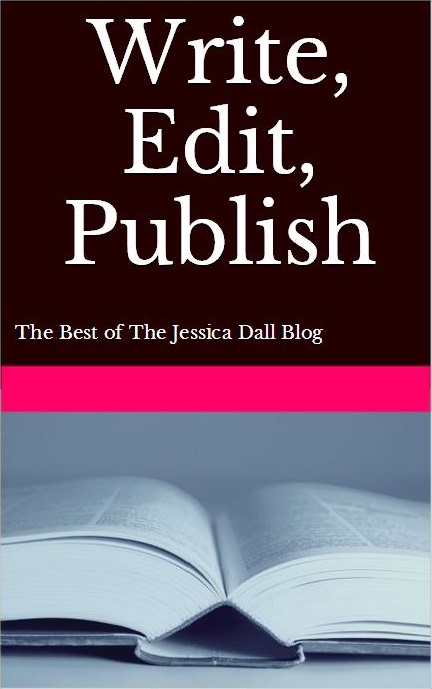
Write, Edit, Publish: The Best of The Jessica Dall Blog

June 17th is here once again, and that means one thing. It’s my birthday. And to celebrate, I have a gift for all you readers out there:

WEP

Write, Edit, Publish includes some of this site’s most popular blog posts compiled into a downloadable eBook, covering everything from staring with a blank page to working on getting a manuscript published.

Download for FREE right here: Write, Edit, Publish [PDF]

Or FREE on Smashwords: Write, Edit, Publish

(Soon available on Amazon and Barnes and Noble)


Write, Edit, Publish articles include:

Section One: Writing

Getting Started

Writing Prompts

Finding Time to Write

Writing through Writer’s Block

Inner Filters

Character Naming

What’s in a Name?

Historical Naming

Who are you, again?

Plotting

From Premise to Plot

“Accidental Plagiarism”

[X] Types of Plot

Characterization

Making Your Characters Believable

Character Flaws

“Plot Device” Disorders

Just a Pretty Face

Dialogue

You Don’t Say

Floating Dialogue

Narrative

Writing Shakespeare

Head Jumping


Section Two: Editing

Editing 101

Plot and Plot Holes

The Ever-Dreaded Plot Holes

A Wizard Did It

That’s Just…Wrong

Language

The Problem with Pronouns

The Unneeded Words

All of a sudden, he was suddenly there

Critique Groups

How to Take a Critique

Crises of Confidence

The Nitty-Gritty

Does Length Matter?

Eh, it’s not my style

“Intensive Purpose”


Section Three: Publishing

Self, Vanity, Traditional Publishing

Shoot the Shaggy Dog

Submissions

How to Get Published

Submissions 101

Wishlists and Trends

Word Counts

Word Limits

Copyrights and Contracts

Contracts

Novel Blogs

Toe Tappin’ Copyrights

Layout

Novel Layout Tips

Historical Naming

Interesting question today: “When writing historical fiction, do you have a hard time coming up with names? Is there a list of when particular personal names were first used? I have written some fiction that is historical and I’m worried the use of a name or names that were unknown in that period might put some people off because of the inaccuracy.

I have written before about how names can be astoundingly important to how both authors and readers respond to characters in stories. It makes complete sense that having a “Neveah” and “McKenzie” wandering around Elizabethan England would be a problem.

Luckily writers have a few resources for looking for “historically accurate” names:

1. BehindtheName.com: One of my favorite sites for finding names in general, behindthename.com (and its sister site surnames.behindthename.com) is a great resource when trying to find appropriate names for historical characters. With popularity lists reaching back to 1880 (with John and Mary topping the charts), you can very easily find names that would suit a story based in the Victorian era forward (it even lists just how popular the names were at the time: 8.15% of boys born were named John and 7.24% of girls named Mary, for example).

behindthename.com

behindthename.com

For earlier names, you have to do a little more digging, but by looking up specific names you can find out about the history of a name, including first origin, famous bearers, and popularity charts (see above). For example, for ‘Mary’ you’ll find:

In England [Mary] has been used since the 12th century, and it has been among the most common feminine names since the 16th century.

For a name like ‘Jessica’, however, you’ll find:

This name was first used in this form by Shakespeare in his play ‘The Merchant of Venice’ (1596), where it belongs to the daughter of Shylock … It was not commonly used as a given name until the middle of the 20th century.

So where you would be more than safe naming a character “Mary” in the middle of the War of the Roses, “Jessica” is probably better suited for a character born in the 1980s or 1990s (#1 or #2 for most popular name from 1981 – 1997).

2. Historical Figures: If you are writing historical fiction you have most likely (hopefully) done some research into the time period. While doing that sort of reading, you have likely come across people who were important to the time period. For example, following the Elizabethan/Tudor example, you might see Henry VIII, Elizabeth I, Mary I, Edward VI, Katherine Parr, Catherine of Aragon, Anne Boleyn, Jane Seymour, William Shakespeare, Thomas Moore, Walter Raleigh…and the list goes on and on and on. It is therefore reasonable to assume that you are “time period appropriate” using any of those given names in the time period.

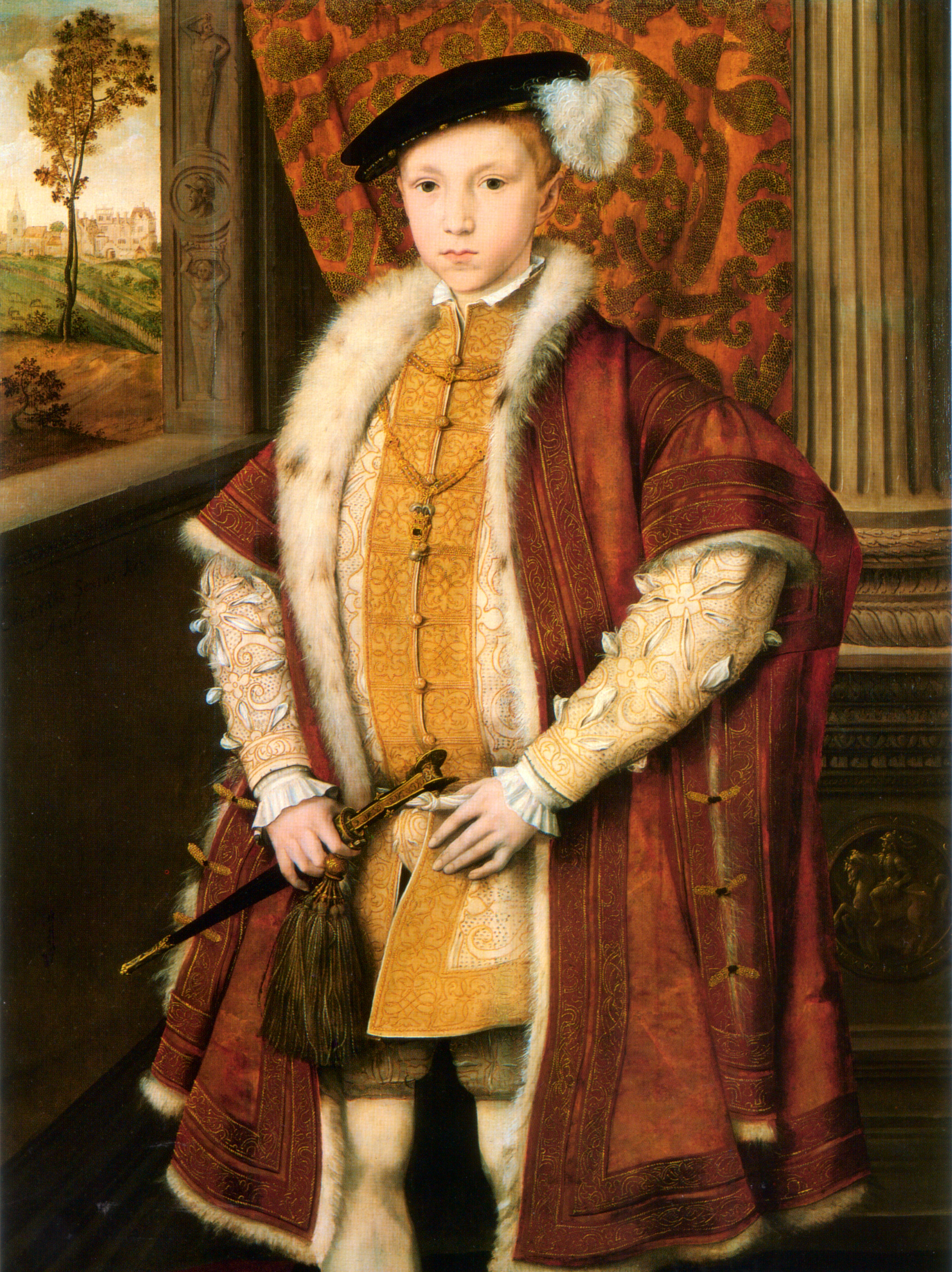
Edward VI--meaning there had already been six other kings with his name by the 1500s.

Edward VI–meaning there had already been five other kings with his name by the 1500s.

If you are interested in genealogy/have done any family research, it is also possible to use your own family tree for inspiration. If you have an ancestor named “Samuel” who fought in the Civil War, you’re likely safe making your 1860’s character’s name ‘Samuel’.

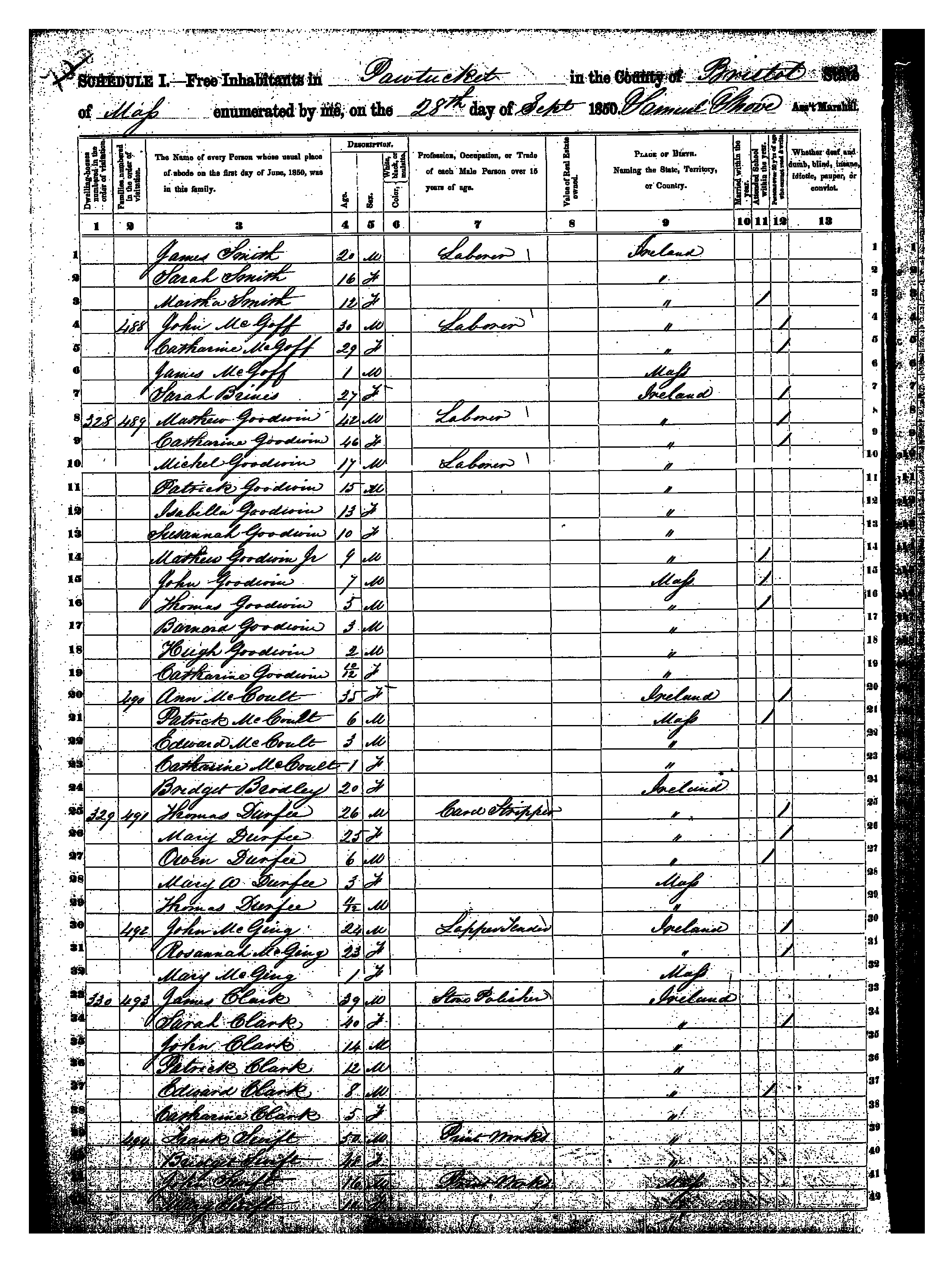
3. Historical Records: Assuming you are writing about a time period that includes a written language/has some “primary source” documents surviving, you are likely to be able to find names off censuses/tax rolls/etc. The more “modern” the time period, the simpler it will be to find these sorts of records (for example, the U.S. Census Bureau released the 1940 Census records in 2012 for interested parties), but it is possible to find things like the 1319 London Subsidy Roll online which will provide you with names such as Johannes (“John”) and Thomas which were both highly popular in London at the time.

1850s Census with names galore (assuming you can read cursive)

1850s Census with names galore (assuming you can read cursive)

(Note: Sources I have easily found online do tend to be highly euro-centric, but as long as you are writing about a “record-keeping” society you should be able to find something [i.e. it will be easier to find records from England or China than it will from nomadic groups]).

4. Figure out naming conventions: This is another one your previous research will aid in, but if you are looking for names on Behind the Name (or another similar site) this should help point you in the right direction. It’s just about following trends. For example, naming oneself after royalty/the ruling class has always been popular, thus you will find more children born after the Norman Conquest with French-based names (from watching how many King Henrys and Charleses there are in both England and France early on, you can see the name bleed-over). Similarly, Puritans were big fans of “virtue” names (Charity, Mercy, Remembrance…) by picking a virtue name for your fictional character on the Mayflower, your name will fit in without “copying” a famous name.

(Note: It is also important to pay attention to naming conventions when it comes to things such as surnames and name order. Would your characters have patronymic names (Greta Hansdatter, James FitzJames, Phillip son of Coul) a geographic indicator (Joan of Arc, Leonardo da Vinci), their family name first (as it common in many Asian countries), or no second name at all? Those details help with the authenticity of your characters).

As with everything else in historical fiction, research is your friend. As long as you know the time period you’re using, you shouldn’t have a problem coming up with names.

————————————————————

Want to carry this and other posts with you wherever you go? Download Write, Edit, Publish for free today.

-isms and Society

*Trigger Warning: Isla Vista shootings/gender-based violence touched on below.*

Relatively often, I have been asked if some of my characters are meant as “feminist heroes” The first few times I heard it, I entirely admit I was caught off guard. Certainly not because there is anything wrong with someone wanting to classify them as so, but because I simply had never really considered it. As a character-driven writer, I tend to focus more on the characters as people than as any sort of statement. My female characters included. Looking over things after the fact, some would strongly identify as feminists. Some wouldn’t think about it. Some live in worlds where ‘feminism’ as a term would just confuse them. Much like I don’t think of someone as “The Black Character” or “The Christian Character” women in my story are people first, their sex/race/creed second. They can be strong, smart, dumb, passive just like any other person in real life. Their background and opportunities change based on who they are and where they live, but they are none of them are meant to be political statements over actual people.

That said, gender relations do play a large part in many of my stories. Whether it is a major theme or not, characters experience things as their society trains them to, and that can be both a mix of privilege and detriment. For the women of the historically based Broken Line series, this pops up quite a bit–they are upper class, generally wealthy (and thus taught that they are better than those who socially rank lower) but they are also women, and that governs what society allows them to do. Some find this yoke more confining than others (raging like Beatrice in Much Ado About Nothing, “O God, that I were a man! I would eat his heart in the marketplace”); some find ways to use this double standard to their advantage (like Adela‘s, “Men often underestimate a woman with a pretty face”); but all are products of their society.

For the most part, I do my best to stay away from current events/politics in this blog–it is a writing blog, after all, not meant as my personal soapbox. With the events last Friday around UCSB setting me along this train of thought, however, I would beg reader’s indulgence for today. For those who, for one reason or another, haven’t heard, over the weekend a 22 year old named Elliot Rodger participated in a drive-by shooting leaving himself and six others dead by the end of it. On the way to this shooting (which he termed “retribution” in a posted Youtube video) he also emailed a 141-page autobiography/manifesto outlining his life and reasons for doing what he was going to. The document, in its entirety, now posted online, I spent a good part of last night reading it. Why? Primarily morbid curiosity, I have to admit. As a writer, I have always been interested in how others’ minds work–even severely damaged ones–and while I have not yet gotten to the worst of the ravings most have understandably reported (he spends a large amount of time recounting his “joyful” childhood before slowly devolving toward the racism and misogyny on which the papers have focused) it is a fascinating, if awful and tragic, head to peer into.

After reading what I have, would I say Rodger had mental problems? Obviously. I don’t think anyone truly has to read any of his manifesto to conclude that. Mentally sound people don’t generally decide to shoot complete strangers before taking their own life. What is fascinating, however, is to see everything that came together to this tragedy. Was he disturbed? Obviously. Is he an unreliable narrator? Of course. But you start getting a much deeper insight into his psyche than the news stories report. Was it mental illness? Misogyny? Racism? Honestly, it was a little bit of everything.

From an early age, Rodger reported himself being a ‘jealous’ person. Friends wanting to play with other children, other’s getting positive attention–especially attention he felt he deserved–set him off. This “innate” jealousy and sense of entitlement (be it narcissism or another disorder, I don’t pretend to have the credentials to say) slowly began to morph as he got older. Craving attention, Rodger began copying “the cool kids” trying to be one, picking up hobbies he didn’t care for and dropping ones he liked to try to stay with the trend. As he reached middle school, the “cool” thing was to “be popular with girls”. A late bloomer, Rodger claims to have had no interest in girls yet, in fact claiming the idea of sex was repulsive to him (whether this is the truth or a later manifestation of his anger around the idea, I can’t say). Still, he wanted to be popular, and so he wanted to be popular with girls too (his own words stating that men who could “acquire” girls easily were more respected). Combined with what seems to be an anxiety disorder and discomfort with talking to women in any capacity, he found that “girls” was not a hobby he could simply pick up like skateboarding or Pokemon. From there, it seems to have become a perfect storm. The longer he went without a girl he “deserved” the angrier he got. The angrier he got, the more awkward he became around women, to the point where he fully admits to never approaching women other than to yell at them about speaking to men he found “less worthy” rather than him. Amazingly enough, this did not do much to get him a girlfriend. Still, he entirely shifted the blame for his depression, loneliness, and anger to women for not throwing themselves at him rather than considering it something he could likely fix if he just went up to some people at a party and started talking to women like human beings.

So, was it mental illness? As I’ve said before, yes. Narcissism. Anxiety. Chronic Depression. Some spectrum of Autism. I will leave the official diagnosis up to his former therapists, but there was very obviously something wrong. It would be remiss, however, in my own personal opinion, to discount these actions simply as one disturbed boy rather than one disturbed boy who grew up learning that he deserved a girlfriend (a “hot blonde” girlfriend at that) simply because he wanted one. Grew up learning that women, specifically pretty women, are a status symbol. Is society responsible for the entirety of Rodger’s actions? Of course not. Is it others’ (men or women) fault that he went to this extreme? I don’t believe so. No one gave him the gun and told him to start shooting. No one gave him mental issues. Is there a problem somewhere deep in society that he could get these ideas in the first place and find people online who agreed that “b*tches had it coming”? There, I have to say, is a resounding yes.

I will be the first to admit I do not have a “fix all” solution. All manner of inequality are a deep hurt that run centuries back. Some people were elevated, some oppressed, perhaps simply rising from the fact that there are limited resources on the planet. For the most part, things are slowly heading for progress. I was never made to feel inferior for being a girl in my group of friends and family growing up. I was able to pursue a college education. I was never sexually assaulted while attending said college (though probably being six feet tall in my stocking feet was a bit of a deterrent there as well). I know many people, men and women, who go about their lives as respectful, good people. I have also been harassed on the street. Have friends who are survivors of rape or attempted rape. Know better than to go to some clubs without a man in the group to “stay safe”/ward of men who think simply being in a club gives them the right to grab women who don’t wish them to. And that’s not okay. Society is changing/has changed and for that I am grateful. Grateful for all the wonderful men and women I have met throughout my life. Writing examples like this off as “just a damaged guy” however, just because it is unpleasant to consider what wounds the past has still left on society, is counterproductive.

Characters are a product of their society. We are a product of ours. Good. Bad. Somewhere in between. It affects us, and ignoring that doesn’t help anyone. Both in fiction and in life you sometimes have to face the unpleasant truths for anything to get better.

Mental Health Blog Day

I'm Blogging for Mental Health.

Once again, it is American Psychological Association’s Mental Health Blog Day. Before, I talked about the use of mental disorders in fiction (something that can both be done very, very well and very, very poorly); today I’ll be talking about mental disorders on the other side of the keyboard (or typewriter, or pen).

In a statistic that probably shouldn’t surprise anyone, those who work in creative fields have some of the highest rates of mental illness in the general population. As this article puts it, “People in creative professions are treated more often for mental illness than the general population, especially writers, according to researchers at Karolinska Institute” (emphasis mine). They go on to state, “Like their previous study, [Karolinska Insitute] found that bipolar disorder is more prevalent in the entire group of people with artistic or scientific professions, such as dancers, researchers, photographers and authors. Authors specifically also were more common among most of the other psychiatric diseases (including schizophrenia, depression, anxiety syndrome and substance abuse) and were almost 50 per cent more likely to commit suicide than the general population.

As an author myself (obviously) I can fully understand how being a little crazy is helpful when it comes to writing (especially when there are mental links between things like bipolar and hypergraphia–the compulsive need to write). Unfortunately, however, mental illness is not a golden ticket to being a great author. While I am hardly an expert in all mental disorders, between my own personal experiences and what I have heard from other authors, depression can really put a kink into your writing.

With symptoms including:

  • Loss of interest or pleasure in normal activities
  • Tiredness and lack of energy, so that even small tasks take extra effort
  • Anxiety, agitation or restlessness — for example, excessive worrying, pacing, hand-wringing or an inability to sit still
  • Slowed thinking, speaking or body movements
  • Feelings of worthlessness or guilt, fixating on past failures or blaming yourself for things that are not your responsibility
  • Trouble thinking, concentrating, making decisions and remembering things

just to name a few, even the most prolific writers might find themselves not wanting to touch their work in progress. So what should you do if you find yourself in something a little bit more than a slump?

1. Only write what is cathartic. Sometimes you need something light to ignore what you’re feeling. Sometimes you need something dark to get all those awful feelings out. If whatever you’re writing only makes you feel worse, stop. Energy/Motivation is hard to come by when depressed. Save it for something that helps you.

2. Find support systems. Friends, family, writing groups, online forums…it doesn’t matter. If you need someone to talk to, find someone who will listen. While I’m sure there are plenty of groups out there, if you find yourself needing writing support specifically where it comes to keeping yourself going, the NaNoWriMo forums have always been nothing but supportive for those asking for help–personal or professional.

3. Don’t hold yourself to any standards. One of the crappiest parts about depression is that little voice that tells you that nothing about what you’re doing (or even about yourself) is worthwhile. I’m willing to bet every author goes through periods where they think they’re an awful writer. It’s only worse when your mind is working against you to say you should give up. If you want to write, give yourself permission to suck. Don’t think about anything else you’ve written. Don’t read anything back. Just write whatever you feel like writing. It might end up being good, it might not. It doesn’t matter if it lets you write.

4. Figure out if schedules work for you. Sometimes a set routine will be motivation. Sometimes it will just make you feel worse that you can’t bring yourself to write. If it works for you, set one. If it doesn’t, don’t tell yourself you should be writing. You’ll only succeed in making yourself feel worse.

5. Know it will get better. Clinical depression can last for a week or you can struggle with it for years. The good news is, however, I have never met anyone who hasn’t had things get better at some point. Perhaps you’ll simply come out of it, perhaps you need antidepressants or a therapist, however it happens, you won’t feel like crap for the rest of your life. At some point things will begin to feel a little better and–if you haven’t been able to get yourself to write–you will start writing like you used to. It’s just about getting through the worst until you get to that point. Because, as long as you don’t give up, I promise you will.


Note: If you find yourself  contemplating suicide or otherwise harming yourself, please reach out to friends, family, your therapist, or the suicide hotline:  “No matter what problems you are dealing with, we want to help you find a reason to keep living. By calling 1-800-273-TALK (8255) you’ll be connected to a skilled, trained counselor at a crisis center in your area, anytime 24/7.” http://www.suicidepreventionlifeline.org