Author Interview – Gillian Felix

Today’s post comes to us from Gillian Felix, author of (Family Portrait) Changes, as a stop on her blog tour this month. Find out more about her on her website here, or follow her on Facebook or Twitter

Tour-banner-Vol-1

—————————————————————————————————

What first made you want to be a writer?

I have always written. As a kid creative writing was one of my favorite subjects. I got my highest marks in that subject. Growing up I was told you have to “get a real job”. I’ve had ‘real’ jobs and it always brought me back to writing. I worked at a television studio writing Prime time news, it was fun at first but then it got depressing. I tried to put a positive spin on the stories but that’s not what ‘news’ is about.

Tell us about (Family Portrait) Changes:

Family Portrait is the series title, it seemed fitting because the series is about family and their relationships. Under all the drama and mayhem at the end of the day it’s about family. Changes (the first novel in the series) is the pilot episode of the television series which the book was originally. Changes introduces the characters and shows how they are all connected through major changes in their lives.

Adriana Banovic is a 15-year-old soap starlet and only knows that life, when she is fired, she is forced to adjust to life as a regular person.

Leighann DaCosta, also 15, achieved rock star stardom from the age of 10, after a whirl wind career she walks away in favor of a normal life leaving everyone who depends on her in turmoil.

Robin Banovic, Adriana’s dad is forced to sell his business plus he is dealing with the death of his father and the regret he feels for treating his father badly in the past.

What made you want to write this book?

These characters have played around in my mind for a long time. It was a television pilot I had written, it got interest from Hollywood but nothing came of it. So I decided why not transform all 24 plus episodes into books? Maybe it’ll find an audience.

Is being a writer anything like you imagined it would be?

I didn’t have any expectations, it’s something I do and I love doing. I love the business aspect of it as well.

What do you think makes a good story?

In my opinion good solid characters in challenging situations makes a good story, they don’t have to be likable just entertaining, with some sort of humanness about them.

What’s your favorite genre to read?

I don’t have a favorite genre. I’ll read anything that catches my attention within the first 20 pages.

Is there anything you find particularly challenging in your writing?

Sometimes describing a place, I’d love to be able to make readers see the place as clearly as I do in my mind, that detailing I have no patience for but I am working on it. Writing emotionally is easy so I can take the audience there emotionally with the characters because I hear their voices so clearly.

Is there anything you find particularly challenging in regards to publishing?

Marketing— Marketing is very tricky, I am learning and have learned a lot. It’s fun most of the time. I have a great mentor who has sold millions of books.

 What are you planning for future projects?

I am working on Book 2 (The Banovic Siblings) which combines pieces of several episodes so it will be longer than the first. I also have another script called You Sang To Me, which is a romance script that I will be transferring to a novel at some point. That too had had interest from Hollywood but again nothing came of it.

Do you have any advice for other writers?

If you want to write then write, be true to your characters, don’t rush. If you decide to [self] publish, get a good editor it is worth it.

 Anything else to add?

It has been a pleasure and thank you for having me.

——————————————————————————————————-
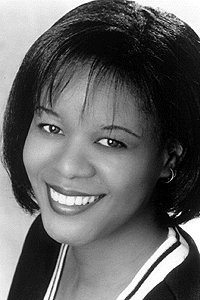
Gillian FelixGillian Felix has been writing since she was old enough to hold a pencil. She enjoys creating characters that could be your next-door neighbor, but if you would want them as your neighbor is another story.

Originally from the island of Trinidad and Tobago, Miss Felix moved to the United States in 1998. Since then she has been involved in the entertainment industry for over fifteen years. Her experience ranges from script supervisor to production manager on many independent features. She is trained in the Meisner and Stanislavski technique of acting, which she credits as an asset to her character development and writing.

You can find her on Facebook at facebook.com/FamilyPortraitNovels or on Twitter @gillianfx

Novel Layout Tips

News Alert: I am happy to announce that my third novel, The Copper Witch, has officially signed with 5 Prince Publishing for release this coming spring. Updates will continue as release draws closer. So for now, a post about publishing:

—————————————————————————————–

I will be the first to admit that I am not generally a layout person. I do have some experience with it, and now have software that would let me do it pretty simply, but I’m generally an editor, not a designer.

Now, we all have our specialties, it’s to be expected. Being a good editor doesn’t necessarily mean you’re a good writer, and being a good writer definitely doesn’t mean that you’re good at graphic design. As more and more people go the self-publishing route, however, it’s falling on authors to do their own formatting (at least if they aren’t going to pay for someone else to do it, which is sometimes advisable). As an editor, a lot of my work comes from people planning to self publish. I’m sure there are likewise freelance designers out there to hire to get a book up to professional quality without the help of a publisher and their in-house designers. If you’ve decided to strike out on your own, please keep a few things in mind that even I, with my limited layout experience find annoying in self-published novels (my reviewer self will thank you).

1. Indents and margins. Luckily for self layer-outers, the combination of publishing platform uploaders and many word processing programs saving to PDF make it simpler than ever to turn a manuscript written in Microsoft Word (or the like) into book format. It’s important to realize, though, that traditional manuscript format (8.5″x11″ pages, double spaced, 1″ margins, 0.5″ indents, 12 point Times New Roman font) does not magically become book format just by changing the page size. Most people realize without being told that books aren’t often double spaced, but what people seem to often miss is that indents and margins that seem normal on a 8.5″x11″ page suddenly are giant when something’s 6″x9″. One of the simplest ways of pointing out a book is self-published (or published by people who aren’t used to doing layout) is by looking at the formatting. Indents of 0.5″ rather than 0.3″ make it seem like someone shrunk Word pages rather than formatted a book. Likewise, margins should be made smaller on a 6″x9″ page. Just think about it. 1″ margins on each side of an 8.5″x11″ paper leaves you with 6.5″ of writing space across. On a 6″x9″ page, that’s only 4″. Everything should shrink in proportion.

2. Chapters start on new pages. When writing in manuscript format, it doesn’t always matter if you do a page break or not at the start of a new chapter. In book format, however, each chapter should be on its own page. This can be done simply by just inserting a page break in the document you are using, or you can be a little fancier and have a chapter start slightly down the page from normal. If doing the second, make sure that you use the ruler function on the side of a Word document so all the chapter headings line up on the same part of the page.

3. Scene breaks. When typing in manuscript format, you generally are expected to use some set of markings between scenes (most commonly it is either *** or #). These marks (especially the hash mark) arose as a way to tell typesetters there should be an empty line there as a scene break. While most books just use a “hard break” (an empty line before the next paragraph) for a scene break, using a hard break in a manuscript would make it possible for a typesetter to miss a scene break should it be pushed to the bottom or top of the page. When laying out your own book, however, this shouldn’t be an issue. Get rid of these “scene break” marks for a more professional look.

4. Font choice. Some typesetters have a strong dislike of Times New Roman (feel it looks amateurish) but for someone who isn’t a designers, I truly have no problem with it. The larger point is to use a “professional” font that is serif. After that, Times New Roman, Georgia, or Garamond–I at least couldn’t tell you the difference.

5. Text alignment. While typing in manuscript format, left text-alignment  is generally the best so you don’t have any strange gaps between words while writing. When laying out as a book, however, justified is the gold standard. If you look in most published books, text is justified to give it a more formal, professional look. Doing so with your own book will lend your layout more credibility.

There are a million other little things that a professional typesetter would be able to tell you about layout that I’m sure I’m missing, but if you take care of these five things, I likely wouldn’t notice it–which at least gives your book a leg up when it comes to first impressions.

—————————————————————————————-

Want to carry this and other posts with you wherever you go? Download Write, Edit, Publish for free today.

Guest Post – Marianne Sciucco: Book Signing 101

Today’s post comes to us from Marianne Sciucco, author of Blue Hydrangeasreleased earlier this year. Find out more about her below or follow her onFacebook or Twitter.

To see my author interview on The Kelworth Files up today click here.

————————————————————————————————

Book junkies everywhere know the thrill that comes when a beloved book is signed by its author, especially when the author signs it just for them.  The only thrill sweeter is when you are the author signing the book for a grateful reader.  Even in this world of e-publishing and e-commerce, when readers and authors can develop relationships online without ever meeting, the book signing event is alive and well.  Selling books hand to hand is time-consuming and slow, admittedly, but to interact with a reader face to face is priceless.

I recently published my first novel, Blue Hydrangeas, in paperback on September 11.  A week later, I was the featured author at a Harvest Festival at the Bethel Woods Center for the Arts in Bethel, New York.  This venue stands on the site of the original Woodstock concert in 1969, and many consider it hallowed ground.  Thousands of people – locals, leaf peepers, and city folk – attend the Harvest Festivals.  I’d like to share with you what I learned from my first book signing ever.

How did a newbie author with few sales and little following procure such a plum selling spot?  Simple – I asked.  I knew the event, held every Sunday in September, sponsored a local author.  Weeks before, I sent an email to the organizer and told her a little about myself and the book, and next thing I knew I was on their schedule.  They provided me with a space in their craft tent where I worked elbow to elbow with jewelry makers, wood carvers, weavers, candle makers, and other artisans.  They also provided publicity about my book signing.  I saw it on their web site, in my local newspaper, and had people tell me they learned about my book on the radio and on the internet.  The advance notice went way beyond my expectations.  I had posted on my social media – facebook and Twitter – but their outreach had eclipsed mine, and brought in the crowd.  Lesson 1: Know who puts on such events in your community and ask to be included.  Many venues and events are looking for local authors.  Most will include you in their advertising.

As expected, the festival had a huge attendance and traffic in the craft tent was heavy and steady.  My husband, Lou, had accompanied me for moral support and help setting up my display table.  I had put together an assortment of items to help promote my book.  I framed an 8 x 10 photo of the book cover, bought a lovely framed print that read, “A true love story never ends,” gathered some blue hydrangeas in a Nantucket lightship basket, and, of course, placed a stack of books in the center of it all with a sign that read, “Meet the Author Today.”  I also had, on one end, information about the upcoming Alzheimer’s walk, and, on the other end, information about the Alzheimer’s Prevention Initiative, the recipient of a portion of my book’s profits.  Scattered across the table were Hershey’s Dark Kisses, because experts say dark chocolate may ward off dementia.  It soon became apparent the table was cluttered and confusing, so we began to pare away the items that didn’t help my cause, which was to attract attention and readers for my book.  Lesson 2: Don’t try to accomplish too much.  Although my intentions were worthy, I needed to keep the focus on my book.  Once people realized I was an author with a book for sale they were able to either move on or engage with me, and not waste either of our time.  Of course, the chocolate remained.

Which brings us to Lesson 3: Engage your audience.  I know this is a hard thing for most people, especially authors who often work alone, but this is not a time to be shy.  People will not flock to your book table just because you’re there.  You need to reach out to them and entice them to come see what you have to offer.  I simply said, “Hi, I’m Marianne, the featured author today,” and those who were not readers or didn’t care for books simply smiled and walked by or ignored me.  The book people in the crowd were quick to come over, because book people love other book people and are always looking for something good to read.  This gave me the opportunity to pitch my book and draw them in.  For the first time, I had the opportunity to gauge the public’s reaction to my work.

Blue Hydrangeas is an Alzheimer’s love story, the tale of a pair of retired Cape Cod innkeepers struggling with the disease.  Alzheimer’s is a tender subject and touches so many lives.  Some people cried just talking about it, such as the woman who recounted the story of her good friend and the husband who cared for her with love and patience until the last day.  Then there was the woman who lost her dad to Alzheimer’s last year and had to walk away because the pain was still so raw she could not speak of it without choking up.  Others were curious about the book and didn’t hesitate to buy a copy, including the woman who lost her father years ago, yet still reads everything she can about Alzheimer’s to further understand what happened to him and what may happen to her and other family members she loves.  I was not sure if those who currently live with the disease would be interested in my story, but was surprised to sell a few copies to current caregivers.

The majority of my customers were middleaged women, avid readers, with a personal interest in either the disease or a good love story.  Some bought the book as a gift for someone they knew living with the disease.  I had the good fortune to sell a copy to a local newspaper columnist and his nurse wife, and an English teacher from my daughter’s high school that had lost his mother to Alzheimer’s a few years ago.  Lesson 4:  Don’t prejudge a possible book buyer.  We never know what passions or interests another person carries.  The little old lady with the tight perm might be hot for steamy romances while the jock may have a soft spot for sensitive love stories.  To prejudge is to lose a possible sale.

Finally, Lesson 5, the most uncomfortable to learn: If it’s an outdoor venue, pay attention to and heed the weather report.  This day was cold, cloudy, and blustery, just as the weatherman had predicted, but did we listen?  No, Lou and I were under dressed for the weather, and it was tough to keep smiling.  This in itself became a topic for conversation, an icebreaker of sorts that helped keep us busy talking about the book and making sales.

At the day’s end, we had sold and I had signed fourteen books.  I hear that’s a good amount, but, even if not, I consider the day a success.  I met many people.  I told them about my book.  I perfected my pitch.  I learned what to bring to a book-signing event.  I made my first sale, ever.  Best lesson: I experienced one of the perks of being an author.

Other suggestions for a successful book signing:

  • Make sure the venue offers shelter (a tent, indoors), a table and chairs.  If not, bring your own.
  • Take along a small cooler with snacks, drinks, and a meal.
  • Stay hydrated.  You will talk a lot and your throat will become dry.
  • Keep plenty of singles on hand to make change.  If possible, arrange to take credit cards.
  • If you’re outdoors in sunshine, wear a hat and use sunscreen.
  • Provide cards or bookmarks with information on how to buy your book for those who are not able to purchase that day.
  • Listen to your customers whether they buy or not.  They may remember you cared and buy the book next week.
  • Never get discouraged.  One single sale is more than you had before the event.

———————————————————————————————–

Marianne

Marianne Sciucco is not a nurse who writes but a writer who happens to be a nurse, using her skills and experience to create stories that bear witness to the humanity in all of us.  A graduate of the University of Massachusetts at Boston and Regents College, she lives, works, and writes in New York’s Hudson Valley.

Find her book, Blue Hydrangeas, here, or find out more about her at her blogs, http://www.mariannesciucco.blogspot.comhttp://www.MyTOSLife.blogspot.com, or http://www.the-reading-writer.blogspot.com. She can be followed on Facebook at facebook.com/marianne.sciucco.1 and on Twitter @MarianneSciucco.

Backup!

Recently my good friend lost her flash drive. Not fun for anyone, but enough to strike fear through the heart of any writer (or anyone, really) who basically lives off their drive like I do. People who follow me on Twitter may have heard my complaining about losing 3,000 words during Camp NaNoWriMo this July from a faulty flash drive. About a year and a half ago, my entire laptop was wiped after going through an x-ray at the airport (rare, but it happens). As I, like many writers, keep most of my writing on my electronic devices (along with songs, pictures, and basically my entire life) my flash drive getting lost, or my computer being lost, wiped, or stolen would be a huge blow both personally and professionally (writing up a novel is not a quick process, if just because they are so long).

So, beyond the general advice of BACK YOUR WORK UP, here are some suggestions on how to do so:

1. External Hard Drive

This is what saved me when my computer was wiped going through the airport. External hard drives are getting cheaper and cheaper (you can get over a terabyte of storage for less than I paid for my old whatever-gig drive) and they allow you to basically store everything you have on your laptop on something that will more than likely not be brought somewhere it will be damaged. Since I had run “Time Machine” on my Mac, I was able to go back to my last back up and put everything back on my laptop that I had lost (all right, I had been bad and not backed up for a few months, but I was able to get most of it back. And what I didn’t have on that hard drive…)

2. Flash drives

Though if I had been good and backed up my hard drive more frequently (or if I had a hard drive that backed up wirelessly like some of those fancy new external hard drives do) I likely wouldn’t have lost anything. But no, I have to go all the way upstairs and plug all these cords in for mine, so I am not quite as good about that as I should be. Luckily flash drives are pocket-sized and easy to carry around in your purse (or even around your wrist if you get this nifty flash drive bracelet the NaNoWriMo Stores sells) and so I’m much more likely to keep my computer and flash drive current with five million copies of different documents. Since flash drives are so much easier to lose (and generally can’t hold your entire computer’s system on them) I wouldn’t recommend only relying on a flash drive in case of a broken/missing/stolen computer, but it is always good to know I have generally recent copies of my stories with me in case something should happen and everything in my house become victims of a localized EMP one day while I’m out and about). Since flash drives are getting to be SO cheap, I actually have one large flash drive that stays at home as back up, and then a smaller one that stays in my purse (not counting the offending broken flash drive mentioned above).

Added bonus: Carrying a flash drive with me also means I’m able to work on any computer I happen to be near without having to save things/download anything onto that CPU.

3. Google Drive/Dropbox/Cloud Storage

As added security–and a way to protect yourself from losing your work even if you should lose your flash drive, have your computer break, and have your external hard drive fry on the same day–there are plenty of “cloud storage” programs you are able to upload your documents to for free these days. The two I am most familiar with happen to be Google Drive (formerly Google Docs) and Dropbox, but I’m sure there are plenty of others for those who don’t want to use either. Though there are limits on how much you can store for free on some, the good news is that Word Docs/other word processing files tend not to be very large, which means if you are using cloud storage mainly to protect your writing, you’re generally in good shape. If you have your work on some program for cloud storage, you are protected by whatever back ups the company has for their massive systems, which means you won’t lose your work for anything short of a catastrophic melt down in [insert town cloud storage tech giant is based in; probably in Nor Cal].

4. Email attachments

For those who don’t want to deal with taking the few minutes it might take to figure out a cloud storage system, you also have the option of emailing your work to yourself as an attachment. Should all your other back ups fail, you will then be able to find those emails and download the attachments that, again, will be protected by your email-providers servers rather than anything you have to take care of. The main downside of this method is that you will have to constantly send new drafts to yourself and wade through them if something happens rather than saving over them as you might in cloud storage (though it isn’t necessarily a bad idea to have old drafts of your work as well in case you change something and ever want to grab a deleted scene again).

Tip: If you don’t want to clutter up your personal email, make a dedicated email for your backed up work–a bulk of email accounts are free to make/maintain these days.

5. Other computers

Much like the idea of an external hard drive, if you have multiple computers in your home (a laptop and a desktop, for example), consider saving your work to both. Is it overkill if you have any or all of the above back up methods already?Perhaps. But can you ever really be too careful? No. Who knows, maybe Dropbox will be hacked, my laptop will die, my hard drive will have burned in a freak electrical fire, and my flash drives will be stolen all on the same day… (Hey, just because I’m paranoid doesn’t means it won’t happen… *shifty eyes* (ok, it probably won’t)).

6. Paper

Perhaps not as eco-friendly, but there’s still something to be said about having a paper copy of your work hanging around somewhere. Often times I like to write longhand for a first draft. While this means I go through pens and notebooks like no one’s business, it means I always at least have some record of what I have written in the event of a complete electronic apocalypse. Sure, I would have to type it all up once again, but at least I would have the basic stories there. The environmentalist in me still has a hard time printing out the hundreds of pages after I’ve finished typing things up, many people actually find it easier to edit when looking at a paper copy of their manuscript than while on a computer screen. If you print things out to edit, just keep them somewhere once you’re done. Even redlined, having a paper copy of your work is a good last resort should everything else disappear.

Hate Storms and Self-Publishing

(Note: Having written this post a few days ago, I have spent a fair deal of time debating whether or not this should be posted as I do not especially like the idea of spreading things that end up quite so hateful and dramatic through this blog. As this situation has showcased an important point about self-publishing, however, I have decided to hit “publish”. Should anyone have any comments, I only ask you attempt to remain respectful. Unnecessarily rude comments will be deleted).

Last week, a blog post for a woman named Quin Woodward Pu went viral detailing her response to what otherwise seemed like a pretty benign “I’m not feeling it” text message. While I do personally agree with the bulk of commentators that her text back to this unnamed man seems, well, crazy, one thing got me thinking. In passing in Pu’s text she mentions that she is “a 25 year old with two published books and a condo” as evidence for why she won’t be affected by him not being interested (I think?) With that detail out there, it didn’t take long for one commentator (what can I say, I sometimes like reading angry responses to things on the internet, it’s a guilty pleasure)  to find her book on Amazon and bring it into the hate storm as fair game.

As of me typing this blog post, both books have been brought down to below two stars based on an influx of one-star reviews that, more likely than not, are tied to her blog post (some directly mention the blog post in the reviews). Now, I never support writing mean reviews for books that are focused on the author rather than the book itself (just recently Goodreads cracked down on reviewers after an author pulled the release of her book from being attacked with one-star reviews before anyone could even read her book because of asking what people thought was a “stupid” question on a site forum) but the ones who read either the book or the free excerpt on amazon and thought the writing was bad quickly pointed out something else–both of Pu’s books are self-published (Amazon lists the publishers of books on their listings and “Createspace” [Amazon’s self-publishing platform] is the one listed for Pu).

Now, there are several very good self-published books out there. For authors who want to maintain complete control over their books, or are just sick and tired of the traditional publishing model, it’s a great option. But while the self-publishing stigma is slowly starting to dissipate as more authors start putting out quality books through such outlets, the reaction to Pu’s books shows that stigma is far from gone.

The problem, you see, is that by passing the power to publish from publishers to authors, you lose the gatekeepers (and the support systems) publishing was once use to. In some ways this is good. As I’ve stated before, publishers buy books they think will sell. If they don’t think a great book will come off the shelf, they will pass on it. Self-publishing allows a great book to attempt standing on its own merit. It does mean, however, that anyone can put out anything in any state. The people employed to find good stories and writing (acquisitions editors, slush pile readers, [and to be honest] publishing interns) aren’t controlling the publishing platform anymore. If someone wants to publish a book that is barely legible from typos and entirely nonsensical, they can put it out there and point to being a “published author”. Without the support system publishers offer as well (content editors, copy editors, cover designers, etc.) it is entirely on the author to make sure they are turning out a professional product (either by being multi-talented artists who can also do graphic design or putting up the money to hire freelancers/editing firms before going to print). And the fact is, many self-published authors just don’t take the time to do so.

I did read the free sample of one of Pu’s books before writing this post, and did I, personally, think that sample at least shows good writing? Not especially. Even the first few pages have typos that should have been picked up and as an editor I would have had several notes for her to work on before going to press. Do some of the people who have taken the time to read a bit–rather than simply attacking her as a person–truly believe that that’s what the book deserves for a rating? Very possibly (unless the book gets much better further on, I’m not sure it would have gotten much better marks from me). Does she deserve her books ending up in the hate storm that’s becoming attached to her name? That’s where it gets difficult.

Like I said before, I never support rating a book that’s available off an author’s personal life/their beliefs/anything that isn’t the book’s own merit. It is a nasty thing to do, period. With Pu’s seemingly self-important attitude about being “published” as a talking point, though, it nearly seems as though she purposefully threw the books into the line of fire.

Who knows? There’s the old adage about any publicity being good publicity. Perhaps people will start buying her books just to see/to hate read them, in which case, good for her, royalties are going to go through the roof. Personally, I think what this example really says, though, is that one needs to be careful when self-publishing. Using a platform like Createspace or Lulu shouldn’t be a mark of shame on any author, but when you’re bypassing the gatekeeping method so long used in publishing for your own path, you are opening yourself up to the full brunt of critiques to your book. There is no “idiot publisher” people will point to whose fault it is for letting a bad book out in such a state. It automatically becomes some “idiot author” who thinks “they’re good enough to sully the name of books” with their opus. Your book suddenly has to carry the entire weight of proof that it is a good book. Otherwise, it’s simple for the great internet droves to dismiss as some nobody who just wants to see their name on a cover without being a “real” author.

And so, if there’s anything to take away from all of this as an author (other than don’t post inflammatory things on the internet without purposefully hoping to get a stir) it is to be thorough when planning to self-publish. As your own publisher, it’s up to you to make sure that your work is the best it can be before being sent off into the world. Nobody else is going to. Hire an editor (hopefully a good one) if you can. Get tons and tons of beta readers and an English teacher to copy-edit (at the least) if you can’t. You are taking a road to publishing that has its benefits, but also many, many pitfalls to watch for. Don’t make it easy for people to dismiss you with a pat on the head.

As to people attacking you as a person, not your book, in a review? Ignore them. Seriously. They’re jerks.

(For those who wish to see the blog post that sparked the hate storm, you can find it here [assuming Pu doesn’t feel the need to remove it at some point]. Fair warning though, of all the comments I’ve found around the internet about this story, the ones on her blog are by far the worst,  devolving to mean comments about her race, appearance, and weight rather than any comments about the post/her actions).

Adjectives and Adverbs

Keeping on my “parts of speech” kick, today’s post will cover another part of speech that is commonly misused–adverbs. Unlike pronouns which replace nouns, adverbs are modifying words more akin to adjectives. As both adjectives and adverbs modify words, however, their largest problem is being confused with one another.

As a refresher:

Adjectives are words that modify nouns. The short boy with brown hair, for example. Short and brown are both adjectives, modifying the nouns “boy” and “hair” respectively.

Adverbs are words that modify verbs. The short boy bounced the ball forcefully. Forcefully is an adverb, not an adjective, since it is modifying the verb “bounced” not either of the nouns (“boy” or “ball”).

As a helpful tidbit, adverbs often end in -ly making it a little simpler to differentiate them and adjectives.

Luckily, for the most part, people have some natural idea whether to use an adjective or an adverb, especially since adverbs should be used relatively sparsely (double adverbs there!) in prose as it is. (More often than not, it is possible to use a stronger verb rather than an adverb in writing: said softly=whispered; ran quickly=sprinted). The largest problem I tend to find in writing, however, is quicker vs. more quickly.

Part of this comes from the lexicon. When speaking, people–more often than not–tend to use as few syllables as possible. That’s why not using contractions seems odd. Few people say, “That is why I am not going to go…” when they could just say “That’s why I’m not going to…” With “quicker” being, well, quicker to say than “more quickly” people speaking tend to use it as a catch-all (“If he doesn’t do his homework quicker he’s going to be late”).

So what’s the problem? “Quicker”, when used properly, is an adjective. Okay, okay, you can get into an argument about English evolving with usage and using “quicker” as an adverb not being the end of the world (it really isn’t), but the fact is “more quickly” is the proper phrasing to make “quick” an adverb.

Most tips I have seen suggest using “quickly” over “quicker” in formal works with “quicker” being all right informally (again, not the end of the world), but I, personally, tend to use this as a narrative vs. dialogue tip in my own writing. If it sounds too formal for your character who says “ain’t” and “gotta” to turn around and say “more quickly” don’t try to force it. The voice of your character comes first in dialogue. In narrative, however, proper grammar seems a little more important (works written as missives notwithstanding).

Will this rule change in the future? Possibly. Someone once railed against splitting infinitives, after all. But for the time being, it is always my suggestion to use “more quickly” over “quicker” when it comes to adverbs unless it is a conscious choice about voice.

The Problem with Pronouns

As far as parts of speech go, pronouns are not too hard to understand. Where a noun is a person, place, or thing (as School House Rock taught us all) a pronoun is a word which is used as a general substitute for a noun (for example Tommy and the dog would be nouns, he and it would be pronouns).

Since we tend to use pronouns so much in speech, people very rarely (I’ve found) have problems using proper pronouns when writing fiction (outside of cases where there is a genderless character, which is a different problem with if it’s proper to use “it”, singular “they”, or some gender-neutral pronoun like “xe”). People know they don’t have to write “Tommy” over and over again in a paragraph. “He” can take over and make things seem a little less cluttered.

No, the most common problem writers come up against with pronouns is using them vaguely. For example:

Tommy looked between himself and John. He was dressed in orange…”

In this case, “he” is used correctly as a pronoun. It is replacing a noun. The problem becomes, which noun is it replacing?

Perhaps it becomes a little clearer as the sentence continues (“He was dressed in orange while Tommy was dressed in…“) but that doesn’t really fix the problem. With that first “he” the reader is now left trying to figure out which “he” is being talked about, and then go back and fit things together at the end of the sentence (“Oh, okay, Tommy’s in green, that means that “he” was John”). Not only can that be annoying, but it starts killing the flow of the story. You want a reader keep moving forward and–hopefully–get sucked into the action. You don’t want them reading a sentence, jumping back to the beginning, figuring it out, and only then continuing forward. It might not take a reader too long, but it still breaks tension and can quickly grow annoying (and that’s assuming the reader can figure it out. Sometimes, especially in dialogue, you just have to guess in general and go with it).

So, while pronouns are a good thing in writing (it would feel clunky and unnatural to not refer to anything in your story as he, she, it, they, or so on) writers have to be careful to watch for when one pronoun can refer to two different people/objects. This can happen in just about any scene you’re writing, but here are a few examples:

1. One person; or Two people, two different genders.

In a scene where you have one character acting, or two characters written as different genders for any reason (a man and a woman; a man and a character that identifies as female; etc.) you for the most part are in the clear. “He” and/or “She” should only be referring to one person at a time. If using the above example:

One person: “Tommy looked at himself. He was dressed in orange.” He is obviously “Tommy” so there is no pronoun confusion.

Two people, different genders: “Tommy looked between himself and Sally. She was dressed in orange…” Assuming normal gender assignments, Tommy is not going to be referred to as “she” and thus it’s simpler to assume “she” is Sally.

Dialogue between two people of different genders also becomes simpler this way as it is possible to go back and forth using simply “he said”s and “she said”s without the reader getting lost.

2. Two people, same gender.

As the first example shows, having two people in a scene who would share a pronoun (two “he”s, “she”s, or “it”s) leaves you more open to having pronoun confusion. The trick to watch out for here is not inserting another noun in between a noun and its intended pronoun. Should you change the above example to “Tommy looked at John. He was dressed in orange. Tommy didn’t like orange, that was why he was wearing green.” The first sentence is directed at John and there is no other noun between “John” and the first “he” thus you don’t have Tommy (“himself”) and John fighting for the next pronoun. As John is not in the third sentence entirely, there is no confusion that Tommy is the “he” wearing green.

This set up can lead you into situations where all of a sudden it becomes awkward to use pronouns in general (you want to refer to two different “he”s in a sentence but end up with:

a) “Tommy looked at John. He didn’t like how he was looking at him.”

b) “Tommy looked at John. Tommy didn’t like how he was looking at Tommy” (since “he” and “him” would go together)

or c) “Tommy looked at John. He didn’t like how John was looking at him.”

In this case, none are the ideal (as there is room for confusion with all of them) but sometimes a situation like this comes down to the lesser of two (or three) evils. “C” would be the best choice, as you can keep one person as pronouns “Tommy” becomes “he” and “him” while you aren’t stuck only using names. (When you come up against this issue, see which is the least confusing while being the least awkward sounding).

3. More than two people.

When you get into a group situation in a scene (where there are multiple people running around) do your best to only use pronouns to refrain from saying a name over and over in the same sentence (“Sally looked up, eyes narrowed. Sally said…” vs. Sally looked up, eyes narrowed. She said). Since the reader will have to keep track of multiple “he”s and “she”s in the scene, it’s better not to make it any harder than it already is and just use names.

——————————————————————————-

Want to carry this and other posts with you wherever you go? Download Write, Edit, Publish for free today.

I. Us. Them.

Recently I started contract work with a small press taking on any extra editing work with which they found themselves (don’t worry, people who have contacted me previously about editing work, I am still taking private projects as well with the same rates as always). What once again working with a press has made me think about, however, is the difference between working with a private editor (whether you intend to self-publish or then move on to submissions) and working with an editor your publisher assigns.

After introducing myself to one of the authors I’m working with for the press, I found myself a little taken aback by the email I received back. Now, nothing about it was rude or combative (I haven’t even started on the manuscript, so I wouldn’t imagine there’s much to argue about at this point–and for the most part authors I know are pretty congenial with their editors) but I didn’t contain a lot of “I” language (“I’d like you to…” “I want help on…” “I think you should…”) which was a little jarring.

Now, before I continue, when you as an author contract me (or any other private editor for that matter), “I” language is the norm. I, as a private editor, am here to help you make your manuscript everything you want it to be. If you want me to focus on X and X alone, that is all I will touch. If you want suggestions on how to substantially alter the manuscript/story, I can do that as well. I am working for you, the author. I am completely honest with my suggestions/changes I believe should be made, but if you just want one thing (or even don’t want to follow a single suggestion I give you) that is up to you. It’s your novel/short story/memoir. You can do absolutely anything you wish to do with it (just try to stay away from things that might get you sued if you’re planning on publishing).

When you have an editor through your publisher, however, the entire dynamic changes. If I am your editor through a press, I am now working for your publisher, not you (just look at who’s paying the bill). While I have never met a press that wishes to entirely railroad an author by unilaterally making changes, by signing that contract, you generally give final editing approval to the press. If you refuse to make those changes, they can either choose to drop your book entirely, or send it to print as they want it, depending on your contract (I know even from reading my own published books I have found one or two instances where a sentence was entirely reworked after I saw the “final” edit. None of them have really mattered all that much as far as the “integrity” of the story, though, so I’ve never really cared. Just something I’ve noted). As your editor in this instance, I am here to make your story the best it can be–but also to make it into what your publisher wants it to be.

For this reason, I’m not used to the “I”s quite so much in this kind of editing. Especially when it comes to big things. You might actually “want suggestions as to adding X subplot” it doesn’t necessarily mean that you’re going to get them. Not without the okay of your publisher. The reason you should do any substantive edits before you submit to a publisher is, once you’re contracted, you’re not really supposed to change your story that much. If you talked with your publisher ahead of time/have discussed changing X, Y, and Z, I’m more than happy to help you with that. If you have just suddenly decided you don’t like your ending anymore–you better believe I’m not touching that without an okay from the editor-in-chief. A publisher has contracted your book as they have read it. Acquisitions has read both a synopsis (probably) and the full manuscript (I would hope, if it’s any sort of good press), and decided this is something they have wanted to put into print. Your manuscript as you have currently presented it to them. They didn’t, however, agree to publish this general story with other major changes you have now decided you’ve wanted to make. Perhaps they don’t like the idea of the new subplot, maybe they think the current ending will sell better, maybe they don’t want the story to be any longer purely for space reasons. Whatever they think, it is their decision to make (and my job to help execute) not the author’s.

And so, some tips if you are going through editing with your publisher (after you celebrate that you’ve found a publisher, of course):

1. Acknowledge there will be edits. You’ve (hopefully) already edited your novel within an inch of its life by the time you’ve started submitting to agents/publishers, but that doesn’t mean that it won’t go into more edits once it’s contracted. If your publisher “doesn’t do” edits or suggests you hire an editor yourself, consider finding another publisher. It’s your publisher’s job to make sure your book is the best it can be before it hits the shelves, and while that might be subjective, it means more edits before it hits the presses. Even the best-written, magnificent, certain-next-best-seller out there is going to come back to you with red lines in it. Whether it’s just them tweaking things to fit their house style guides or wanting massive changes, there will be edits. Embrace it. There is always room for improvement when it comes to writing.

2. Acknowledge your publisher has different goals than you. You are the author. Your job up until this point has been to tell an interesting story that you love the best way you know how. You are the creative brain behind the project. Your publisher is the business side of things. It is your publisher’s job to print and market your book in a way that will make both of you money. Publishers don’t stay in business by slapping a cover on something and sending it out to bookstores. They do their best to keep an eye on what is selling, figure out why, and then try to make your book do that. If they think they can make your book do that more easily by deciding on some changes, they are going to do that. That is their job/what enables them to sign those paychecks.

3. Make all the changes you want before starting to submit. I’m well aware at some point you just sort of have to set your pen down/close your laptop/sign off Google Drive and say DONE when it comes to edits. I don’t know if I’ve ever had a book that I felt there weren’t other possible edits if I just looked at it again. Perhaps this line would sound a little better if I X. Perhaps I shouldn’t have included that other love interest. Perhaps I should have thought to tweak…If you’re anything like me, you’re never 100 percent satisfied when you go back and look at (even published) works a year later. The trick is bringing it up to a point where you are satisfied with it, when it is the best it can possibly be at that exact second, and then casting it off into the world. Otherwise everything would remain a perpetual work in progress. Once you have made that choice (to send it off) accept that it is done. Sure you can make tweaks here and there, but if you think you might want to entirely rewrite the ending you aren’t done. Self-motivated major changes should have no place in your manuscript once you have an agent/publisher interested in it.

4. Listen to what major changes a publisher/agent might want before signing anything. In interest of not getting into fights with authors/ending up having to pull a book after they’ve put a ton of work/money/effort into getting it ready for publication, most publisher will let you know any major changes they’ll want before contracting you (“major” meaning completely writing out a character, changing the ending, or chopping an entire subplot. That sort of thing). If you say “okay” mean it. If it’s something you can’t deal with, turn the contract down. As hard as that might be some times.

5. Don’t try to go behind your publisher’s back. Especially not with your assigned editor. As I stated above, when working for a press, we editors have to primarily be concerned with keeping the publisher happy. If you want a major change, we are most likely going to go to the publisher anyway to get an “okay” it’s not going to happen, have us pass it up and go “Oh well, that’s what the author wants. Too late to change it.” That’s a pretty good way for us to end up not getting paid until we put it back. If you happen to decide at the last minute you need something changed, discuss it with the higher ups. If they say go for it, your editor will likely be more than willing to help you make them.

6. Remember your editor is not the enemy. All that said, your editor does (or at least should) want to work with you and help make your book the best it can be. We didn’t get into the business by hating good books, after all. Yes, we will tell you “no” about your own book if our bosses say “no” to us and sometimes suggest changes you don’t like that lo and behold the publisher decides to go with, but we aren’t doing it because we’re out to get you. We make suggestions we truly believe will make your book better and/or are required by the publisher’s style guide. Please try to be understanding (or at the very least not send us angry emails).

7. If you don’t want anyone touching anything without you having the final say, consider self-publishing. Now, I really don’t intend this tip to sound flippant, but it’s the truth. As soon as your signature is down on a publishing contract you are generally signing away the right to final say over just about anything (check your contract, final say on cover art/edits are generally explicitly given to the publisher). At that point your recourse to keep something you’ll put your foot down over from happening to your story is to try to pull the project all together. As I’ve said before a publisher is more than likely not going to railroad you and turn your heartbreaking tale of two lesbian lovers into a feel-good novel about two best friends out on the prowl for guys. If your publisher were interested in a story completely different from the one you wrote, they would have said no to you and looked for that story instead. Many publishers get hundreds or thousands of submissions a day/week/month. There’s no reason to try to rewrite an entire novel to be something you might find elsewhere. You do, however, have to accept that you might not get the exact cover you want or have that one sentence back the way you think is perfect. If you are worried about those things, you do have a way of publishing while maintaining complete control over your work. Self publishing. Self publishing of course has its own ups and downs, but working with an editor answering to someone other than you is not one of them.

Toe Tappin’ Copyrights

While bumming around the internet, recently, looking for mentions of my work, I came across review of my book, The Bleeding Crowdon “Books? Yes Please!” (link here). While it’s always nice to find good reviews for your work (good always feels better than bad, after all) what really struck me reading it was the reviewer’s comment that two main characters’ relationship in the story reminding her of song lyrics. Besides getting the song stuck in my head after looking it up (say what you will about Taylor Swift, but some of her songs are darn catchy) the comment got me thinking about the inspiration songs can have on writing.

I’ve mentioned before how song lyrics can make for good writing prompts, and I fully admit I have taken inspiration from songs before for my writing (perhaps I wasn’t thinking of Taylor Swift when I wrote The Bleeding Crowd, but the title was not-so-subtly inspired from a song). If a song or its lyrics inspires someone to write, I fully support writers running with it.

As long as they don’t run afoul of copyright law.

Copyrights, as most things buried in legalese are, are not the easiest things to understand at first glance. What’s public domain, what’s allowed under “fair use”…as writers we have to both love them for protecting our work and curse them for keeping us from using a line of another work that explains a scene perfectly.

While all modern creative works tend to fall under some sort of copyright (which means using anybody else’s words from a work after the early 1920s can get you in legal hot water) song lyrics can be a special sort of mine field. While sometimes you can get away with using a small percentage of something as “fair use” songs tend to be so short even a line or two might put you into enforceable copyright territory–and record labels are notorious for litigating anything they think is close to infringement.

For this reason, the most common advice you’ll get about using song lyrics in your writing is simply don’t.

Now, anyone who has read fan fiction sites might be familiar with “song fics” (stories that are built around/interspersed with transcribed song lyrics the author feels inspired/captures the scene they are writing). While these might be a staple of the fan fiction community, publishing any of these scenes with the intent to sell them would be a legal nightmare (and not just because fan fiction tends to use other writer’s characters which is also a copyright no-no). Since most fan fiction is written for the enjoyment of other fans/are posted with no intent for the writer to make money of their story, fan fiction as a whole tends to fly under the radar of people who might otherwise start suing. Once that story you wrote about Percy Jackson dancing with Sailor Moon to Taylor Swift’s “22” starts hitting the presses for you to sell, the legal departments of those publishers/studios/labels start whirring to life. And that is a fight no writer really wants to get into.

So what are your choices if you want to have your characters listen to a popular song in your story?

1. Mention it by title and move on.

While the lyrics of a song can be (and most often are) copyrighted, titles cannot (otherwise how could you have multiple books/songs sharing the same title?) You are more than free to write a scene which includes, “Joe turned on the radio and Tool’s ‘Lateralus’ came blasting over the speakers.” Or, “Sam groaned, this had to be the third time the club had played ‘Blurred Lines’ already tonight.” Mentioning the song titles and moving on allows you to attach a song you want to your writing while staying on the non-sue-able side of publishing.

2. Get permission from the artist/studio.

If you really want to use the actual lyrics for a song, rather than just mentioning it by name, you can also write to whoever owns the copyright for a song and respectfully request permission to use the lyrics in a book you are writing. Sometimes you may get lucky and they’ll say “sure, go for it” but even to get a ‘yes’ it’s recommended you give yourself 4 to 6 months advance time to get everything sorted away before trying to publish. You also have to accept you might also get a ‘sure, but pay us $X for using it’ (see this article on how much $X can be) or just a straight ‘no’ when you contact them–meaning you’ll need to write that part out before you publish all the same.

Note: Just attributing the lyrics to someone as you would a quote in a school essay does not mean you don’t also need permission to use the lyrics in the first place. Citing=/=permission.

3. Tempt fate.

So you want to use the lyrics, but don’t want to waste the time asking for permission. You can always go ahead and tempt fate and see if you get away with it (but really DON’T, it’s not worth it).

4. Just don’t.

Does your story really, really, really need those lyrics in it to be perfect? 99 times out of 100, probably not. In fact, naming a certain song/using a specific song in a scene will tend to only date your story. Unless you want your story to specifically be “[State] in 2007”, don’t have your characters listening to “Fergalicious” at a club. Songs rise and fall so quickly that what is extremely hot one year will drop off and become “oh yeah, that song” soon enough. If you’re going for a generic “present day” time period for your story, naming specific songs is a bad idea. If you are writing a certain year, but don’t have a character really in to pop culture, naming a song is generally unnecessary. Leave your characters at listening to “[genre] music” and use the specific song that inspired you as just that–inspiration.

—————————————————————————–

Want to carry this and other posts with you wherever you go? Download Write, Edit, Publish for free today.

Googled Questions: Part II

Every once in a while, I like to take a look at what search terms bring people to my blog. Helpful as it is, it’s also fun to see how people stumble upon the site. Sometimes, however, it seems there are questions that are never really answered that still end up with people on the blog. It’s for these people that I like to do a quick Q&A to hopefully answer more thoroughly what they were originally trying to Google (read the my first Q&A post here).

1. Is “shut the light” grammatically correct?

Yes, grammatically it’s fine. As to common…”shut the light” as a phrase is regional–mainly used in Brooklyn/the New York area from my understanding. More commonly you will hear “turn off the light” in common parlance. If your character is from Brooklyn, however, it is grammatically correct and a great way to show some regional differences in speech patterns.

2. What is the DSM diagnosis is for the movie Silver Linings Playbook?

Touched on briefly in this post, Silver Linings Playbook depicts Bradley Cooper’s character, Pat, having Bipolar Disorder (seemingly Type 1). I’m not sure if Jennifer Lawrence’s character, Tiffany, is ever diagnosed, but she seems to admit to suffering from some form of Clinical Depression (Major Depressive Disorder [MDD] in the DSM) and Hypersexuality (currently labeled as Sexual Disorder Not Otherwise Specified [Sexual Disorder NOS] in the DSM, with a push to have Hypersexual Disorder added in the appendix), perhaps caused and/or exacerbated by her husband’s recent death.

3.  Should I accept to be a ghost writer on commission?

Probably originally directed to this article, my advice would be a resounding “no”. If you are looking for a little more experience and don’t especially care about how much you get paid for your work, you can. Unless best sellers, however, books tend to make very little in royalties to start with. If you don’t have Obama offering commission on his next memoir, you’re not likely to see much, if anything, for your work.

4. What is bad about Black Wyrm Publishing’s contract?

Not having any experience with Black Wyrm myself, I turned to Preditors and Editors and Absolute Write Water Cooler to see what other authors have to say (both good sites to look at when you’re looking at publishing with someone who isn’t a “big  name”). Preditors and Editors states “Poor Contract. Not recommended.” and Absolute Write Water Cooler has little about them in general. Their name pops up a few more places as not recommended, but I can not find much other than the fact that something seems to be off about their contracts. Their site, however, does state, “Our typical contract stipulates that BlackWyrm provides the editing, cover design, money for printing, promotion, and ebook conversion. BlackWyrm keeps the revenue until the book breaks even, then splits the money evenly with the author thereafter.” While this sometimes happens in the event of an advance (where the publisher pays X amount of dollars as a down payment to the author to then be made up in royalties) it is not common/accepted if there is no advance to an author. It is the publisher’s duty, as a publisher, to put up money for all they have stated/pay for it out of their share of the royalties. If they have not already given any money, it’s a poor contract to allow them to take all money made from the book until they “break even” (a term that sounds very easy to exploit). I imagine this is the clause to which Preditors and Editors is referring.

5. Is SBPRA (Strategic Book Publishing and Rights Agency) a scam?

Taking a look at Preditors and Editors once again we find “Poor contract. Strongly not recommended.” along with  “Currently being sued by Florida State Attorney General.” for fraud including showing books which they have not actually published as their “success stories”. So, at best, they are a vanity press (one that charges you to publish your book: read more about those here) and, at worse, a scam. I would recommend staying far away.

6. Why is the Time Turner a plot hole in Harry Potter and the Prisoner of Azkaban?

Time travel is a wishy-washy, trip yourself up sort of thing. While it can be done well, and is rather popular for the time being, it also leaves you open to a bunch of possible plot holes along the lines of, “If X happened, then Y happens, but Z happened…so how did X happen?” For Harry Potter specifically, the main plot hole which the Time Turner introduces is, if time travel is readily accessible for the wizards in the Harry Potter universe, why didn’t anyone just go back in time and stop Voldemort at any point along the way? And why do they never use it again after Prisoner? It could come in handy, no doubt.  Good as a plot device for the events in the third book, it opens up a can of worms for the integrity for the rest of the novels.