Truth is Stranger than Fiction

Happy December! Hopefully as everyone starts coming back down from the craziness of NaNoWriMo you’re all enjoying family time, sleep, and all of that sweet, sweet editing.

For anyone who doesn’t already know (hi to the three of you!), I tend to spend a lot of my free computer time hanging around the NaNoWriMo Forums. One of the forums, the Reference Desk, is also a great place for authors to get information they might not be able to easily research online. Need to know what a social worker in Alaska would do in X situation? There very well might be someone whose day job is being an Alaskan social worker hanging around to answer you. It truly is a great resource for any matter of questions, November or no.

So, going through posts on the Reference Desk recently, I came across a post asking about recovery times from a stomach wound. Namely, they had a character they didn’t want to die, but did want to suffer a sword wound going clean through their stomach in a crusades-era setting (doesn’t specify which crusade, but sometime between 1000-1200 A.D. presumably). And so, after outlining what they wanted to happen to the character and asking how long it would take to recover from that wound, the poster ended up with a resounding, “They’re not going to recover” phrased in a number of ways:

“They better have a saint on hand to perform a miracle”

“Magic, time travel, and divine intervention would be the character’s only hopes.”

“From right away to three or four agonizing days. That’s assuming that “heal” and “die” mean the same thing.”

“About nine months, after which your reincarnated body is ejected from the host you are going to have to learn to call ‘mommy’.”

A little snarkier than the NaNo Forums tend to get, but a fair enough point. Finding the responses amusing on my end (my apologies to the Original Poster if they found any of the responses mean, or are upset I found them amusing) I ended up reading a couple out loud to my historian husband. Being him/us this got us into a debate about ancient health care.

Now, since I’ve recently been working on projects that take place in historical fantasy worlds, I’ve gotten very used to hearing about all the little quibbles my husband has with “Hollywood” history (things movies do for plot reasons, or because the writers don’t know any better, that perpetuate things that are widely debunked by historians at this point). For the most part, it’s very helpful to have (I’ve gotten lazy by being able to go “Honey, what kind of guns would they have in the 15th century?” and have him rattle it off without me having to look it up) but this particular debate went something along the lines of this:

Husband: “I’m not sure that’s entirely fair. They helped people with crazy injuries back then. It’s not like they didn’t have any medical knowledge or something.”

Me: “They didn’t have antibiotics.”

Husband: “No, but some battlefield techniques were already highly advanced.”

Me: “People would still die from a wound like that today. It’s not saying ‘Look at those people who don’t know anything’ It’s saying, ‘If you run someone through the stomach with a sword and pull it out to leave all that acid and blood and bile eating away at the guy, he’s most likely going to die.”

Husband: “Painfully.”

Me: “Exactly!”

Husband: “But ‘most likely’. People did survive crazy, crazy injuries now and again…”

And then he trailed off into a number of examples that he of course knew off the top of his head about people surviving being stabbed, bludgeoned, and shot any number of ways while at war, because he somehow keeps a fully-indexed encyclopedia of facts in his head. It really should be studied by science.

Anyway, while, yes, I will fully admit crazier things have happened in real life, this argument got me thinking about the old Mark Twain quote: “It’s no wonder that truth is stranger than fiction. Fiction has to make sense.”

And that, really, is the crux of the original NaNo poster’s problem. While maybe, had this character the author is writing been real, they could have been that one in a billion to survive through some absurd act of god. The chance is so small, however, that writing about someone surviving that wound would shatter just about every reader’s suspension of disbelief. In this case, saving the character would still be an act of god, but only insofar as the author is acting “god” over their story. And so the real difference between the two is that authors are held to a higher standard as far as what is believable. As creator of our story worlds, we can say the sky is green or people can fly or rabbits talk, but only on Tuesdays and as long as that is established, the reader will for the most part go along with it.  When using things based in reality, however, having things so improbable they’re nearly impossible in your story seems as though the author is suddenly using their ability to turn the sky green just because they can. And that’s jarring.

So, sadly, while you generally have god-like powers over the characters in your stories as an author, fiction still sometimes finds itself held to a higher standard than even reality when it comes to the improbable. And so, for our NaNo poster, that character is either going to either have to have a new wound or die for there not to be an outcry.

This Totally Makes Sense

A while ago I wrote a piece about Dei ex Machina (singular: Deus ex Machina), an inadvisable plot device where–when all else is lost and the protagonist is backed into a corner–something comes out of nowhere to save the protagonist from an otherwise hopeless situation. Meaning “god from the machine” dei ex machina get their name from Euripides’ play Medea where a god (in a mechanical chariot) quite literally comes down at the end of the play to life the titular Medea out of the mess that forms at the end of the play.

DoDMedeaonChariot300

Medea on Chariot
Source: Howling Frog Books

While you don’t generally see gods popping up to fix everything in modern literature, the plot device has kept its name, generally seen these days when a character suddenly develops a magical power they didn’t know about at the climax (oh yeah! She totally has the ability to teleport right when there’s no other way out of this corner I’ve written myself into) or less flashy acts of god (He’s about to be killed, but oh! A tree branch fell on the bad guy. The end). While I have already addressed Dei ex Machina specifically, more and more while editing/critiquing/reviewing, I have begun to see Deus ex Machina’s less offensive cousin in stories, the “Oh yeah, this is important” (doesn’t quite roll off the tongue in the same way, but work with me).

Perhaps related to both foreshadowing and fixing deus ex machina, writers should always keep one thing in mind: If it’s going to be important later, mention it when it might pop up logically before you need it.

  • If your character is going to need to teleport out of the climax, show that they can teleport earlier on.
  • If your character is going to use a “prop” later in a scene, show they have it with them the scene before.
  • If your character has done something that doesn’t really make sense, don’t later explain why it makes sense three chapters in.

I understand why these things happen (especially points two and three) while authors often have climaxes planned out and know to avoid using a deus ex machina, when writing quickly (cough, NaNoWriMo, cough) sometimes you realize later on you haven’t explained something you meant to or you need something in a scene you didn’t of until the moment you need it.

What you  don’t want to do, however is end up with something like:

  • He pulled out his glasses, which he had put in his backpack that morning before leaving the house

-or-

  • [after a chapter of helping someone it makes no sense to in a zombie apocalypse] But she had always had a softness for people who limped. It made sense she couldn’t leave him behind.

Why? Because it makes those moments seem, at best, an afterthought, at worst, an author trying to write themselves out of a corner.

What should you do instead? Put the information in ahead of time where it logically fits.

Is your character going to need glasses he doesn’t generally bring with him later in the scene? Show him grabbing them on his way out the door the scene before. Is there an explanation for why your character is risking their life for someone they just met (which isn’t part of a larger reveal)? Put that information in when she decides to help them.

If there is a logical place for an event to happen/information to be placed, don’t put it where it will feel like an afterthought (or at least move it once you go back to edit if you’re still working on a rough draft). It’s a quick fix, and makes a world of difference to the reader (they don’t have to jump back and file that information away where it makes more sense themselves), the story (you don’t have to stop the action to explain, “oh yeah, this totally makes sense once you know X”), and your perceived ability as a writer (you don’t have a reader thinking “man, this writer had to throw something in at the last minute to make up for their poor planning”). Keep up with a little internal logical.

He said, said he.

As we turn into the third week on NaNoWriMo an interesting question has popped up in one of the forums about dialogue tags. Now, I have previously touched on the subject of why it is not a problem to use “he said” and “she said” rather than trying to find random replacement words. This question, however, asked:

I’m wondering if there is any difference between using ‘she said’ and ‘said she’. I feel like I tend to use ‘she said’, but both sound grammatically correct to me…

First things first, grammatically, yes,both are correct. The reason this forum poster might find they are using “she said” more than “said she”, however, is that “said she” has slowly fallen out of favor in the past 150 years or so:

He said, said he

Going above and beyond for this OP, WriMo doublej compiled this handy graph of the use of he said and said he over the past two centuries. As can be easily seen, “said he” was the more popular form of dialogue tag in the beginning of the 19th century before it started to lose quite handedly to “he said” sometime around the American Civil War. And so, while it is not grammatically incorrect to use “said he” in your writing, it does give a distinctly “old” feel to the prose.

If this is a conscious decision in your writing, go for it. Otherwise, it might be wiser to just stick to the more popular “he said”–especially if that is your first instinct. It doesn’t feel as old, and certain publishers will be less likely to find your writing “antiquated” (seriously, I’ve done editing work for a publisher who’s house guide included replacing any “said he”s with “he said”s in editing to keep the books from sounding, in the words of the editor-in-chief, antiquated).

And so, with that taken care of, get back to writing. November’s not over yet!

Happy NaNoWriMo

It is November, and that means once again it is National Novel Writing Month. Hopefully everyone participating had a productive first weekend of it. I know it is always my goal to get as far ahead as I can before the first week buzz dies down and fatigue sets in (I’ve never run a marathon, but this is totally the same thing, right?)

Still, no matter how far you got (or didn’t) this past weekend, there is no losing until you entirely give up. After all, 50,000 words or 500, you are going to end the month with more down on paper than you started with–and that’s never a bad thing.

And so, since I really should still be writing, I will leave this blog off with this for now. If anyone needs any help going forward with their own NaNo projects, or just something they are working on in general, drop by the NaNo Forums or feel free to contact me. I’m always happy to help.

Happy writing!

(Note: For the month of November, normal blog posts will be decreased to once a week on Mondays rather than my normal Monday/Thursday schedule. If you have a question you still want addressed, please feel free to contact me any of the ways listed on this website. I’ll do my best to fit it in ASAP).

Current NaNoWriMo Stats:

Stats from the NaNoWriMo site as of sign off 11/3/13

The End?

Happy Halloween! And with the last day of October here, midnight means one thing–the start of NaNoWriMo.

Yeah, I’m the second one.

Now, I’ve never done a midnight kickoff party (probably as Halloween hasn’t fallen on a Friday or Saturday since I started participating), but all over the forums tell me there are novelists ready to head out for their first write-in as the clock hits midnight.

What the forums also tell me is that a number of plotters out there are feeling the crunch for figuring out the ending of the novel they’ve spent much of October outlining.

For those who aren’t familiar/haven’t heard me use the term before, NaNoWriMo tends to divide participants into one of two groups: the Plotters (who outline their plot before the start of NaNoWriMo to work off of) and the Pantsers (who “fly by the seat of their pants” and write whatever comes to them at the spur of the moment). Both for November and in general, I tend to be the latter. If I don’t have a good reason to work out some rough outline (namely it’s a part of a series) I tend to start writing whatever comes to me. So far it has served me pretty well.

So why, then, do I feel at all qualified to address the plotters out there about their style? Mostly because, even if you need everything else plotted out, I feel there is some merit in not knowing your ending. If your story doesn’t spring to life with the ending already in place in your mind, there is no need to stare at your outline worrying about how you can’t write until you know if the Main Character (MC) is going to die, if the final game will be won, or really anything that happens after your climax. Once you get to that point, where you’ve been with these characters for thousands of words, figured out the tone of the book, and seen how everything actually fits together–sometimes it suddenly makes sense.

And so, if you are furiously wracking your brain trying to come up with an ending before the stroke of midnight, relax. Sometimes outlines change as you are writing. Sometimes you just need all the pieces before the last one will fall into place. Just certainly don’t feel like you’re going to fail November if you can’t think of an ending right this second. NaNoWriMo is about being a little crazy, so go with the feeling and just start. Who knows, you might be like me and find it more interesting when you don’t know how the story will end before you get there.

——————————————————————————————————–

To learn more about NaNoWriMo, go to nanowrimo.org. Good luck to all participating! 

Your Character as a Roommate

Put together by WriMo “IAmTheFadingYearbookPen“, an interesting thought experiment that takes character questionnaires to the next level. If you were going to live with your character, what would that be like? Some questions to consider:

Would you trust him/ her to pay their share and on time? Why?

What annoying habits do they have?

Which of your habits would annoy them?

What state is their bedroom in?

What five things would you most probably find in their rubbish bin/ lying on the floor?

What five things would they definitely have in their room?

Are they domestic or domestically challenged?

How much of the time do they actually spend in the flat, or are they out most of the time? 

Do they sleep in or run out of the house already late for the day?

Are you friends with them? Do you get along?

Have you ever had any serious spats?

What has caused them to move out/ on/ into sharing a flat with you?

If you gave them the opportunity to decorate, what colours are likely to be painted everywhere?

                     – any patterns?

                     – objects/ decorations.

                     – posters? 

Would you be horrified if you walked in to this newly decorated flat?

                      – or would they be too lazy to even accept your offer? 

What three items of clothing would most likely be thrown over the back of the kitchen chair?

Do they do their own washing? 

What DVDS on the shelf belong to them?

What books on the shelf belong to them?

What music do they like to play?

Do they play it at inappropriate times/ too loud?

Does it annoy your neighbours?

Would they care if it annoyed your neighbours. 

Do they have guests over often?

Do they ask your permission first, or assume you’re fine with it?

Do they ever bring any trouble to the flat?

How many times, if any, has the police been called to the flat/ has the police came to the flat/ dropped your character off at the flat? 

What trouble would this most likely have to do with?

Do you help them, or give them your notice to move out?

What refrigerator magnets do they own?

What mugs do they own?

Do they bring an income?

What food is theirs?

What food can they not go without buying?

If you kept a pad on the fridge door with things to do on that day, reminders etc, what would your character have most likely written down? Would they bother to write anything down at all?

Do they have any medication/ cosmetic products etc. in the bathroom cupboard? 

Do you think they’ll ever move out? 

Would you keep in contact if they did? 

NaNo Prep

To read my guest blog today about working with a small publisher click here (thank you to Marianne Sciucco for hosting!)

For those looking for help preparing for NaNoWriMo (starting in just over a week) read on.

Anyone who has spent any time around my blog knows that I am a big supporter of National Novel Writing Month (NaNoWriMo)–both The Bleeding Crowd and soon(ish) to be released The Copper Witch spending at least part of their writing in the whirlwind that is NaNoWriMo.

And with November fast approaching, I, like many others, am once again full swing into NaNo planning. While I tend to be a pantser (someone who “flies by the seat of their pants” while writing) at heart, I at least like to get some world building and characterization started before jumping into NaNoWriMo full-force. Everyone, however, has their own way of preparing (if they do at all) for the literary abandon that comes in November.

Luckily for everyone, there is the twitter hashtag #NaNoPrep which is really heating up as October progresses. So, in the interest of helping all the Wrimos out there, a digest of my favorite #NaNoPrep tips:

– From Kristen Grace (@KayEeeGee) Tips for doing NaNoWriMo while also being a student: http://bit.ly/1gturXE
– From Heather Mihok (@HeatherMihok) Some tips for what a Nano Plot might look like http://wp.me/py7Aw-3uc 
– From NaNoWriMo itself (@NaNoWriMo) The Adoptable Forum, where you can pick up abandoned characters, setting, and full plots to use/inspire yourself http://bit.ly/1hCztP9
– From io9 (@io9) Tips for writing an amoral main character: http://bit.ly/17GKc5C 
– From Mary (@Maryiswriting) tips on things to consider before you start NaNoWriMo: http://goo.gl/eGkwCC 
– From Matthew Wright (@MJWrightNZ) Some things to think about before starting your novel: http://bit.ly/1eq08iE

And before we leave off, an awesome tip from veteran WriMo, Skye Fairwin (@SkyeFairwin):

Delete nothing, no matter how bad you think it is. Often what you write during NaNo seems terrible at the time, but when you go back to it a month or two after November, you find it’s actually not that bad at all. Sometimes it’s great!

You can keep up to date on NaNo Prep tips on Twitter your self, or (as always) get writing tips from my blog right here–many of which will be NaNo-based for the next month as I try to knock out yet another 50,000 words this year. Hopefully I didn’t use everything up for Camp NaNo.

Good luck to everyone planning on participating!

Writing Shakespeare

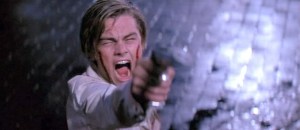
As prolific as Shakespeare has proven to be with his plays, most people at least have a passing familiarity with a few of his plays. With Baz Luhrmann and Kenneth Branagh out there, it’s even likely many have seen at least one of Shakespeare’s plays performed more or less with its original dialogue–even if some have guns in them.

Alive, in triumph! and Mercutio slain! Away to heaven, respective lenity, and fire-eyed fury be my conduct now!

Alive, in triumph! and Mercutio slain! Away to heaven, respective lenity, and fire-eyed fury be my conduct now!
(photo: Romeo+Juliet [1996])

While Shakespeare has been adapted and re-adapted in just about every setting possible at this point, the language is still a sticking point for many readers. This exposure to what sometimes is mistakenly referred to as “Old English” (Shakespeare wrote in “Early Modern English” much more understandable than true Old English), many times seem to give writers who wish to set a story in Tudor England the feeling that they need to break out the prithees and thous (and perhaps try to figure out how the heck to write in iambic pentameter) if they are going to be “accurate”.

The first time I received a question about how to properly do X-time period language in writing, I admit I was a bit confused. Having grown up on a steady diet of historical fiction as a child, I’d never considered having to make someone “sound” 16th century in a novel by going so far as to write in Early Modern English. It makes sense to some extent (you wouldn’t have someone in 1620’s Massachusetts saying “cool” or “what’s up”) but there is certainly a difference between refraining from using modern slang and trying to get your PhD in Renaissance Literature so you’re able to properly use Elizabethan phrasing.

Have your PhD and want to write in historically accurate language? Awesome, that sort of rocks. Just find the time period fascinating and want to write a story about it after doing non-PhD-level linguistics research? Don’t drive yourself crazy.

You see, the main reason Early Modern English finds itself questioned so much when it comes to this set up is that it is a version of English that is obviously different, but still possible to understand. Writing in it is not outside the realm of possibility, so some authors feel like a fraud not even trying.

But then, if you’re writing a book set in ancient Rome, do you have to write it in Latin? If your characters are from China, do you have to write in Chinese? Do you have to come up with an entirely new language for your aliens who would obviously not speak English on their home planet?

Of course not.

Creative fiction comes built in with a very handy tool for writers–suspension of disbelief. To a certain extent, the reader is willing to believe what you (the author) say is true simply because you say so. There are dragons in your world? Sure, let’s read about them. There’s no such thing as a smart phone? Sure, why not. You have to be careful to stay within the set rules of your universe and not strain/break that suspension of disbelief, but it is a very handy tool.

Language works the same way. Would someone born and raised in China likely speak English everywhere they go? No. Does that mean you can’t write that story until you become fluent in Chinese? Again, no. As we have been trained to do since before most of us would be able to even really think about it, suspension of disbelief allows the reader to assume that the novel is a modern-English translation of whatever your characters would likely be speaking. You can easily break this disbelief by throwing in too-modern language in historical pieces, but you by no means have to learn some different dialect just because you are writing historical fiction. And that really is for a few reasons.

1. Suspension of disbelief covers you.

As I said above, people aren’t going to condemn your WWII story for not being written in Polish when that’s your setting. They aren’t going to condemn you for not writing in Early-Modern English for a Tudor period piece. Just keep the modern slang out of it, and it is assumed your work is a “translation”.

2. You’re more than likely going to get something wrong and be more distracting.

Unless you are a linguistics protege/actually did get your PhD and are now fluent in the vocabulary and syntax of whatever time period you’re setting your story in, trying to make your characters sound Shakespearean is just going to make the dialogue stilted, and annoying to people who might be more familiar in the usage (that’s not how you use thou!) You will end up with better writing writing as you are comfortable.

3. It makes it easier for your audience to read.

As well-remembered as Shakespeare is, there are still plenty of people who just “don’t get it” and thus don’t especially like struggling through the Elizabethan language while attempting to follow along. Perhaps you know all the nuances, perhaps you don’t, you still have cut your possible readership down to people who understand Early-Modern English/don’t mind muddling through. Generally your sales will thank you not to do so.

And so, don’t worry too much about what your characters would actually speak when you’re writing, even when writing historical fiction. Worry about not throwing someone out of the time period altogether with modern slang. As long as you are careful about that, you’re in good shape.

(Note: When it comes to using a word that you feel might sound too “modern” I highly suggest looking at etymonline.com. An online etymological source, it has the historical usage of most words in its database. So can you use the word “crazy” to describe the man yelling about the world ending outside the Globe Theatre? Etymonline says if it’s after 1570, yes if you mean “diseased, sickly” or after 1610 to mean (the more modern usage) “of unsound mind, or behaving as so”).

———————————————————————-

Want to carry this and other posts with you wherever you go? Download Write, Edit, Publish for free today.

From Premise to Plot

As I believe I have said before, ideas are the easy part of writing. They are always the bright and shiny bits that bounce around in your head before you get to the nitty-gritty part of actually writing. But what happens when all you have is an idea–not even a true plot? That’s where you have to take your idea from premise to plot.

Now, when it comes to creative writing, I’m all for rule breaking. That’s the creative part, after all–not having to do everything to the letter, messing with grammar, all of those fun bits that make creative writing different from formal essays or business writing. As I have mentioned before, however, you need to know the rules before you can break them. And so, for building a plot, that entails knowing the general elements to a plot.

For those who paid attention to that day in English class, you might have seen plots lain out as a graph that looks something like this:

Basically these plot graphs break the essence of a plot into six (or so) sections:

1) Exposition (explaining your “normal”). Generally this section is one of the shortest parts of your story if you’re following the common advice of “Get to the Action”. This section of the story establishes what is “normal” in your story’s world. This might be what is normal in everyday life, or it might be dragons flying around and wizards having duels. The point of this section is to show what your character considers their normal life. Should nothing happen at this point, there would be no real plot. It would be a character study of how your protagonist goes about their day (generally not that exciting to read).

2) Inciting incident (changing “normal”). The inciting incident is the deviation from the normal. This can be something simple (the character deciding they are unhappy with their life) or catastrophic (terrorists blowing up the character’s hometown and killing the character’s entire family). The inciting incident just needs to get the character moving on their story–and ideally it happens as early as possible so you don’t lose the reader with boring “normal”.

3) Rising Action. Rising Action makes up the bulk of the story. It is a series of events (as shown above) which eventually leads to the climax. As this tends to make the bulk of a plot I will touch on this later.

4) The Climax. The climax is what the entire story has been building to. It’s the final battle with the big bad, the underdog sports team winning the championship, or anything else where your protagonist finally reaches (or learns they will never reach) their main goal that has been driving the story (see below section on rising action).  As the name would suggest, the climax is generally a large, blow out, (often) action-filled section, whatever it ends up being–the main point, however, is that it is definitive. Your protagonist wins or loses based on this moment (to whatever extent a win/loss is possible in your story).

5) Denouement (also called Falling Action like above, regaining “normal”). A denouement is the aftermath of the climax and a return to the “new” normal. Things may not have gone back to how they were at the start of the story (often times things are radically different) but the battle is over, the game is won, your protagonist has done whatever they can and are now going to settle into their new reality (whether that being their world changing, them changing, or everything actually going back to how it was).

6) Conclusion (settling into the new “normal”). Possibly part of the denouement, the conclusion is a (probably) short bit that shows the character living once again in “normal” Sometimes this is an epilogue, sometimes it’s not there at all (such as in open-ended endings). While some graphs show the conclusion as the opposite side of exposition (where it forms a mountain), I personally prefer the graph above, as it doesn’t make it seem like the conclusion must be in the same vein as exposition.

Now, as I said, writers by no means should feel married to this exact lay out for their story–if you can think of something awesome that doesn’t fit into this structure, do it–but most stories follow something of the kind.

Anyway, since the bulk of a story using this structure is spent in rising action, this tends to be the part that really turns a premise into a plot. For example, let’s analyze the first Harry Potter book. Before writing even started, there was a premise (boy wizard goes to magic school). From there you have exposition (life in the normal “muggle” world) and inciting incident (boy learns he’s a wizard/goes to school). There’s the climax (battle with the big bad [Voldemort]). And denouement/conclusion with leaving school for the year. Taking all those bits out, you are left with the bulk of the story–rising action.

So what do you do when you have a premise (or premise and ending) and not much else? You figure out what your character wants. Desires are what fuel action in real life, they’re what fuel story characters. If your characters are entirely content, why are they doing anything other than the boring stuff they were doing to start with? A character has to have a want–even if that want is just to get back to normal after being thrown out of it in the inciting incident. The events shown in rising action can be external (people attacking the protagonist, a natural disaster) but the character needs to be in those positions because of their wants and desires. Perhaps they are attacked while on the road going from point A to point B, but why are they on that road in the first place? Likely because it is a step to reaching whatever desire/goal they have for themselves.

(Note: The climax is the resolution of the character’s ultimate goal, but there should be smaller steps between the inciting incident and the climax. These are either steps to lead to that ultimate goal or smaller goals which generally make for subplots).

And so, long story short, when you’re caught trying to figure out how to plot out your book, stop focusing on the plot, and focus on your characters. Once you know why your characters are doing something, the easier it will be to have them realistically move the plot forward.

And if all else fails, throw in zombies. Zombies always get things moving.

—————————————————-

Want to carry this and other posts with you wherever you go? Download Write, Edit, Publish for free today.

Backup!

Recently my good friend lost her flash drive. Not fun for anyone, but enough to strike fear through the heart of any writer (or anyone, really) who basically lives off their drive like I do. People who follow me on Twitter may have heard my complaining about losing 3,000 words during Camp NaNoWriMo this July from a faulty flash drive. About a year and a half ago, my entire laptop was wiped after going through an x-ray at the airport (rare, but it happens). As I, like many writers, keep most of my writing on my electronic devices (along with songs, pictures, and basically my entire life) my flash drive getting lost, or my computer being lost, wiped, or stolen would be a huge blow both personally and professionally (writing up a novel is not a quick process, if just because they are so long).

So, beyond the general advice of BACK YOUR WORK UP, here are some suggestions on how to do so:

1. External Hard Drive

This is what saved me when my computer was wiped going through the airport. External hard drives are getting cheaper and cheaper (you can get over a terabyte of storage for less than I paid for my old whatever-gig drive) and they allow you to basically store everything you have on your laptop on something that will more than likely not be brought somewhere it will be damaged. Since I had run “Time Machine” on my Mac, I was able to go back to my last back up and put everything back on my laptop that I had lost (all right, I had been bad and not backed up for a few months, but I was able to get most of it back. And what I didn’t have on that hard drive…)

2. Flash drives

Though if I had been good and backed up my hard drive more frequently (or if I had a hard drive that backed up wirelessly like some of those fancy new external hard drives do) I likely wouldn’t have lost anything. But no, I have to go all the way upstairs and plug all these cords in for mine, so I am not quite as good about that as I should be. Luckily flash drives are pocket-sized and easy to carry around in your purse (or even around your wrist if you get this nifty flash drive bracelet the NaNoWriMo Stores sells) and so I’m much more likely to keep my computer and flash drive current with five million copies of different documents. Since flash drives are so much easier to lose (and generally can’t hold your entire computer’s system on them) I wouldn’t recommend only relying on a flash drive in case of a broken/missing/stolen computer, but it is always good to know I have generally recent copies of my stories with me in case something should happen and everything in my house become victims of a localized EMP one day while I’m out and about). Since flash drives are getting to be SO cheap, I actually have one large flash drive that stays at home as back up, and then a smaller one that stays in my purse (not counting the offending broken flash drive mentioned above).

Added bonus: Carrying a flash drive with me also means I’m able to work on any computer I happen to be near without having to save things/download anything onto that CPU.

3. Google Drive/Dropbox/Cloud Storage

As added security–and a way to protect yourself from losing your work even if you should lose your flash drive, have your computer break, and have your external hard drive fry on the same day–there are plenty of “cloud storage” programs you are able to upload your documents to for free these days. The two I am most familiar with happen to be Google Drive (formerly Google Docs) and Dropbox, but I’m sure there are plenty of others for those who don’t want to use either. Though there are limits on how much you can store for free on some, the good news is that Word Docs/other word processing files tend not to be very large, which means if you are using cloud storage mainly to protect your writing, you’re generally in good shape. If you have your work on some program for cloud storage, you are protected by whatever back ups the company has for their massive systems, which means you won’t lose your work for anything short of a catastrophic melt down in [insert town cloud storage tech giant is based in; probably in Nor Cal].

4. Email attachments

For those who don’t want to deal with taking the few minutes it might take to figure out a cloud storage system, you also have the option of emailing your work to yourself as an attachment. Should all your other back ups fail, you will then be able to find those emails and download the attachments that, again, will be protected by your email-providers servers rather than anything you have to take care of. The main downside of this method is that you will have to constantly send new drafts to yourself and wade through them if something happens rather than saving over them as you might in cloud storage (though it isn’t necessarily a bad idea to have old drafts of your work as well in case you change something and ever want to grab a deleted scene again).

Tip: If you don’t want to clutter up your personal email, make a dedicated email for your backed up work–a bulk of email accounts are free to make/maintain these days.

5. Other computers

Much like the idea of an external hard drive, if you have multiple computers in your home (a laptop and a desktop, for example), consider saving your work to both. Is it overkill if you have any or all of the above back up methods already?Perhaps. But can you ever really be too careful? No. Who knows, maybe Dropbox will be hacked, my laptop will die, my hard drive will have burned in a freak electrical fire, and my flash drives will be stolen all on the same day… (Hey, just because I’m paranoid doesn’t means it won’t happen… *shifty eyes* (ok, it probably won’t)).

6. Paper

Perhaps not as eco-friendly, but there’s still something to be said about having a paper copy of your work hanging around somewhere. Often times I like to write longhand for a first draft. While this means I go through pens and notebooks like no one’s business, it means I always at least have some record of what I have written in the event of a complete electronic apocalypse. Sure, I would have to type it all up once again, but at least I would have the basic stories there. The environmentalist in me still has a hard time printing out the hundreds of pages after I’ve finished typing things up, many people actually find it easier to edit when looking at a paper copy of their manuscript than while on a computer screen. If you print things out to edit, just keep them somewhere once you’re done. Even redlined, having a paper copy of your work is a good last resort should everything else disappear.