Today in our “Genres (and why we write them)” blog series, we have YA author, Brenda Vicars, author of Polarity in Motion. Connect with Brenda on Facebook and Twitter or at her website: www.brendavicars.com
———————————————
Brenda Hummel: Young Adult Genre and Uneven Playing Fields
I love reading and writing YA, but the marketing side of this genre is tricky. You have to appeal to two distinct audiences: the young adults plus the older adults in their lives. Since most young teens do not have Amazon accounts or autonomy to buy whatever they feel like reading, they must get parent permission or school approval to acquire a book. Most parents and teachers are not reading and screening stacks of YA books in order to provide their charges with a range of choices. Instead, millions of parents and teachers rely on American Library Journal to rate and review YA books. Moms and teachers know if ALJ says it’s okay, it’s okay! Seems simple—get your book in ALJ. Not simple—you have to submit at least 15 weeks prior to publication. It’s then or never! (If anyone knows a way to get in ALJ after publication, please, please, please let me know!)
So why, in the name of sanity, write in a genre in which you must to win two audiences, who often have opposite tastes and opinions? Because I have no choice. Polarity in Motion had to be written. When Polarity’s nude photo shows up on the Internet, her journey distills the voices of teens I’ve known. Her eyes are opened to more than the dangers of a photo prank. She discovers that the playing field is not even for all kids. This message is my passion. My heart. I cannot not tell it.
 Still, there have been moments since Polarity met the world, when I’ve wondered whether I want to keep writing in a genre that is tough to market. But this past school year, those moments of doubt ceased. A high school class from the Northern Lights Community School in Warba, Minnesota read Polarity in Motion. Their teacher Gail Ann Otteson and I had met through Goodreads, and she set up a Facetime conversation with her class and me. I don’t have the words to do justice to the rich experience of having high school students react to my book. Their young faces and their insights warmed my heart and energized my creativity. For example, there’s a strange character, Arvey, who slinks in and out of the Polarity’s life, doing a wicked thing for twisted reasons. Mrs. Otteson’s students asked questions about Arvey and wanted to know if there will be a book about her. Up until that instant, the answer was, “no.” I’m done with Arvey. But now Arvey stomps around in my head demanding that her story be told. At this moment she’s leaning across my dining room table smirking at my laptop screen, too unimpressed to even roll her eyes. Arvey is one of those kids who is looking at an even playing field, but she knows her own feet will never touch it.
I asked Mrs. Otteson’s class if they would like to read chapters from the new book I’m writing (Polarity in Love), and they said, “Yes!” Critiquing chapter by chapter, these students are as insightful as any editor I’ve worked with. I love these students! For example, I used the word “tingle” (way too often) when describing Polarity’s feelings about her hunk, Ethan. The class nixed the tingles. So I’m working on new YA pleasing plus parent appeasing lingo for tingling. How lucky to have this kind of feedback!
Even with the genre’s double marketing challenges, people like Gail Otteson and her students are motivation to keep me in YA! My journey is not that different from Polarity’s. We both can’t stay out of the uneven playing field.
About the Author
 Brenda Vicars has worked in Texas public education for many years. Her jobs have included teaching, serving as a principal, and directing student support programs. For three years, she also taught college English to prison inmates. She entered education because she felt called to teach, but her students taught her the biggest lesson: the playing field is not even for all kids. Through her work, she became increasingly compelled to bring their unheard voices to the page. The heartbeat of her fiction emanates from the courage and resiliency of her students.




 also writes fantasy, the assumption being that nobody could possibly approach two such wildly different genres with equal fidelity. It’s kind of like the parent who says they love both their children exactly the same, and part of you wonders, Do you really?
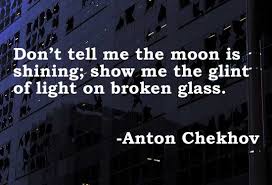
 On the other hand, given all the tragedies in the news (not to mention the history books), most of us have become a bit numb to human suffering. This means that, as in the case of somebody who has trouble suspending their disbelief and imagining reanimated dragonbones, the trick is to avoid boring generalizations, tighten the focus, and make the scene so vivid that the reader simply cannot turn away.
 I never know how to get these posts started so I’m going to jump right in. I’m a YA writer for the most part. When I first stared down the writing path, the idea of adult readers liking YA novels was a fairly new concept. You never really heard adults gushing over a “teen” story the way you do now. But within a two year span, YA became huge among adult (mostly women) readers. The first novel I wrote was actually a new adult (NA) story, but because YA had become so big, I decided to work onCanvas Bound more and ultimately decided to query that out rather than the NA.
 For example, if you have a great idea for a vampire story, you’re going to have a much more difficult time getting it published because the market was flooded with those about eight years ago. You almost have to be able to see into the future to know what will be selling well in two to three years because that’s about how long it takes to get a novel from query ready to out on bookstore shelves. I’m by no means saying give up on that vampire story, but lets say you have an idea for something new and fresh, you may want to put your writing time into that and save the vampire story for later in your career. After all, sub-genre trends do come back around eventually. L.J. Smith published The Vampire Diaries in 1991 and it didn’t become a hot TV series until 2009. (I’m crossing my fingers that in the next 15ish years YA stories about art students with unusual talents will be the next hot thing.)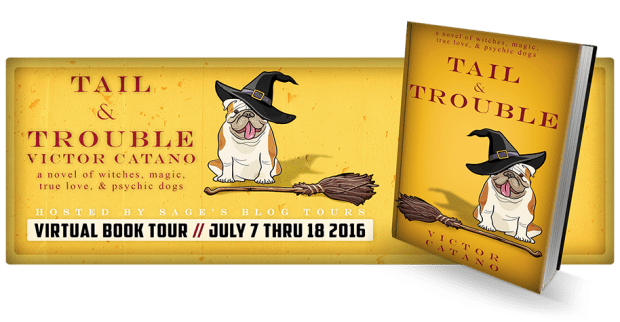
 Victor Catano lives in New York City with his wonderful wife, Kim. When not writing, he works in live theater as a stage manager, light designer, and technical director, working mainly with dance companies. His hobbies include coffee, Broadway musicals, and complaining about the NY Mets and Philadelphia Eagles.
 covers books that take place in historical settings. Famous historical figures may become characters (even the main character such as Mary Bolyen being the protagonist of Philippa Gregory’s
  .
.
 Now that I’ve moved into the historical fantasy genre, I’ve found that being at edges of genres is apparently my modus operandi. While I certainly have the fantasy part down in my novels–people finding out they’re reincarnated gods really can’t be anything but fantasy–writing what I want to read still means character-driven plots, and that isn’t quite as expected in fantasy novels as it is in romance. One of the oddest things I’ve found of straying into character-driven fantasy so far is actually that a ton of people who state they “don’t generally like fantasy” love the book. Much like the romance readers who don’t like my straying away from the romance formula, however, many pure fantasy readers end up on the other side of things, unsure if they feel like they got what they thought they were going to.
 Jessica Dall