Valentine’s Day Interview

Happy Valentine’s Day one and all. Today I’m celebrating with an author interview over on The Page Walker (do I know romance or what?) Check it out here.

Interview:

Hello, Jessica, and welcome to The Page Walker!

First, tell us something about yourself.
The Page Walker: Most writers are readers too.  Which writers inspire you?

Jessica Dall: Between writing my own things and editing as a freelancer, I actually have very little time for outside reading, sadly (the irony of reading all the time and not at the same time). I have really enjoyed Philippa Gregory’s books, though, and I did recently go back and reread Liz Berry’s The China Garden simply because it was my favorite book back when I was fifteen. Honestly, I’m inspired by everything and anything, so just about anything I read becomes inspiration to me. Perhaps I’m lucky that way.

TPW: Is there a special spot when you’re writing?

JD: I tend to be one of those lucky writers who are able to write anywhere. I always have a notebook with me and have a MacBook Air which is small enough to carry around in my purse if I like, so whenever I have a moment, I’m generally writing. I just have to be careful that… Read More

Character Flaws

With the term “Mary Sue” becoming more and more common amongst writers, one question I get asked more and more is how to give characters flaws. After all, one of the major reasons Mary Sues are so annoying are that they’re perfect, and perfect characters are boring at best, unbearable at worst.

The problem with thinking of weaknesses as something you have to throw in to balance out strengths, however, is that it is entirely missing the point. Giving a character weaknesses isn’t about balancing some cosmic Mary Sue scale (Good singer +3 Sue, Clumsy -1) it’s about making your character seem real

And so, if your character seems annoying perfect, throwing in a few “weaknesses” isn’t going to help all that much. A saintly character who is sweet, and smart, and entirely angelic is not going to become any more interesting because sometimes she’s a little absentminded or naive.

When trying to flesh out characters, don’t worry about the strengths and weaknesses lists, worry about building a believable character. While a lack of weaknesses is a warning sign for Mary Sues, the bigger problem is they simply aren’t believable. They’re perfect and special and the world around them changes to accommodate them because they are so perfect and special. Any amount of random weaknesses isn’t going to change that.

So, how do you build a believable character:

1. Separate yourself from your character.

Every author puts a little bit of themselves into their characters. One character might like the music you like. Another might have your sarcasm. That isn’t a problem.  What you don’t want to do is make a character your wish-fulfillment. A character that is you as you wish you could be isn’t going to be realistic. Even a character you just really, really care about might not be. Caring about your characters is fine, just don’t let your love for them cloud your judgment when it comes to building their personalities.

2. Think of personality as more than just a pro/con list.

As stated above, it isn’t possible to balance out a Mary Sue by countering their +3 awesomeness with -2 clumsiness. Instead of coming up with a list of all that is good about your character and then trying to think of an equal number of weaknesses, come up with traits. People are a balance of good and bad traits in real life, but many times what is positive and what is negative come from the same trait. Being outgoing, for example, is generally a good thing. It can become negative, however, if the character doesn’t know when to keep quiet or can’t keep secrets simply because they love to talk to people. Again, being a straight-A student would likely go on the “strength” side of the list, but what comes with that as far as weaknesses go? Perhaps they’re stressed, feeling they need to be perfect. Maybe they’re overly competitive or think school is the only thing that’s important. Consider each trait and what it means for your character’s personality, not just if it goes in the strengths or weaknesses category.

3. Change your character based on your world, don’t change your world for your character.

Everyone has a past. Whether you drop in when your character is 5, 15, or 50, it doesn’t matter. They have things that have happened that have shaped who they are. While the reader doesn’t necessarily need to know everyone’s back story, it’s important for the author to, and to think about how growing up as the character did affected them. Someone who grows up dirt poor in rural New Mexico. is going to be a different person than someone who grew up being groomed for the galactic senate. Don’t change the world you have built to suit your character (the real world doesn’t change to suit us), figure out how your character fits into the world you have built.

——————————————————————-

Want to carry this and other posts with you wherever you go? Download Write, Edit, Publish for free today.

Tiny Thoughtless Tales

To kick off publicity for The Copper Witch (out March 13) catch a sneak preview today on RUNEARTH Anthology: Tiny Thoughtless Tales here. Happy reading!

TheCopperWitch

The Copper Witch: Out March 13th 2014

Sign up here to be the first to know when it’s available to order:

← Back

Thank you for your response. ✨

Worth the Wait

If there is one thing that I wish I could go back and tell my younger self about publishing, it would be ‘take your time’. With my newest book ramping up for release, I have received a number of emails/IMs/Facebook messages from aspiring authors asking questions about how to get published (or If I can help them get published some of the time). While the answer the second question is “I can help tell you about the publishers with whom I have worked, but no, I can’t go and tell them to publish you”, my general advice is to slow down.

As far as answering questions, I am always happy to help just about anyone who asks for it. Far too often I read posts from new writers stating it’s “impossible” to get a book published. Unfortunately, this sentiment is often what has authors fall into the trap of working with a vanity press (a press which charges authors to put their books out). It makes sense why many new writers fall into that trap (and at least enough do to support all the vanity presses around) but being in that much of a rush only leads to problems later down the line.

Recently, I received a question from an author who had published their first book with a vanity press which shall remain nameless and was unhappy with how sales were going. After having paid over a thousand dollars in “start-up costs” (something no reputable publisher will ask for) she hadn’t made even half of it up in sales over the year. She asked if I thought she should now try to find an agent to go with traditional publishing with the hopes that the time/rejection that meant would lead to better sales.

While I would recommend anything over vanity presses (either self-publishing through a platform like Createspace or Lulu) or pursuing traditional publishing (through a large or small press), that ship has sadly most likely sailed. While it is true that some previously self-published books are picked up by traditional publishers later on in their careers, most publishers contract “first publication rights”. What this means is publishers are buying the right to make your book available to the public before anyone else. Once your book as been published (be it through a self-publisher, vanity press, or public novel blog) those rights have been used up and publishers won’t contract the book outside of it being an independent commercial success. The likelihood of them picking it up from a vanity press, especially with the book not selling particularly well, is slim to nil. It’s just not worth their time, effort, or money.

All is not lost for the question asker, of course, she is not forever blacklisted somewhere. Any new book she writes she can either self-publish through a non-vanity press platform or attempt to traditionally publish. This first book is just a bit of a costly mistake.

And so, never be in a rush to publish. Is pursuing traditional publishing confusing sometimes when you’re starting out? Definitely. Does it mean a lot of rejection/effort? More than likely. Is it better than paying someone to publish your book for you? You can bet your socks.

This is not to say that self publishing is also a bad. There are several writers who have found success through self-publishing. Not, however, by rushing. Authors chose to self publish for a number of reasons, amongst them more creative control or writing something that would have a hard time finding a traditional outlet. “I want it published now” should not be the main reason for pursuing self-publishing either, however. Some self-published books are as good, if not better, than traditionally published books with amazing quality. It is up to the author however to make it that way which can take a fair chunk of time and effort, especially when it comes to paying for editors/cover artists/etc. (in self publishing you will be paying upfront for publishing, but namely for freelancers, not a package from a company. Combined with a platform that lets you post books for free, such as the ones mentioned above, this is almost always cheaper than a vanity press without tying yourself to a less-than-reputable company). Self-publishing will likely be a quicker route to publishing than traditional publishing (unless you’re one of the lucky ones who find a publisher on their first query) but to make a quality product it still takes time. You control the release date, but there is no reason taking another six months or a year to make your book the best it can be will make or break the project.

Especially because, as an author, your name is your product. And the internet has a very long memory. If you pay to have a vanity press produce a book (especially a vanity press that doesn’t do a good job editing) people will end up finding that press and book tied to your name even after you’ve moved one to bigger and better things. If you rush a self-published book that just isn’t ready (one with typos and bad cover art) you might later be able to remove it from print, but copies/traces of it online won’t magically disappear.

As an author you will always be improving. Even now, with my third novel just about to come out and over five years of editing under my belt, I don’t pretend I’m a perfect writer. Each new book that comes out will likely be a little better than the last (I would hope) simply because the more you do something the better you tend to get at it. There is no need to chase perfection, but there is also no need to rush. Do your best to only put things out that your future writer self will be proud to have their name on. True, that’s sometimes easier said than done, but truly, there’s no rush. Take your time to make a brilliant product. After all, as an author, your name is your brand.

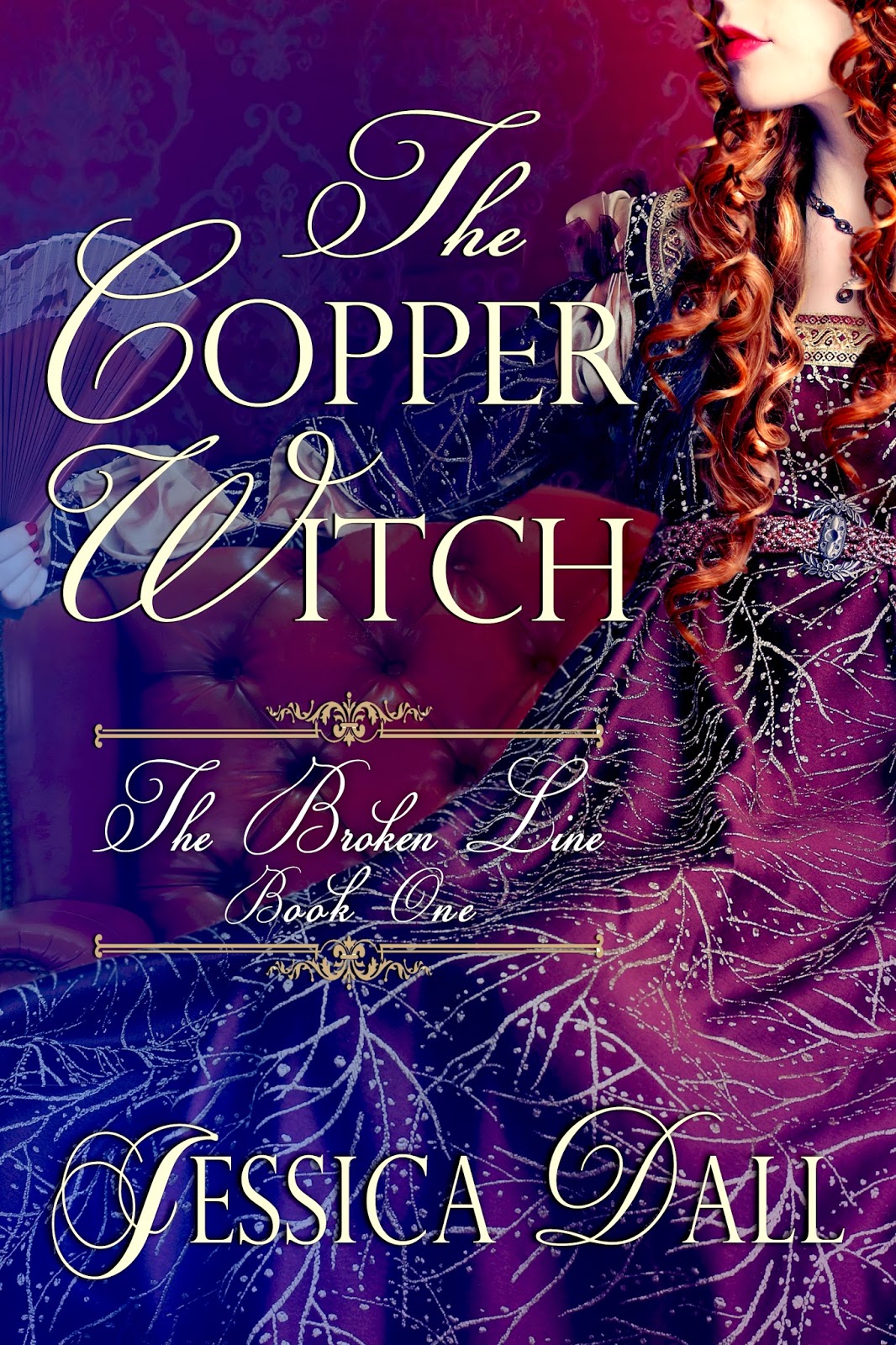
The Copper Witch: Cover Reveal

With March quickly approaching, my new novel, The Copper Witch, will soon hit the shelves. For now, a sneak peek of the new cover:

Adela Tilden has always been more ambitious than her station in life might allow. A minor nobleman’s daughter on a failing barony, Adela’s prospects seem dire outside of marrying well-off. When Adela catches the eye of the crown prince, Edward, however, well-off doesn’t seem to be a problem. Thrown into a world of politics and intrigue, Adela might have found all the excitement she ever wanted—if she can manage to leave her past behind.

Book One of the Broken Line Series, available March 13th, 2014.

Genre: Fiction, Romance, Historical, Alternative History

Release Date: March 13, 2014

Digital ISBN 10: 1631120093 ISBN-13:978-1-63112-009-1

Print ISBN 10:1631120107 ISBN-13:978-1-63112-010-7

Find more at 5 Prince Publishing.

Professional Writing from A to Z

Today’s post comes to us from Nikolas Baron, part of the Grammarly marketing team. Find more about him on Facebook or Twitter or Check out Grammarly (billed as “an automated proofreader and your personal grammar coach”)

————————————————————————

There are some practices that not all professionals share. Some writers have the luxury of working at home. If so, they might spend the day in pajamas. Why get dressed if no one is going to see? What about the days that they have a conference call with an editor? They might keep on the pajama bottoms, simply putting on a nice shirt for the camera. Anyone who would criticize this practice is probably jealous. Professional attire is not as important for telecommuters as it is for other professionals. Nonetheless, there are some things telecommuters can learn from their colleagues in other industries. Let us examine a few to see what we can apply to the writing field.

  • Astronauts

Years before a mission, astronauts begin preparations. They learn special procedures to perform important tasks in space.  Because of the lack of gravity, they learn to swallow special toothpaste instead of spitting it out. They practice what to do in case of an emergency. They rehearse hundreds of times before a launch. To produce a high-quality product, writers also prepare. They take writing classes to learn procedures that will aid them in the writing process. They learn to use computers. They might perform hundreds of writing exercises before they ever begin a novel, but this time is not lost. Practice does make perfect.

  • Emergency Medical Technicians (EMTs)

EMTs have one of the most challenging professions of all because life and death depends on whether they perform well under pressure. Timing is essential. Writers often have deadlines, but focusing on them can cause writer’s block. Rather than panic, writers can draw from emergency response advice: Decide what needs to be done, and then do it! Try not to obsess over deadlines. Grab a drink, find a comfortable place, and write. Once you relax, the words will begin to flow.

  •  Jockeys

Jockeys are great at staying on a moving horse. You, too, can ride your work to victory again and again. Many writers do not realize that they can resell their articles. Imagine you wrote a short story and sold it to the imaginary Amazing Tales magazine. You could develop the same characters and themes into a novel. Or vice versa; you could use one of your novels as the basis for a series of short stories. What happened to your characters before or after the novel? Think of these stories as deleted scenes from a movie. Many of your fans would love to read something like that. It is also a great idea for a blog! Other journals, such as Reader’s Digest, welcome reprints. Remember, though, that you must own the rights to any article that you sell.

  • Zoo Keepers

Zoo keepers have fun, dangerous work. These professional caretakers must learn the habits of the animals that they keep; otherwise, they could get hurt. Writers hurt themselves if they fail to use the tools of the trade. If they do not take advantage of free proofreading online, they could lose time and money. If they do not attend writer’s groups, they miss out on encouraging association and valuable feedback. There’s no need to spend a fortune on education. Local colleges often offer writing and computer classes to the community. Learn what is out there and take advantage of it.

Lemonade stand workers set a great example. Their business may consist of only a sign, a table, and a pitcher of lemonade. The venture may be small, but the young entrepreneurs create a great product. They offer it to the community in attractive packaging. Simple though their business may be, they know the importance of creating a great product and treating customers well. Whether you identify with jockeys, jewelers, or janitors, you will be successful if you take a look at other professionals. No matter what kind of professional you look at, there is always a lesson to be learned.

———————————————————————–

NikolasNikolas Baron discovered his love for the written word in Elementary School, where he started spending his afternoons sprawled across the living room floor devouring one Marc Brown children’s novel after the other and writing short stories about daring pirate adventures. After acquiring some experience in various marketing, business development, and hiring roles at internet startups in a few different countries, he decided to re-unite his professional life with his childhood passions by joining Grammarly’s marketing team in San Francisco. He has the pleasure of being tasked with talking to writers, bloggers, teachers, and others about how they use Grammarly’s online proofreading application to improve their writing. His free time is spent biking, travelling, and reading.

Layout Templates

Happy New Year’s Eve to everyone (and apologies for the late post this week). Recently I was asked about book and manuscript formatting. While I previously posted some Layout Tips to make your book look more professional when laying out your text yourself, I thought I would now offer a template as a late holiday present.

As a winner’s gift, Createspace offers NaNoWriMo winners a code for free copies of their book when uploaded to Createspace. While I don’t intend to self-publish my NaNo novel (especially not while it’s still a rough draft) I thought it would be fun to at least see what it looked like in book form for now. Thus, not wanting to spend too much time on it, I changed the story format from manuscript to book format. For anyone who is likewise intending to turn their manuscript into a book, I present you with the template I created:

Book Layout [.docx]Book Layout

While (if you’re intending on full self-publishing at professional quality) this template no way replaces what a professional might do, it is a good start for beginners, including all the headers and section breaks you need to upload a word document to a self-publishing platform as a book.

For those who are looking to submit their manuscripts to agents or publishers (after editing, please, please, please) here is my general manuscript formatting (check each agent’s/publisher’s guidelines before submitting, in case they ask for something specific, but a good all-around format to look professional when submitting):

Manuscript Layout [.docx]Manuscript Layout

If anyone has problems downloading the files, please contact me and I’ll be happy to help.

Happy Holidays!

It’s been done

Because I haven’t learned my lesson about having to many things on the fire at once, joining my third novel The Copper Witch coming out next year is my fourth, Between the Lines, with REUTS Publications.

Written for the most part in 2009, I remember rather jealously guarding the idea for this novel, which seemed entirely unique at the time. While the world, I still think, is unique–mostly because it’s one I created, and no one shares my exact thoughts (yet)–having more experience with writing, publishing, and books altogether, I have now learned that ideas are relatively cheap. Some are more unique than others, but the idea is not what makes a story. 

And that leads me to today’s post. The question I saw while browsing in the NaNoWriMo forums:

How do you get over the fact that everything’s been done before?” 

As I said above, ideas are cheap. There are a million different ideas out there floating around at given moment and another couple million people ready to write them. Perhaps there’s a brilliant idea out there that the rest of humanity has someone missed, but as of today, I fully believe that if you haven’t found anything out in the world that shares the slightest similarity to your new idea, you probably haven’t yet looked enough.

And so, how do you get over the fact that everything has already been done?

Know that your writing and your characters are what are going to make or break the idea. 

Yes, it is important to have an interesting idea in that you have to be interested in it enough to write it. If you don’t find your story intriguing enough to write, you are never going to actually sit down and get anywhere with it. The fact is, though, even if two writers were fed the same idea, even if they were told to write the same basic plots, their books would not be identical. The characters would be different in how they thought, acted, how they related to one another. All the little things that make a story interesting would reflect the author writing it, not end up as an exact carbon copy.

So write what you like. Write what interests you. Write something brilliant or stupid or derivative. It is who you are as a writer that will make your story unique. If you hold on to that, the fact that everything has already been done but trust in your writing, you’ll always be in good shape.

Does Length Matter?

As December and the holidays firmly take hold, the authors who did NaNoWriMo tend to either wander off to nurse their wounds and take some well-deserved time off or dive right back into trying to finish their novels (if 50k words wasn’t the end of their story) and/or edit some sense into the words they managed to churn out over the month.

I, personally, am doing my best to finish up the tail end of my NaNoWriMo project and it’s seeming the novel will likely be topping off around 75k words–a little shorter than I was hoping, but respectable all the same.

For you see, though it is called National Novel Writing Month, the 50k word goal of NaNoWriMo often leaves authors in the odd nether-space when it comes to the work they end up with (if authors stop at the 50k word mark). While 50k words is long for a novella, it’s not really considered a novel by many publishers.

Looking at the Wiki article on word count, it is listed there:

Classification Word count
Novel over 40,000 words
Novella 17,500 to 40,000 words
Novelette 7,500 to 17,500 words
Short story under 7,500 words


So what am I on about? 50k is certainly over 40k words. That makes a 50k word book a novel! When you start looking around at submission guidelines however you start finding things like:

“Preferred word counts are between 75,000 and 120,000.”

or

“We rarely publish anything under 80,000 words.”

And so, with a 50k word novel, many authors find themselves too short by a third to have many traditional print publisher take their works seriously. And that can feel like a bit of a kick in the teeth.

So what should you do? Try to whittle the story down into a novella? Beef it up into a novel? Well, there are a few things to consider.

1. EDIT.

This should be a no-brainer, but it is undoubtedly a bad idea to take any first draft you have written (especially one written in a month), pop together a query letter, and start sending it out to agents/publishers. It’s a bad idea to even think that your first draft will be exactly what you’ll have once you’ve gone through and edited. Perhaps there are useless scenes you’ve thrown in just to keep writing that you’ll chop lowering the word count over all. Perhaps you’ll realize there was an entire subplot you never fleshed out and add several thousand more words to your novel working that out. Don’t assume 50k is the office length your manuscript will be when you start shopping around. (And please, please, please don’t throw your new NaNo out into the world without edits. Publishers and agents will thank you)

2. Look into standards for your genre.

Yes, many publisher don’t really like to look at things that are under 70k words or so, but there are some genres where 50k is exactly in line with what publishers want (for example, mid-grade fiction and Romance novels). Don’t read this blog post and automatically start beefing up your story because you think you need to. You might have written something in a genre that doesn’t want long stories.

3. Consider your publishing goals.

So you’re writing in a genre that does want something longer than 50k (Fantasy, for example, is notorious for wanting longer manuscripts). Consider if those are the presses you want to go after. Want to go after big-name publishers/agents and fight for that big advance and first run? Conforming to industry standards will definitely make it a little easier for you along a undoubtedly hard trail. Planning on self-publishing, or even going after small/e-presses? You might not have to. Many e-presses quite like shorter books (even some big presses are doing e-imprints now) and small presses aren’t under the same pressure to look for things that only fit with what is out there already. If you’re happy with your manuscript as it is, look for places that won’t punt it because of word count.

4. Consider subplot

So you want to beef up a story but it really seems like your story tapped itself out at 50k. Consider if there are any subplots you want to add. When I first started writing short stories (after starting off as a novelist) I was told the main thing to keep in mind is that short stories tend to follow one or two characters from A to B and that is the end. Novels, on the other hand, have a full range of characters, and don’t have to only tell A to B. A to B can be the most important part of the story, but other things can be happening at the same time. Often there is a romantic subplot in stories (characters are going from A to B, but Male Main Character [MMC] and Female Main Character [FMC] are also falling in love) but there is no reason a subplot couldn’t be something entirely different. The characters are going from A to B, but MMC is also dealing with a severe illness. They’re going from A to B, but FMC is also doing her best to get into a good college. Think about the world around your characters and see if there is something that can be added that builds the story up.

5. Add descriptions/dialogue.

If you’re like me and tend to write large amounts of dialogue, go through your novel and look for places where you can add more description. What does the room they’re sitting in look like? What are your characters seeing? Don’t overdo it, but there should be plenty of places to build up your world while also increasing word count.

Alternatively, if you are primarily a narration writer, look at where you can add dialogue. More than once while editing I have come across something along the lines of “He told them about X” in a narration-heavy piece of writing. If the reader already knows about X, there’s no reason to rehash it, but if it’s the first time it has been mentioned, why not expand it into actual dialogue? Not only will you expand word count, you’ll also move from telling your reader about what’s happening to showing them.

6. DON’T add in meaningless filler.

Adding a subplot does not mean adding “filler” There shouldn’t be scenes that don’t have some purpose (slowing down the main story to show two characters grocery shopping just to add words is not a good idea). Likewise, adding description/dialogue does not mean throwing in walls of text/meaningless dialogue just to make a piece longer. Tolkien may have been able to get away with it, but taking three pages to wax poetic about a tree is a good way to have readers stop reading. And there is only so long readers will read seemingly meaningless dialogue before they put the book down. If your story is tight and flows well as it is, don’t sink it just for word count. Quality is still more important than quantity.

———————————————————————

Want to carry this and other posts with you wherever you go? Download Write, Edit, Publish for free today.

Typing, Print, Cursive

With news of the standard curriculum changing to no longer include cursive making the rounds, there have been a number of arguments surrounding the usefulness of teaching children to write in script. While many make the argument that it is an antiquated skill (and they possibly have a point, what with more and more documents being produced electronically) I have a much more personal connection to cursive than it seems many my age.

You see, when writing, I often prefer to write my first drafts out long hand. Sometimes I actually find it necessary (more than once on my most recent work in progress, I’ve only been able to write long hand while I just end up staring at the cursor on a word processor).

A sample of what nine out of ten notebooks in my house are filled with

When writing long hand, I also tend to solely write in cursive (print is reserved to mark what I intend to italicize when typing everything up). While I am able to write in both print and script quite legibly (I believe), I find writing in print much slower than writing in cursive (what with having to lift  your pen between each letter). The printing shown above was very deliberately my “nice” printing. In fact, if I try to print as quickly as I write in script, it ends up something more like this:
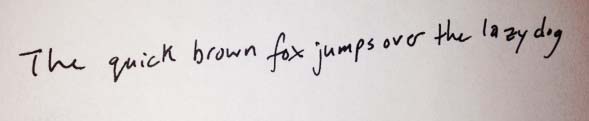
Why it also wobbles up and down, I don’t know.

Still legible, perhaps, but certainly not as pretty as cursive tries to sneak its way back in (I seem to be unable to separate the ‘h’ and ‘e’ in ‘the’ when writing in a hurry). As I tend to write whatever comes to me, I am thus not able to print quickly enough to keep up with my mind without the letters beginning to resemble chicken scratch (perhaps what those who knew me in middle school would remember as just my writing…)

But Jessica, you may be asking, if you don’t like printing, why don’t you just type? That’s what kids will likely find most useful in the future anyway. To which I say, fair question, rhetorical person. Typing likely will be a more important skill for children to learn in their lives–especially if their writing ventures tend to consist of school papers and emails.

As a writer, though, I still must make my case for writing longhand (and thus cursive) for a just a few reasons:

1. You think better writing longhand.

Seriously. There have been entire articles about it. While I don’t know if it is the reason (or only reason) I have been able to power through writer’s block with a pen when Microsoft Word fails me, there have been plenty studies that prove students learn better when writing things out by hand than with typing. To quote the article linked above:

“Writing stimulates a bunch of cells at the base of the brain called the reticular activating system (RAS). The RAS acts as a filter for everything your brain needs to process, giving more importance to the stuff that you’re actively focusing on at the moment—something that the physical act of writing brings to the forefront.

“Dr. Virginia Berniger, who studies reading and writing systems and their relationship to learning processes, found that children’s writing ability was consistently better (they wrote more, faster, and more complete sentences) when they used a pen rather than a keyboard…The difference, Berniger notes, may lie in the fact that with writing, you use your hand to form the letters (and connect them), thereby more actively engaging the brain in the process. Typing, on the other hand, involves just selecting letters by pressing identical-looking keys.”

Of course, some people are much more comfortable typing and that allows them to work more easily when not worrying about writing, but the very act of writing longhand engages the brain in ways typing does not, and that is helpful for many.

2. You can write on the go.

As smartphones and tablets become more and more common, pen and paper may begin to lose their advantage here, but for now, pen and paper wins out for easy writing on the go. You can get a small notebook from Office Depot for 99¢ (you aren’t going to get the cheapest tablet for that) and throw it in your purse without giving up much space, worrying about it running out of battery, or having to figure out how to type with any speed on a touch screen. Even lacking a notebook, you can almost always find a scrap of paper somewhere to scribble down ideas. There’s something poetic about starting a best seller on a napkin (like J.K. Rowling!) that just isn’t there trying to type out something on your smartphone before it dies.

3. It streamlines the editing process.

“But you’re just going to have to type it up anyway,” rhetorical question-asker argues. “Agents/publishers aren’t going to take handwritten manuscripts.” Well, yeah, but you also aren’t going to (hopefully) be sending in a rough draft of a work to an agent/publisher in the first place. Once you have finished your first draft, you then have the chance to start first-round edits as you type up what you have already written. Really hate this one scene? Rewrite it. Think that sentence could be better? Tweak it as you’re typing things up. Rearrange. Cut scenes. Add scenes. You can do it all while typing what you’ve written up. It’s all stuff you should be doing anyway.

4. You always have a backup .

Hopefully you already have a backup of your manuscript (or multiple), but in the event that the machines finally rise up and become our masters, it’s always comforting to know that there’s at least a draft of what you’ve done somewhere to work with rather than losing everything (or, perhaps more likely, should your laptop and external hard drive get stolen, it’s far less likely for a burglar to grab a stack of already-used notebooks on their way out). Can you lose a notebook? Of course. Could it be destroyed? Yep. But it isn’t going to be taken out by clicking on the wrong link one day or an airport scanner wiping your computer hard drive (latter one has happened to me in the past. Thank god for external hard drives).

5. You won’t get (as) distracted.

Ok, there’s really no limit in being able to find distractions when you don’t want to write (I really should reorganize this bookshelf…) but by writing on paper, you have one less potential time waster easily accessible. Sure, there are writing programs that allow you to write “full screen” these days, so you don’t see things popping up to distract you while you type, but really, it’s so much easier to hit that little escape button and check Facebook “just for a second” then it is when you’re writing in a notebook.

5. You have something to auction off when you’re rich and famous.

I know, I know, this one’s a bit wishful thinking…but what author really doesn’t want to think about their first drafts being auctioned off for big money once they’ve hit Stephen King levels of fame? Selling a flashdrive with an old draft of your Word Document just doesn’t have the same draw.

And so, there are my reasons for still writing longhand (beyond “it helps me write” and “I like it”). Do I begrudge schools for finding other skills than cursive more important these days? No, I completely understand the argument. Do I plan on teaching my children how to write in script all the same? If at all possible, you can bet on it.