Today for our “Genres (and why we write them)” series, we have J.M. Frey, an author who writes across the speculative fiction genres (namely Sci Fi (social science fiction), Fantasy (epic, urban, steampunk), and horror (urban)). Find her on Twitter or at www.jmfrey.net.
————————————–
J.M. Frey: Writing Speculative Fiction
Q: What do you love about your genres?
It’s funny you ask, because I just gave a keynote speech for the local Rotary Club about the importance of writing and why SF/F is more than just escapist fluff. I talked about how SF/F can, yes, fun and escapist, and in troubling times like this – the #Brexit, Orlando, ISIL – escapism is important for mental health, for arts therapy, and keep the arts alive and people filled with joy.
But at the same time, it can teach. The Hunger Games speaks frankly about the dangers of 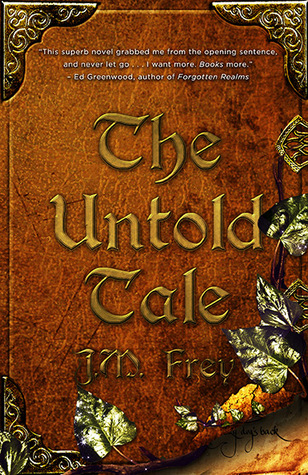 dictatorships, media over-control, and blind consumerism and classicsm. Harry Potter teaches readers about racism. Star Trek is about pacifism. Lord of the Rings, much as Tolkien disliked allegories being applied to his work, speaks eloquently about environmentalism. Think of the messages in 1984, Logan’s Run, Metropolis. I think this is incredible that stories can both teach, provide awareness, encourage discussion, and entertain. And SF/F gives us the ability to talk about HERE and NOW by setting it THERE and THEN.
I often talk about how a person is a late. A book is a stone thrown into the water. It causes a ripple and then the lake goes placid. The disruption the stone causes smoothes over. But that stone, it’s still there. At the bottom of the lake. It is now a part of the lakebed. The foundation of that person. It shapes the water like a vessel.
That is why I love writing.
Q: Is there anything you hate?
Self-important gatekeeping nerd-jerks. See: #Gamergate and the 2015 Hugo Ballot.
Q: Has your genre shaped your publishing goals?
Yes! I found Neil Gaiman late in my reading life, and I adore the fact that he writes his stories in the medium that is best for the story, not the medium that he has to. He writes screenplays and poems, and song lyrics, and kid’s picture and middle grade books, novels, novellas, comics… and that’s really influenced and inspired me, because for the first time I felt the freedom to imagine my stories in other mediums. I realized I didn’t have to try to jam things down into novels if they didn’t fit into novels. I could try comics, or screenplays. And this was really better for my creativity – it could breathe.
And I think that’s a very SF/F thing. SF/F novelists very often also write comics, screenplays, articles, magazines, reviews, etc. This is, I think, because the SF/F was so small, so marginalized, and had to be so self sufficient for so long, that we all started picking up work where we could, helping around where we could to promote each other’s work and give one another awards, and generally being a community. I mean, have you seen fandom? Cosplayers, fan ficcers, reviewers, convention committees, people celebrating SF/F in every way possible, spreading out and filling the niches, and learning and teaching.
Embracing every medium, every story, and trying everything, and volunteering is just so SF/F. Fearless exploration and epic quests are between our pages. So of course, we live our lives that way, too!
Q : What expectations do you find placed on you because of your genre?
Well, it’s less about my genre and more about my gender. Because I’m a woman writing SF/F, I find people expect a lot of urban fantasy romance series from me, and not the superhero or epic fantasy stories that I do write. Which is equal parts frustrating and awesome because I can defy expectations when I get people into my books, but frustrating because there were expectations to begin with. Not all female SF/F authors write urban fantasy romance we write other things, too. (And FYI, it’s a bit insulting to be shocked when I say I write epic fantasy. I mean, Marion Zimmer Bradley? Jennifer Roberson? Hello?)
And that’s super-annoying. So is the mainstream awards and review outlets looking me over because I write ‘genre’ (see my first answer for my thoughts on why that’s BS).
But having said all that, it’s nice being part of a genre, because the fans are so loyal, and so enthusiastic, and so creative. You just don’t get that kind of love in mainstream fiction. I adore it.
About the Author
 J.M. is a voice actor, SF/F author, and professional smartypants on AMI Radio’s Live From Studio 5. She’s appeared in podcasts, documentaries, and on television to discuss all things geeky through the lens of academia. Her debut novel TRIPTYCH was nominated for two Lambda Literary Awards, nominated for a 2011 CBC Bookie, was named one of The Advocate’s Best Overlooked Books of 2011, and garnered both a starred review and a place among the Best Books of 2011 from Publishers Weekly. Her sophomore novel, an epic-length feminist meta-fantasy THE UNTOLD TALE (Accidental Turn Series #1), debuted to acclaim in 2015.
 good guys must thwart. This conflict, unlike other genres, by and large, involves lethality.
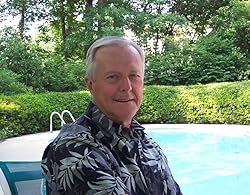 After graduating from the University of Vermont College of Medicine, John L. DeBoer, M.D., F.A.C.S. completed his surgical training in the U.S. Army and then spent three years in the Medical Corps as a general surgeon. Thirty years of private practice later, he retired to begin a new career as a writer. When not creating new plot lines for his novels, Dr. DeBoer pursues his interests in cooking, the cinema, and the amazing cosmos. He’s an avid tennis player, and his yet-to-be-fulfilled goal is to achieve a level of mediocrity in the frustrating game of golf. The father of two grown sons, he lives with his wife in North Carolina.
 The other genre I write in is cozy mystery. Cozy, specifically, because I love that small-town, squad-goals feel of an everyday girl and her friends sussing out the bad apple in their midst. The focus is on a happy ending, with emphasis on the characters’ daily lives and hobbies. We can all be a cozy mystery heroine, the genre says. We can handle it.
 world for about fifteen years now, off and on—I finally feel like I’ve learned enough to do it justice. In that time, I’ve written literally all my other novels: three series’ worth. Building everything from nothing is intimidating some days. The struggle with Mystery is not its complexity, but its expectations. The villain gets a head start, and the interplay of sleuth and villain needs to feel organic while furthering the plot and allowing the sleuth to have downtime with her friends and family. And hopefully a cute pet. Or cupcakes.
 Mysteries are all about unraveling the knot, whether from Nero Wolf’s armchair to Sherlock Holmes sniffing around out on a trail. They are often, though not always, more intellectual than physical. Clues must exist in the story if the reader is to participate.
 police-procedural—the Al Quinn books, are in a space kiddingly (I hope) known as “geezer” fiction. Colin Cotterill’s Dr. Siri series is one quite good example. Instead of a young and strong character battling the odds, the reader follows the adventures of someone older who must fight the good fight while feeling the same aches and ouches that the reader might experience.
 books, Russ Hall has had more than twenty books published. In 1996 he won the Nancy Pickard Mystery Fiction Award for short fiction. In 2011 he was awarded Sage Award, by The Barbara Burnett Smith Mentoring Authors Foundation–an award for the mentoring author who demonstrates an outstanding spirit of service in mentoring, sharing and leading others in the mystery writing community. In 2014 he won First Place in the Austin International Poetry Festival. In 2015 The Writers’ League of Texas awarded “To Hell and Gone in Texas” its Fiction Discovery Prize.
 The second reason is a pretty simple one. I write the books I want to read. If there was any rule for the kinds of books an author should focus their efforts on, it’s that one. My favorite authors all write humorous fantasy, or humorous memoir, or humorous literary whatever. Point is, they’re funny. Satiric in most cases. I like thrillers. I like mystery. But I love to laugh and I love fairy tales. Humorous fantasy was a natural fit.
 Still, there have been moments since Polarity met the world, when I’ve wondered whether I want to keep writing in a genre that is tough to market. But this past school year, those moments of doubt ceased. A high school class from the Northern Lights Community School in Warba, Minnesota read Polarity in Motion. Their teacher Gail Ann Otteson and I had met through Goodreads, and she set up a Facetime conversation with her class and me. I don’t have the words to do justice to the rich experience of having high school students react to my book. Their young faces and their insights warmed my heart and energized my creativity. For example, there’s a strange character, Arvey, who slinks in and out of the Polarity’s life, doing a wicked thing for twisted reasons. Mrs. Otteson’s students asked questions about Arvey and wanted to know if there will be a book about her. Up until that instant, the answer was, “no.” I’m done with Arvey. But now Arvey stomps around in my head demanding that her story be told. At this moment she’s leaning across my dining room table smirking at my laptop screen, too unimpressed to even roll her eyes. Arvey is one of those kids who is looking at an even playing field, but she knows her own feet will never touch it.
 Brenda Vicars has worked in Texas public education for many years. Her jobs have included teaching, serving as a principal, and directing student support programs. For three years, she also taught college English to prison inmates. She entered education because she felt called to teach, but her students taught her the biggest lesson: the playing field is not even for all kids. Through her work, she became increasingly compelled to bring their unheard voices to the page. The heartbeat of her fiction emanates from the courage and resiliency of her students.




 also writes fantasy, the assumption being that nobody could possibly approach two such wildly different genres with equal fidelity. It’s kind of like the parent who says they love both their children exactly the same, and part of you wonders, Do you really?
 On the other hand, given all the tragedies in the news (not to mention the history books), most of us have become a bit numb to human suffering. This means that, as in the case of somebody who has trouble suspending their disbelief and imagining reanimated dragonbones, the trick is to avoid boring generalizations, tighten the focus, and make the scene so vivid that the reader simply cannot turn away.
 I never know how to get these posts started so I’m going to jump right in. I’m a YA writer for the most part. When I first stared down the writing path, the idea of adult readers liking YA novels was a fairly new concept. You never really heard adults gushing over a “teen” story the way you do now. But within a two year span, YA became huge among adult (mostly women) readers. The first novel I wrote was actually a new adult (NA) story, but because YA had become so big, I decided to work onCanvas Bound more and ultimately decided to query that out rather than the NA.
 For example, if you have a great idea for a vampire story, you’re going to have a much more difficult time getting it published because the market was flooded with those about eight years ago. You almost have to be able to see into the future to know what will be selling well in two to three years because that’s about how long it takes to get a novel from query ready to out on bookstore shelves. I’m by no means saying give up on that vampire story, but lets say you have an idea for something new and fresh, you may want to put your writing time into that and save the vampire story for later in your career. After all, sub-genre trends do come back around eventually. L.J. Smith published The Vampire Diaries in 1991 and it didn’t become a hot TV series until 2009. (I’m crossing my fingers that in the next 15ish years YA stories about art students with unusual talents will be the next hot thing.)
 Victor Catano lives in New York City with his wonderful wife, Kim. When not writing, he works in live theater as a stage manager, light designer, and technical director, working mainly with dance companies. His hobbies include coffee, Broadway musicals, and complaining about the NY Mets and Philadelphia Eagles.
 Jessica Dall